There has been a lot of talk about Anthropic lately. There is a lot of talk about this company in particular in the context of the dispute with the US administration and the Pentagon (and what OpenAI did later), but its new products, such as plug-ins for Claude Cowork, regularly make media headlines, because it has become a kind of tradition that they cause stock market declines of software-related companies. The February round of financing for Anthropic also attracted considerable attention, as part of which the company obtained another USD 30 billion from investors. That's interesting in itself, but more importantly, Anthropic also shared select information about its finances at the time. The data provided shows that within a year it transformed from a company that could generate $1 billion. revenue annuallyIn a company that generated over $1 billion. revenue monthly.
If this is true, then Anthropic has managed to break through this barrier faster than OpenAI. Of course, it must be taken into account that we are based here on data provided by Anthropic, which is difficult to verify, and we are talking about forecast amounts, assuming the current level of token sales and subscriptions will be maintained. However, this does not change the fact that Anthropic managed to achieve something that is worth taking a closer look at.
The difference of opinion that gave rise to Anthropic
Anthropic stayed founded in 2021 by former OpenAI employeeswho left Sam Altman's company because they didn't like the direction it was taking. They talk about it most often the most famous faces of Anthropic, i.e. the Amodea siblings — Dario and Daniela, CEO and president of the company, respectively. In various podcasts and interviews, they accuse OpenAI that, in their opinion, at some point the drive to commercialize developed models and tools became more important than ensuring their security, and they wanted to create something in which security is not an addition, but a foundation. Whatever it was, it's clear that Anthropic's management and Sam Altman are not on good terms and they greatly disagree with each other on many issues.
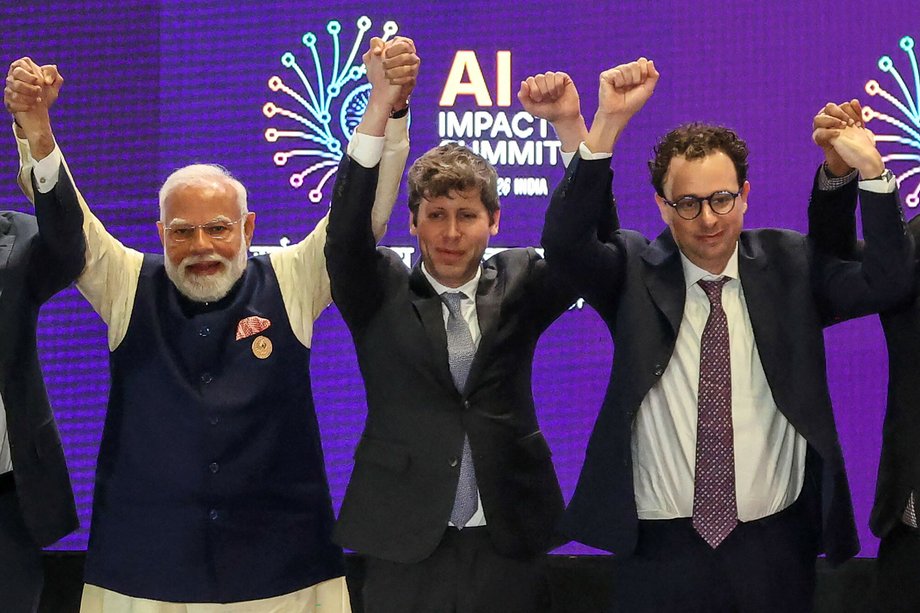
The photo of Sam Altman and Dario Amodea, who refused to hold hands during the India AI Summit, says a lot about the relationship between these men.
|
Ludovic Marin / East News
Anthropic, unlike OpenAI, was creation-centric from the very beginning product for business customers and institutions. The previously mentioned statements, but also the publication of the so-called “Claude Constitution”, or constant assurances that customer data is not used to train modelsAnthropic tried to gain the trust of the largest players in the market. Everything indicates that it has been a success – as it says, it currently has over 500 clients with a projected scale of at least USD 1 million. annually and business customers, not consumers, are the company's main source of revenue, unlike OpenAI.
Claude Code, or an unexpected revolution from Anthropic
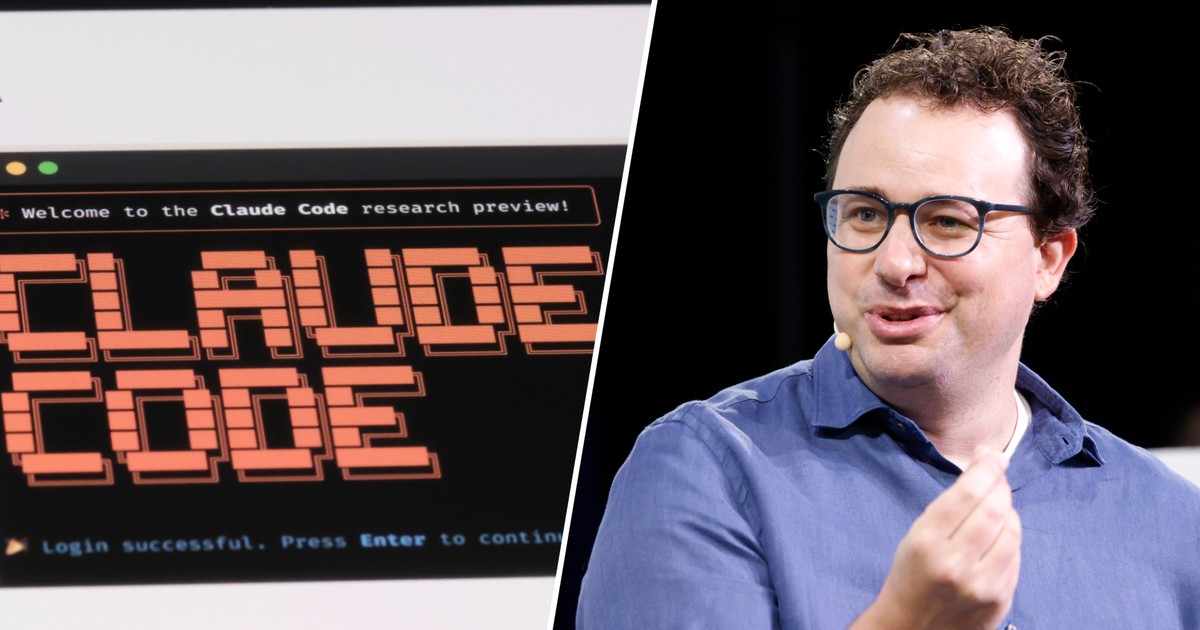
A breakthrough moment for the company was the middle of last year, when it released an inconspicuous-looking tool Claude Code. It took the development landscape by storm because it made it possible to automate long, multi-step tasks. In other words, after installing Claude Code and integrating it with your development environment, you can simply tell it what you want to do (for example, what application to create), leave it for a long time, and it will perform subsequent stages of the task, iterate, look for errors, until it returns a result that it considers satisfactory (whether it is actually satisfactory – according to expert reports, this still varies).
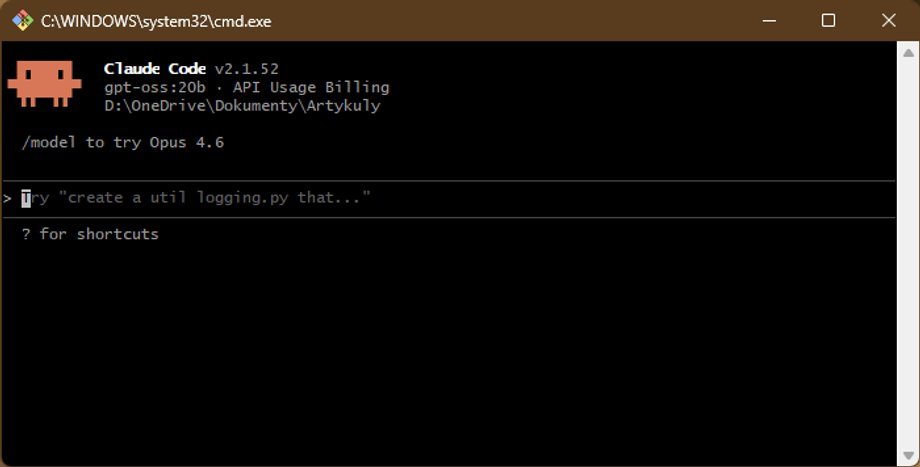
Claude Code is an inconspicuous terminal tool that caused a huge stir.
|
Onet
It didn't take long for people to start using this tool also for non-programming tasksfor example, to operate on the data you have collected and generate reports, texts, charts, etc. The list of things that can be automated in this way is limited only by your imagination and… finances. Such looping agentic tasks consume a lot of accelerator computing power, for which you have to pay, which significantly increased Anthropic's average revenue per user. Demand for Anthropic models is now so great that the company's revenues (at least for some time) may grow in proportion to the available data center computing power – any new accelerator supporting Claude will almost immediately be used by a new customer to perform some task.
Unique diversification of accelerator suppliers for Anthropic
The issue of accelerators and the construction of data centers is another issue in which Anthropic differs greatly from OpenAI. The gigantic contracts signed by OpenAI with accelerator providers and data center operators are often criticized and assessed as unrealistic. Anthropic is a much more conservative company in this matter. Some even say it's too conservative. Dario Amodei, however, believes that would rather have a slight shortage than overestimate the market demand for computing power and thus drag the company down.
Diversification is also an important pillar of Anthropic's hardware strategy. One of the larger initial investors is Amazon and this It was on AWS servers and Amazon Trainium accelerators, and not on Nvidia hardware, that the first versions of Claude were trained. This certainly came with additional challenges, as Amazon doesn't have an ecosystem built around its hardware like Nvidia, but it's safe to assume that the extra work was worth it. We do not know the exact financial terms of the agreement between these companies, but It is to be expected that they were very attractive to Anthropic.
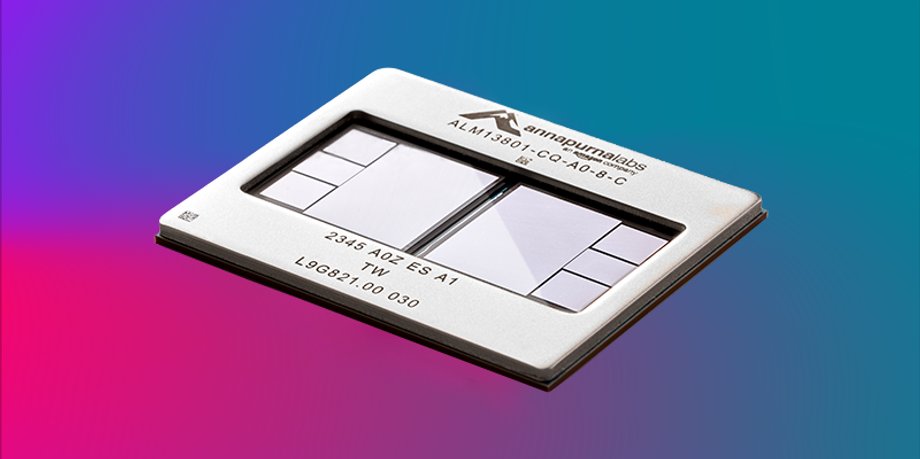
Anthropic language models are the only models of this class trained on Amazon accelerators.
The company is run by Dario Amodei However, it has not committed itself to just one accelerator supplier — it also signed an agreement with Google for the supply of TPU accelerators, it also uses AMD equipment to serve models, and finally it also signed an agreement with Nvidia. This puts Anthropic in a unique position.
A young startup that has become one of the most important companies in the world
In summary, the fact that Anthropic has become the fastest-growing technology company in history is not a coincidence or a collective bubble blowing. Its founders had an idea from the very beginning, they consistently stuck to it and it paid off. They also had a bit of luck, without which it is often impossible to achieve such spectacular successes – the hit Claude Code, which put Anthropic in the position of a leader in AI agents, was published without any major expectations, according to its creator, and its popularity surprised Anthropic. Thanks to all this, many analysts assume that Anthropic will become profitable earlier than the competition led by Sam Altman.
However, while everything looks solid from the business plan, finance and technology side (by the standards of AI companies), Anthropic faces perhaps its biggest challenge yet. The dispute with the US government has put this start-up in the center of global attention. For now, it has caused an outflow of users from ChatGPT and another wave of Claude's popularity growth, but it is simply impossible to predict what far-reaching effects it will have. In practice, this is not just a dispute about one company, but something that may shape the entire technological future of the world.