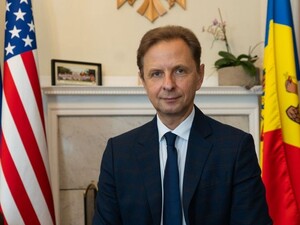
According to him, these elections became in many respects the “second day of independence” of Moldova.
“The Moldovan people said that the Russian administration is not needed here. The people decide their own destiny and future. This was a very clear signal that [страна-агрессор] Russia as a dominant force is no longer needed in Moldova,” the ambassador said.
The journalist asked Kulminsky whether Russia would continue to interfere in Moldova's internal affairs with troops in Transnistria after the election defeat. The ambassador believes that this will not happen, since Moldova has become much stronger and copes well with security issues.
Commenting on Russian drone flights over Europe, he said that these actions show not the strength, but the weakness of Russia.
“Russian influence is leaving. Look at what is happening in other regions – in Africa, Syria, in the post-Soviet space. Russia is losing ground. You cannot do what it did in Ukraine and hope for the respect of other countries,” the diplomat added.
Context
On September 28, 101 members of parliament were elected in Moldova for a term of four years. This year competed for seats in parliament 23 electoral competitors (15 parties, four blocs and four independent candidates). Party of President Maia Sandu got a majority and can independently form a government.