Correspondence with the USA
“What we have heard so far is that even though we wiped out the Iranian regime, this is not a war to overthrow the regime. Even though we wiped out their nuclear program, we had to go to this war… because of that program. While Iran wasn't planning any attacks on the U.S., it may have been planning them – depending on who you ask. And while this isn't a war to liberate the Iranian nation, that nation has just become free, or will be free, depending on who takes power. except we don't know it. The message about this war is, to put it mildly, chaotic!
If we were looking for the best description of the feelings that Americans have had a week since the start of the war in Iran, Matt Walsh's statement (entry from his account on X) seems to hit the nail on the head. This is significant because Walsh is a star of the right, a columnist appearing on the platform The Daily Wire, with which Ben Shapiro, Michael Knowles and Andrew Klavan also cooperate.
What are Americans' reactions to the war in Iran?
What do representatives of the Democratic Party think about the war?
What investments have Trump's friends made?
What were Rachel Maddow's motives for attacking Iran?
Misinformed or deceived?
Although most of conservative America supported the attacks (55% CBS/YouGov, March 2, 2026), Americans as a society feel uninformed and even deceived in the first place, especially when it comes to the causes of the war. Mainly because the arguments put forward by the White House in the first days resembled quicksand. They ranged from the thesis about the need to “cut off the head of the regime” – which America heard from Donald Trump on the day of the attack – through the need to destroy Iran's arsenal of missile weapons and nuclear program – these were the words of Secretary of War Pete Hegseth in his first briefing on the war – to the “friendly” favor that the US simply gave to Israel, which “needed” to attack Iran before Iran attacked it – this is how Secretary of State Marco Rubio presented the matter before a briefing for congressmen on Monday, March 2.
And since Rubio's statement caused a huge wave of indignation on both sides, on Tuesday, March 3, Trump intervened again with the correction that it was Israel that took advantage of America, and not the other way around. Despite the lack of confirmation from intelligence agencies in other parts of the world, Trump makes Americans believe that Iran was preparing for massive missile attacks on American targets in the Middle East.
The bombing of Iran was a big surprise to the vast majority of Americans. Not everyone follows the daily news, and reports that the US had recently sent almost a third of its navy to the Middle East were giving way to revelations about the latest tranche of Epstein files recently made public.
Just before the attack, on Thursday and Friday, the media mainly served readers tidbits about the Clintons' congressional hearings on this very issue, and there were still echoes of Trump's Tuesday State of the Union address. Although the president spoke for almost two hours, he devoted only three minutes to Iran, which fooled even the experts. So far, presidents have used this opportunity to inform the nation of their most important policy plans and goals, especially if they wanted to go to war.
I found the news about bombed Iran in a ski resort. The scale of shock in which Americans found themselves is best demonstrated by how often the words “Trump”, “war” and “Iran” came to my ears when I was standing in long lines to the ski lifts (winter arrived in the Rocky Mountains only two weeks ago!). I also had no doubt that even Trump voters seemed at first to be angry rather than proud of this turn of events.
– Has he gone mad? There will be another Afghanistan. He promised us no more wars. This is betrayal, said a snowboarder, apparently a student, standing next to me with two of his friends. To the answer that maybe everything would go as quickly as in Venezuela, he vigorously denied it and added that Will now think carefully before voting again.
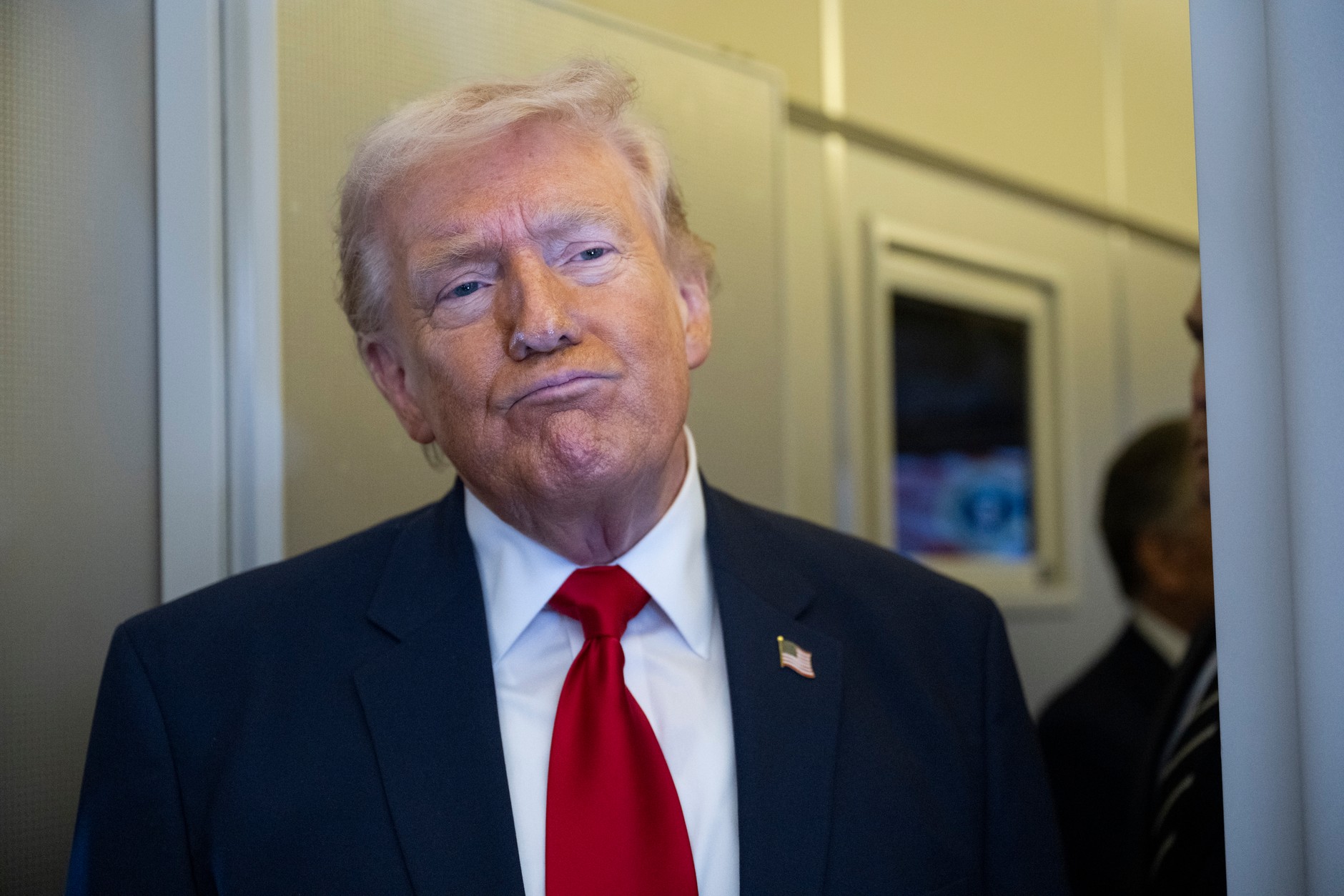
US President Donald TrumpRoberto Schmidt/Getty Images
The worst of betrayals
The MAGAsfera establishment also initially reacted with anger and even rebellion. Podcaster and staunch anti-Semite Nick Fuentes, who after the death of Charlie Kirk intensively cultivates right-wing American youth, he called Trump a traitor and called on his fans to… vote for Democrats.
Tucker Carlson and Megyn Kelly, former Fox News stars, now independent producers of their own online programs, also condemned the war as involving America in its own interests. Carlson called the attacks “diabolical and disgusting” (“Pure Insanity” — Who Benefits From Bombing Iran?”, The Tucker Carlson Network, March 3, 2026), Kelly raised the alarm that “no one should die for a foreign country, (…) meanwhile American soldiers died for Iran or Israel” (“Understanding America's Goals in Iran”, Megyn Kelly, March 3, 2026).
Trump's harshest critic from within his own movement at the moment, former Georgia congresswoman Marjorie Taylor Greene, she accused the president of brazen hypocrisy. “Thousands of Americans of my generation died in senseless and endless wars abroad until we said enough is enough. Now we are liberating the Iranians. Come on. This is the worst of betrayals, because it is committed by a man and an administration whom we all believed that their rule would be different!” — she thundered on her X account just a few hours after the attacks.
Most Republican congressmen still working on Capitol Hill either did not take a stand immediately or became war hawks and even took on the backbreaking task of weaving together seemingly contradictory doctrines and goals. As prominent Republican senator from South Carolina Lindsey Graham said in a conversation with journalists on March 1: “America First is not isolationism, not head in the sand, not an attitude of non-engagement (…). America First is death to people who wish us ill and have given us evidence of this in the past by attacking us abroad” (“Trump goes to war despite professed aversion to foreign entanglements, AP News).
Democrats presented a more united front, but condemned the attacks on Iran for slightly different reasons. First of all, they considered it another act of presidential lawlessness and Trump paving his way to power and dismantling democratic institutions. Trump started the war without consulting anyone about this decision and without even informing the members of the congressional armed services committee about it. The Constitution, meanwhile, allows U.S. entry into the war only if authorized by Congress. In normal times, Congress could impeach the president. However, we do not live in normal times and we know that nothing like that will happen today.
Less than a week after the attack on Iran, however, Republican members of Congress closed ranks again and on March 4, they made another show of unconditional loyalty to Trump by blocking a resolution in the Senate that would have imposed restrictions on him in connection with further military actions in the Middle East.
Democrats blast the White House for starting a war without having any plan in place to help the Iranians rebuild their country once the bombs stop falling on them. Trump is very shaky on this issue, he even declared that the new leader of Iran may come from circles supporting the current regime, as long as he accepts America's conditions and interests. Leaving the aforementioned Capitol Hill meeting with Mark Rubie, Senate Minority Leader Chuck Schumer stated that “There were a lot of questions, but the answers we were given were highly unsatisfactory.”
In a March 4 NBC poll 52 percent respondents said America should not have started the war in Iran41 percent supports the war, 7 percent and he has no opinion on this matter. Most opponents of the war indicate that they see no justification for hostilities, which involve not only the risk of the country being embroiled in another never-ending conflict, but also colossal expenses.
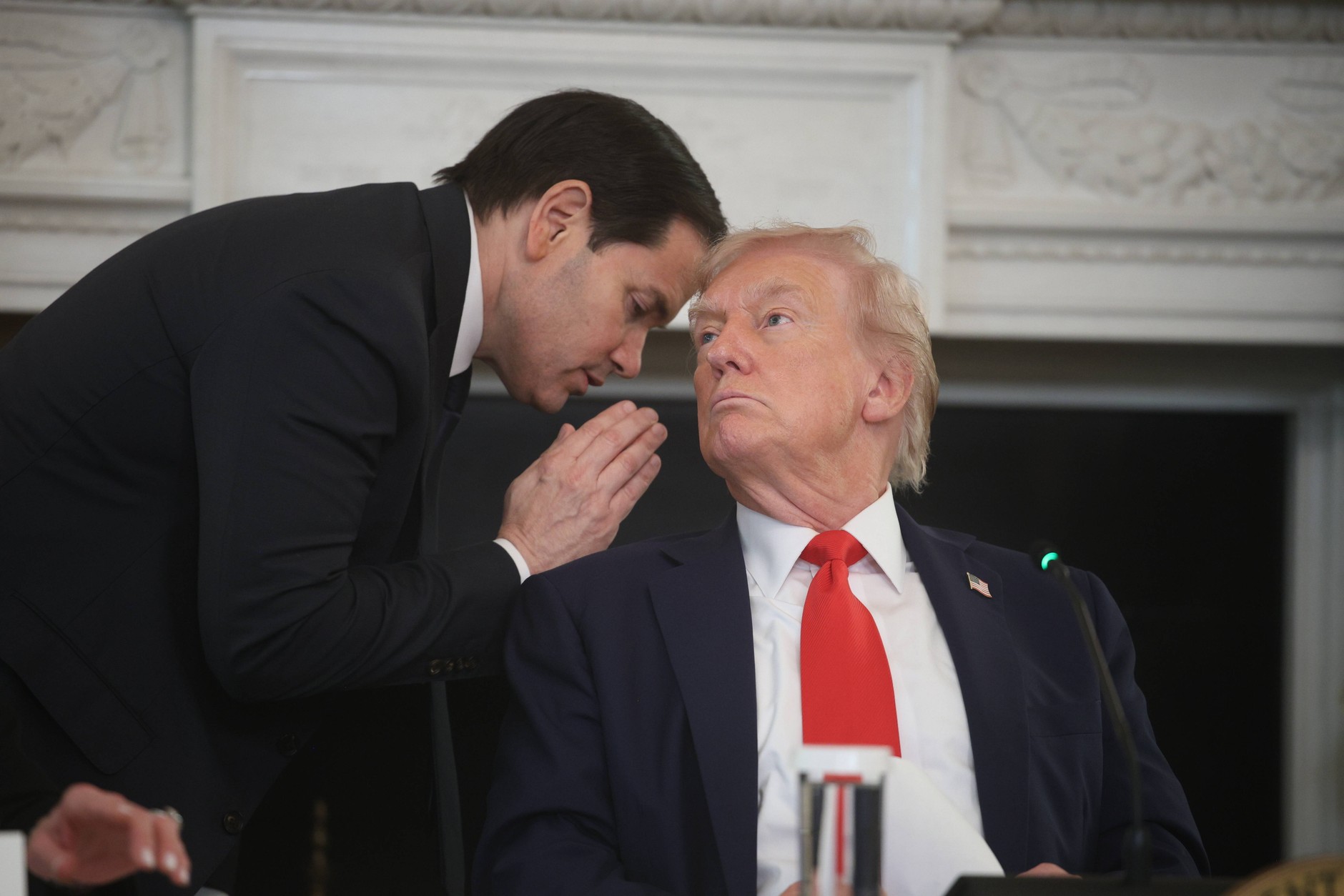
Marco Rubio, US Secretary of State, and President Donald Trump. Washington, October 8, 2025EPA/FRANCE CHUNG / POOL / PAP
Who benefits from war?
Unless the causes of the war are more obvious than we think. This thesis was put forward by MSNBC TV presenter Rachel Maddow on the day of the attack. She pointed out that attacking Iran was not in the interest of Americans, but it was in the private and business interests of Trump and his group of powerful friends. The war was started because it had to be started to secure these interests. This would explain why Iran flared up just a day after the Omani foreign minister said in an interview with US media that he believed an agreement was close.
The subsequent peculiar discrepancies in the narrative about the origins of the war presented by various members of the administration may also prove that Maddow's suspicions were correct. It is no coincidence, Maddow explained, that Trump's powerful friends from the Persian Gulf region are also Tehran's greatest enemies, next to Israel.

“Tygodnik Przegląd” No. 11Weekly Review
Last year, Trump received a bribe worth $400 million from Qatar. plane, and the son of presidential war emissary Steve Witkoff's investments in the Witkoff family ventures. Saudi Arabia invested $2 billion. into Trump's son-in-law's company as soon as Trump finished his first term. The United Arab Emirates a few days before the inauguration of Trump's second term bought 49% for half a billion dollars. shares in his sons' investment company, thus significantly strengthening its position on the cryptocurrency market.
Let's not forget one more thing. “As an ordinary citizen, Trump repeated in 2011, 2012 and 2013 that then-president Barack Obama would start a war with Iran to strengthen his re-election chances. (…) Today, in the face of his own political disaster in the upcoming elections, he did it himself,” concluded Rachel Maddow (“Who benefits from Trump's war in Iran? The answer is disturbingly clear”, MS NOW, February 28, 2026).
The war, predictably, has not been limited to Iran and is spreading dangerously around the world. It is hard to believe that a country that until recently was the world's stabilizer is now the one that is sowing chaos and destruction in it.