Oil prices continued to rise on Thursday despite major countries agreeing to release a record amount of oil from strategic reserves in a bid to cushion the impact of the Iran war.
Brent crude rose nearly 9 percent to over $100 a barrel in Asian trade, even after all 32 members of the International Energy Agency (IEA) announced they would release 400 million barrels in response to supply concerns.
Brent is used as a benchmark for the price of about two-thirds of internationally traded crude oil. It is the standard reference for Europe, Africa, the Middle East and most seaborne crude oil contracts
Iran has warned that oil could reach $200 a barrel
Iran warned on Wednesday that oil could hit $200 a barrel as its attacks on ships escalate in the Strait of Hormuz, a key waterway for energy shipments.
A spokesman for the Islamic Revolutionary Guard Corps (IRGC) said any ship linked to the US, Israel or their allies would be targeted.
“You will not be able to artificially reduce the price of oil. Expect an oil price of $200 per barrel,” the spokesman said.
“The price of oil depends on regional security, and you are the main source of insecurity in the region.”
The narrow shipping route is crucial to the global economy, as about a fifth of the world's energy supply passes through it.
IEA members account for approximately two-thirds of global energy production and consumption.
The release of reserves is more than double the previous IEA record, which came after Russia's invasion of Ukraine in 2022.
The IEA's decision is “historically significant” but is only a “temporary buffer”, said Martin Ma of the Singapore Institute of Technology.
Oil prices will remain high as long as there is a risk to supply, and the latest rise suggests traders still expect a “prolonged” disruption, he added.
Global oil markets have been extremely volatile since the US and Israel launched airstrikes against Iran on February 28, with Brent crude reaching nearly $120 a barrel earlier this week.
That has driven up fuel prices around the world, which will feed into almost all other prices, including food.
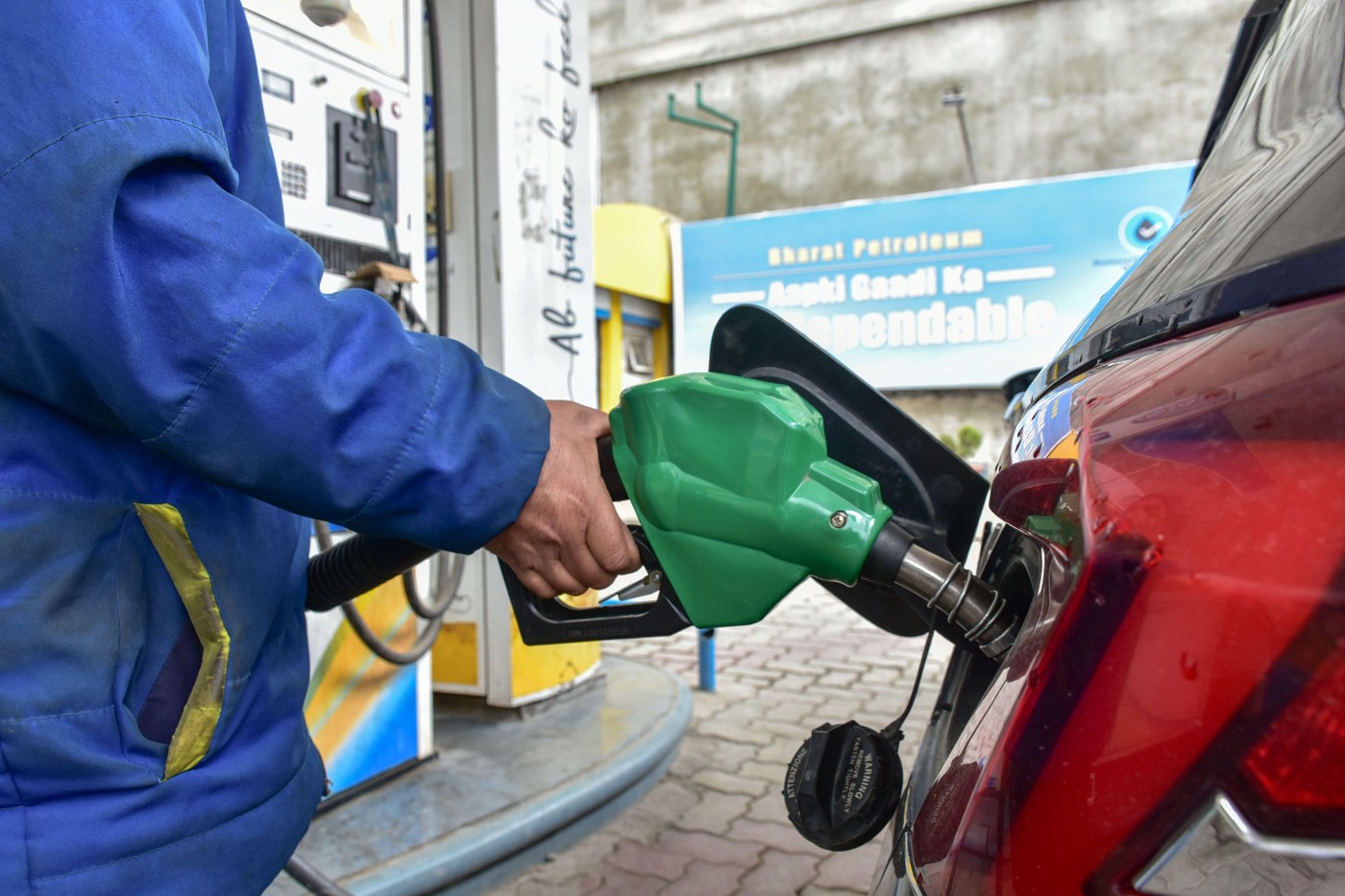
In the US, the average price of gasoline rose above $3.50 a gallon on Tuesday, according to the American Automobile Association.
Many countries in Asia, which depend heavily on Middle Eastern energy, have been particularly hard hit.
Long lines were seen this week at gas stations in the Philippines, Thailand and Vietnam as people rushed to fill up.
Thai authorities have asked staff in most government agencies to work from home to save energy. Officials are also discouraged from traveling abroad.
The Philippines also started a four-day work week for the government to help reduce energy consumption.
The Five Major Oil Shocks
1973 – The embargo imposed by OPEC
The first major oil shock in modern history was caused by the OPEC Arab countries' embargo against Western economies that supported Israel in the Yom Kippur War.
Oil prices quadrupled within months and the West entered a period of stagflation. This crisis led to the creation of the International Energy Agency (IEA) and the first coordinated strategy on energy reserves.
Lesson: Energy dependence can be turned into a geopolitical weapon.
1979 – Iranian Revolution
The second shock came with the overthrow of the Shah and the Iranian Revolution. The collapse in Iran's production caused another spike in oil prices.
Western economies went into recession and central banks had to raise interest rates dramatically to reduce inflation.
Lesson learned: Even the loss of some production by a large producer can destabilize the global economy.
1990 – The Gulf War
Iraq's invasion of Kuwait led to further turmoil in the energy markets. Oil prices doubled in a few months.
The shock proved to be relatively short-lived, however, as US military intervention quickly restored oil flows.
Lesson learned: When a geopolitical crisis has a clear military solution, markets recover faster.
2003 – Invasion of Iraq
The US invasion of Iraq in 2003 sparked new uncertainty in energy markets at a time when demand for oil was growing rapidly due to China's development.
Prices began to rise gradually, and over the next five years they reached all-time highs.
Lesson: Geopolitical instability in major oil-producing regions can fuel long-term bullish trends.
2022 – The war in Ukraine
The Russian invasion of Ukraine caused the biggest energy shock in Europe since the 1970s. Natural gas and oil prices have skyrocketed, while European economies have been forced to look for alternative sources of energy.
The crisis accelerated the energy transition, but also the rearrangement of global energy flows.