
March 11 16:00
Scientists from the Siberian Federal University and the Federal Siberian Scientific and Clinical Center of the FMBA of Russia and colleagues from Sweden have developed a new way to “photograph” ultrafast processes inside molecules. The opening was reported in the press service of Siberian Federal University.
“If optical lasers have gone from laboratory curiosity to everyday technology in half a century—from printers to microsurgery—then X-ray free electron lasers are at the beginning of this path. These are still gigantic installations, accessible only to a few laboratories in the world. But their potential may be even greater: X-rays “see” the world on the scale of individual atoms and record processes lasting femto- and attoseconds,” explained Sergei Polyutov, director of the International Research Center for Spectroscopy and Quantum Chemistry of the Siberian Federal University.
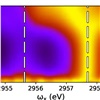
Modern X-ray lasers make it possible to “record” the movements of electrons inside atoms and molecules in femtoseconds. However, it is extremely difficult to observe these processes directly: the amplified X-ray radiation travels forward along with the laser pulse and is difficult to separate from the original signal.
“We proposed an elegant solution: instead of directly observing the main X-ray beam, we would “listen for echoes” – detect weak secondary radiation emitted perpendicular to the main beam. This is similar to how you can determine the shape of a room by the sound reflected from the walls, even without seeing it directly,” said SFU graduate student Svyatoslav Blinov.
Experts believe that this knowledge will help create batteries with higher capacity and charging speed for electric vehicles and gadgets, develop more precise medicines with minimal side effects, bring closer the creation of superconductors that work at room temperature, and design new catalysts and nanomaterials.
Essentially, the method gives researchers a “time-lapse” of the nonlinear X-ray processes that underlie future technologies. Its main advantage of the method is practicality. The technology can be implemented now on existing X-ray lasers, including the European XFEL, where a unique spectrometer with a spatial resolution of 15 micrometers is installed.
“We have created a kind of “X-ray oscilloscope” that allows us to see what was previously hidden from the eyes of researchers. It’s as if for the first time we had the opportunity to observe the movement of electrons inside molecules – a movement that determines the properties of everything that surrounds us,” said Viktor Kimberg, leading researcher at the Federal Siberian Scientific and Clinical Center of the Federal Medical and Biological Agency of Russia.
The research results were published in the journal Physical Review Research. The work was carried out with the support of the Russian Science Foundation.
Newslab now in MAX. News is also published in OK | VK | Zen | Telegram
Related links: