NBP gold and armaments. Who manages the reserves and how the central bank wants to generate billions


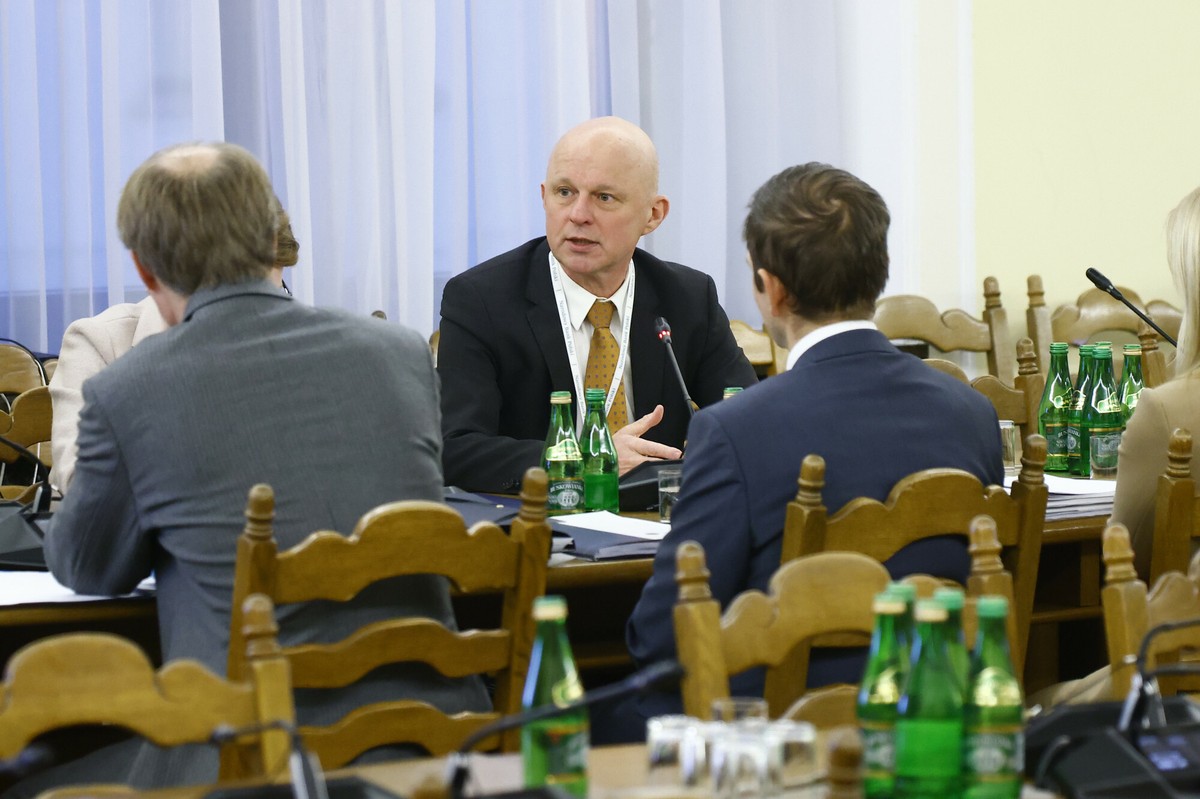
Although the face of SAFE is zero percent. is president Adam Glapiński and president Karol Nawrocki, someone else will have the most say in the possible implementation of the idea. This is Paweł Szałamacha, Minister of Finance in Beata Szydło's government, who has been a member of the NBP management board for 10 years.
How to generate money for armament using the reserves of the National Bank of Poland? We described the mechanism in Business Insider Polska on Tuesday afternoon.
— Concept assumes that the central bank will become an active player on the gold market and will actively manage gold reserves. This means selling and purchasing gold almost every day. Each sale will allow you to record a real profit from reserves. There is high volatility in the gold market and this allows such transactions to be carried out profitably, he adds and says that such behavior of the central bank will not violate any national or EU regulations, our source explained.
The interlocutor emphasized that the central bank can carry out such transactions for years and thus generate profits.
— Additionally, the NBP will have control over what the profit from gold may be, whether it is PLN 10 billion or PLN 50 billion. The NBP will not suddenly rush into a transaction in which it wants to sell 50 or 100 tons of gold, because this would significantly collapse the price of the precious metal, we heard.
NBP, who is it?
Okay, but who exactly would manage the reserves, including gold? Not necessarily president Adam Glapiński. There are special departments in the bank's structure for this purpose.
In the context of the mechanism described, the most important are: the Department of Foreign Operations and the Department of Financial Risk Management. The first one is managed by Donald Malicki, and the second one by Juliusz Jabłecki.
However, both departments are supervised by a delegated member of the NBP management board. He is Paweł Szałamacha, former Minister of Finance in Beata Szydło's government. He is the first head of this ministry after PiS took power in 2015.
It was at the end of his term that, among others, implementation of the Standard Audit File, a solution that greatly contributed to tightening the tax system. Although the law introducing this instrument was passed in the fall of 2015 by the PO-PSL coalition, the system was launched by the PiS government.
Szałamacha also became famous for his bet with the then head of the Civic Platform parliamentary club, Sławomir Neumann. From the parliamentary rostrum, politicians argued about the 2016 budget.
Neumann argued that the project proposed by Szałamacha was unrealistic. The minister, in turn, defended his position and proposed a bet of PLN 10,000. PLN that the income and deficit will be achieved. Ultimately, the current member of the NBP management board was right.
This is what reserve management is supposed to look like
But let's get back to possible trading in gold reserves. And not only that. This process is described in detail in the Foreign Exchange Reserves Management Strategy. This is a document from 2020.
As economist Rafał Mundry points out, at the moment it does not talk about selling and trading gold, but only about buying additional tons. This is what the NBP has been doing regularly in recent years.
See also: Poland is a powerhouse when it comes to gold reserves. Will Karol Nawrocki use it?
Foreign exchange reserves are not only foreign currencies (although they constitute a large part), but also gold. To understand the role of Paweł Szałamacha, you need to study the mechanism step by step.
It is described in an article in “Obserwator Finansowy” (a website published by the National Bank of Poland) by Beata Berłowska, head of the department in the Risk Monitoring Department in the Financial Risk Management Department of the National Bank of Poland, and Juliusz Jabłecki, director of the Financial Risk Management Department of the National Bank of Poland.
They are both involved in the entire process as representatives of a key NBP department. As they explain, the management of NBP foreign exchange reserves takes place as part of a three-stage decision-making process.
“The first stage is the Strategic Asset Allocation, approved by the NBP Management Board (Paweł Szałamacha is a member – ed.), defining the long-term assumptions of the investment process, including, above all, the acceptable level of financial risk,” we read.
Next comes Tactical Asset Allocation remaining under the responsibility of the Foreign Exchange Reserves Investment Committeewhich “specifies the parameters of the tactical benchmark at least once a quarter.”
“The goal of Tactical Asset Allocation is to take advantage of medium-term changes in the financial market to achieve a higher rate of return,” they explain.
The last stage of the decision-making process is Active Portfolio Management, i.e. “the current investment policy implemented by the operational department, aimed at achieving a rate of return higher than the tactical benchmark”.
In this way, the NBP would manage reserves (implicitly: trade in gold) to generate the highest possible profit.
“The biggest challenge in this approach there is the so-called market parameters using available qualitative tools (macroeconomic leading indicators, risk analysis, early warning signals) or quantitative tools (technical or econometric analysis),” they conclude.