
An oil shock would quickly be transmitted to inflation in Romania, says a BNR vice-governor


The escalation of the conflict in the Middle East and the increase in oil prices could have effects on inflation and the European economy, including on Romania, warns the vice-governor of the National Bank of Romania, Cosmin Marinescu.
According to him, a permanent 10% increase in oil prices would add about 0.3 percentage points to annual inflation, which could force economists to revise current forecasts.
The message was sent at the opening of the “Rethink Romania” conference, hosted at the National Bank of Romania.
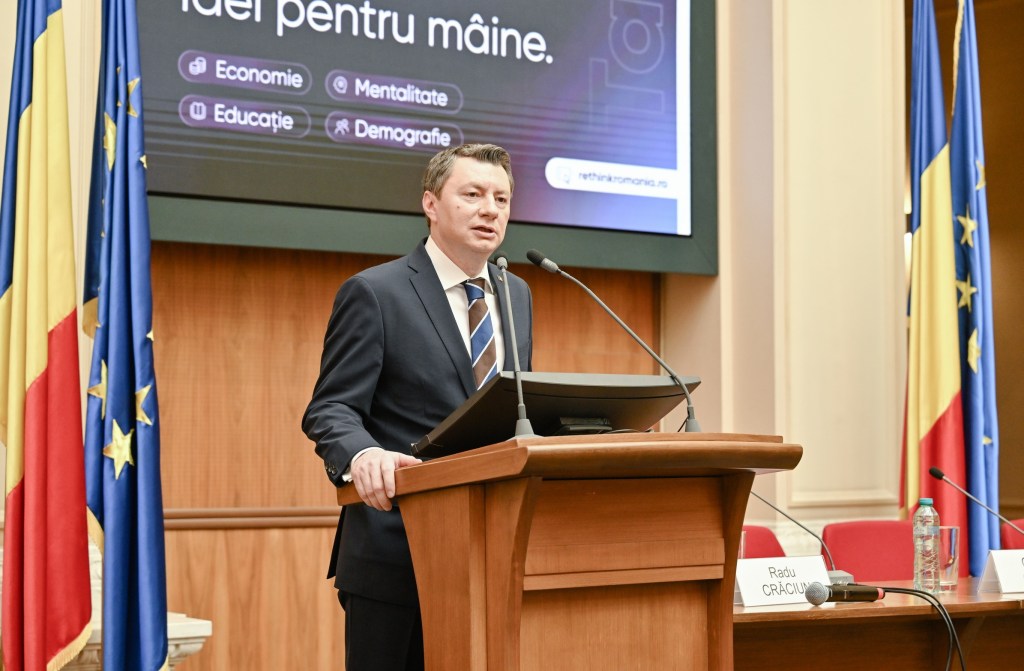
War in the Middle East increases global uncertainty
The vice-governor of the BNR believes that the deterioration of the security situation in the Middle East amplifies the economic volatility at the global level, especially in the energy and financial markets.
“The worsening of the security situation in the Middle East severely amplifies the uncertainty and increases the volatility at the global level, especially in the markets of energy products”, explained Marinescu.
According to him, if the conflict drags on, the economic impact could become persistent and spill over to European economies through multiple channels — particularly through rising energy prices.
Romania imports relatively little oil, but it does not escape the effects
From an energy point of view, Romania is in a relatively better position than other European economies.
Romania's net dependence on oil imports was approximately 1.5% of GDP in the period 2022-2024, and in 2025 it could decrease to 1% of GDP, according to BNR estimates.
However, the economy remains vulnerable through indirect effects on the prices of consumer goods.
“Exposure to the consumer goods price channel remains an important one,” the deputy governor warned.
BNR: Fiscal consolidation is not optional
In his speech, Cosmin Marinescu insisted on the need to reduce the budget deficit, which he considers essential for economic stability.
“There is no rational alternative to the need to strengthen public finances,” he said.
According to the vice-governor, reducing the budget deficit is crucial for the credibility of economic policies, macroeconomic stability, reducing inflationary pressures and limiting sovereign risk.
Romania continues to face high deficits, both on the budgetary and external side, says the vice-governor.
The current account deficit narrowed only slightly in 2025 to 7.95% of GDP from 8.2% of GDP in 2024, despite the fiscal adjustment.
The economy is starting to change: investments are gaining ground
Marinescu showed that the structure of economic growth is starting to change.
In 2025, Romania's economy grew by approximately 0.7%, and the contribution of investments was greater than that of consumption: investments contributed 1 percentage point to growth, while consumption contributed 0.4 percentage points.
This change is important because it indicates a transition to a more sustainable economic model.
“We must accelerate this path of economic growth, through measures that expand the competitiveness of the business environment and revive production,” said Marinescu.
“2026 must be the year of European funds”
Another central message of the speech was the role of European funds in Romania's economic stability.
According to the vice-governor of the BNR, European financing reduces the pressure on the public budget and stimulates private investments.
In total, Romania benefited from almost 100 billion euros from European funds, which contributed significantly to economic development and to the management of certain periods of crisis.
In this context, Marinescu emphasized that 2026 should be the year of accelerating the absorption of European funds, especially in the context of the approaching deadline of the PNRR program.
An important signal: the rapid adoption of the 2026 budget
The vice-governor of the BNR said that the quick adoption of the budget for next year is important for strengthening confidence in the state's economic policies.
“We hope to soon have the budget for 2026, which will provide a signal of political and economic stability, particularly important in these complicated times”, concludes Cosmin Marinescu


