Europe's missed opportunity. Cars disappear without a trace. Others rub their hands


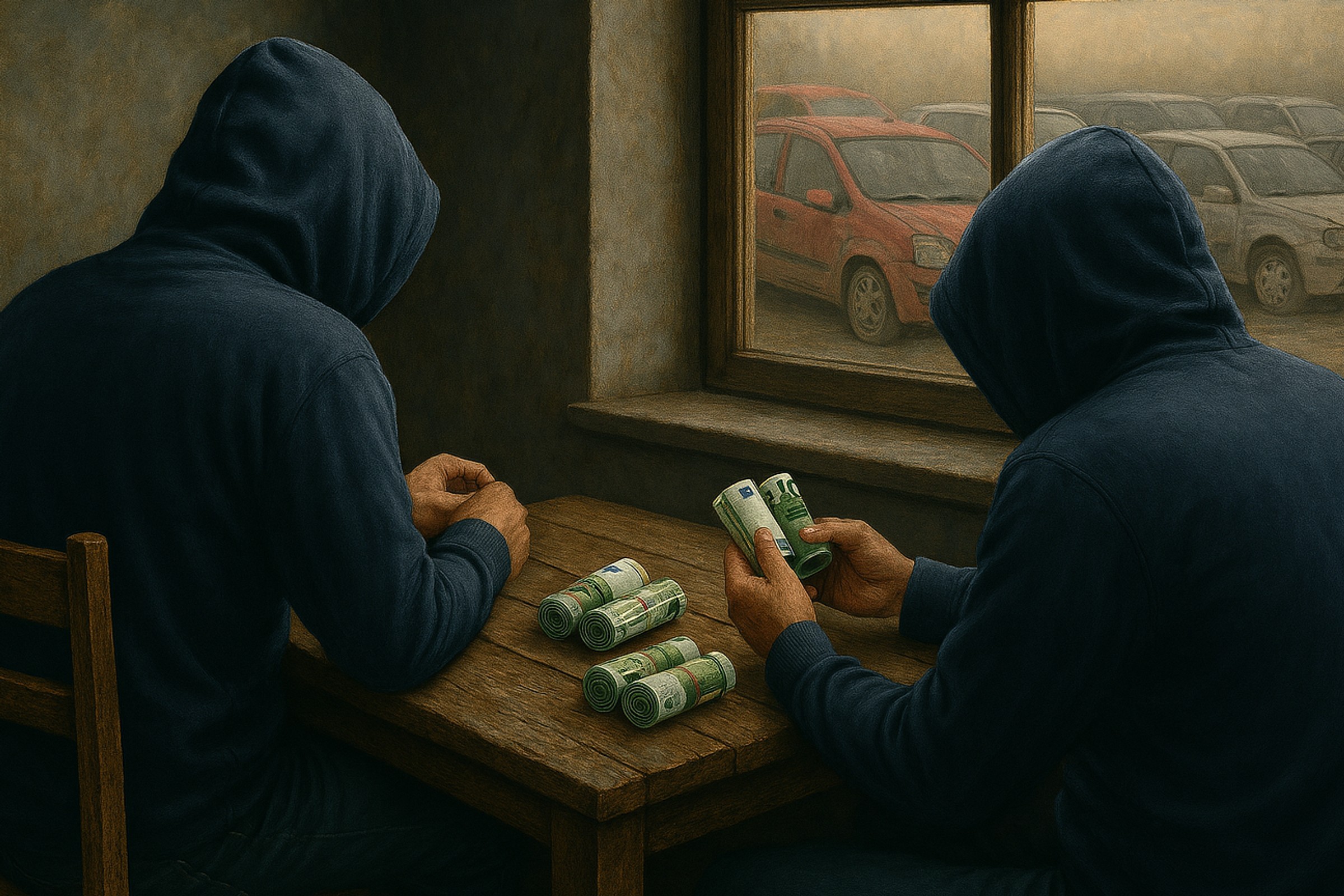
Car showrooms in this industrial district in southwest Brussels ship European used vehicles – many of them too polluting to drive on the continent's roads – to African countries such as Senegal, Sierra Leone and Nigeria, where the market for unwanted cars from Europe is booming.
One day, these cars will end up in distant scrapyards, and with them tons of valuable metalswhich the EU could recycle and reuse to power its economy. All the more so because the community wants to become independent from raw materials imported from China. The EU is trying to fight shady businesses, but progress is too slow.
– We have enough dishonest entities in our industry who are ready to cooperate with a completely illegal market – thunders Emmanuel Katrakis, director of public relations and regulations at the recycling company Galloo in Belgium.
The EU is struggling to secure new sources of metals and minerals needed for clean energy and military technology – a task that is becoming more urgent as geopolitical tensions disrupt traditional supply chains.
For a small continent like Europe, poor in natural resources but rich in consumer goods, old cars are a promising source of these materials. These vehicles contain many metals such as copper, platinum and steelwhich are essential to many key industries such as clean energy and military technology. They will become even more valuable as the first generations of electric vehicles – full of battery metals such as lithium, cobalt and nickel – reach the end of their life cycle.
However, the EU does not take advantage of this perspective. Apart from legally exported vehicles Every year, 3 to 4 million end-of-life cars disappear from the EU without a trace.
This is one third of all cars deregistered. Some of them get lost due to gaps in documentation. Others are exported through obscure trade routes. Many are illegally dismantled, with more valuable parts sold online or at non-compliant car dealerships, and the rest thrown away, posing a risk of environmental pollution.
“We see large and currently untapped potential in recycling, reusing and replacing critical raw materials,” says Keit Pentus-Rosimannus, a member of the European Court of Auditors who last month co-authored a report on the EU's difficulties in securing supplies of critical raw materials.
However, recycling and reuse can only take place if waste, such as cars, goes to recycling centers first.
“Illegal dismantling and export [pojazdów wycofanych z eksploatacji] are mainly motivated by profits from the sale of spare parts and metals,” writes the German Environmental Protection Agency in a 2020 study on the subject. Unauthorized dismantlers “neglect proper cleanup to avoid additional costs,” the study explains.
In a separate paper published in 2022, the agency estimated that 20 percent all German vehicles that “disappear” – over 72 thousand cars – are illegally exported.
According to Interpol data, as of December 31, 2025, almost 3.6 million vehicles and car parts from Europe – not only from EU countries – were registered in the stolen motor vehicle database.
Europe's missed opportunity
The EU has made materials recycling a strategic pillar of its mission to reduce dependence on imports from China in an increasingly hostile geopolitical environment.
The European economy is based on the import of key raw materials such as nickel, copper and lithium, as well as rare earth metals and the so-called metals from the platinum group, such as palladium or platinum. It needs them to produce car engines, weapons and products that contribute to the bloc's transition to green technology, including batteries, chips and solar panels.
Although these metals are mined around the world, China overwhelmingly dominates the processing and refining of these key raw materials.
To solve this problem, the European Commission says it wants to launch new mining projectssign agreements with other countries to diversify supplies and promote recycling projects.
With the introduction of the Critical Raw Materials Act in 2024, EU governments will be required to adopt national circular measures to increase the recovery of critical raw materials and simplify the authorization processes for recycling and recovery projects.
The act stipulates that by 2030, 25 percent annual consumption of strategic raw materials in the EU should come from domestic recycling. Last December The Commission announced additional measures under a new plan called RESourceEU.
However, many people claim that progress is too slow. — Most existing EU targets do not encourage the recycling of individual materials. High processing costs, limited availability of materials, technical and regulatory issues also make the recycling sector less competitive, says Pentus-Rosimannus of the Court of Auditors.
Others say the EU is doing little to reduce consumption. Policymakers must “address the issue of consumption [materiałów]to speed up this process, in addition to all the other activities we are taking on recycling,” explains Daniel Montalvo, head of the clean and circular economy group at the European Environment Agency. EU policy should address “how we can change this initial part of the material cycle so that we can use products more intensively and for longer,” he adds.
Recycling companies need help
All end-of-life vehicles should go to one of the 13,000 authorized treatment facilities in Europe, such as the one in Menen, Belgium, which is located on the border with France and is run by the recycling company Galloo.
— We can dismantle 17 cars at a time here. We usually process between 10,000 and 15,000. cars per year, but this year it is about 3 or 4 thousand. at this plant – says Emmanuel Katrakis, director of public relations and regulations at the company.
In 2023, Galloo formed Valorauto, a joint venture with French-Italian automaker Stellantis. Valorauto provides vehicle collection and recycling services through 300 authorized treatment facilities in Western Europe.
Low turnover in Europe's car fleet – the result of stagnant sales since the COVID-19 pandemic due to Europe's weaker economy – means fewer cars are ending up at recycling centers.
When vehicles arrive in a place that can only be described as car graveyardthey are cleaned of contaminants and dismantled into parts. Most plastics, rubber, glass and iron are recyclable.
Most importantly, more valuable raw materials can be recovered from engines, catalytic converters and electrical systems. Two thirds of vehicles that have reached the end of their life enter this system.
But running a recycling center is expensive. Illegal dismantling centers create unfair competition because they avoid regulatory and compliance costs, driving down prices while diverting part of the end-of-life vehicle stream – and therefore revenue – away from authorized centers.
We have enough dishonest entities in our industry who are ready to cooperate with a completely illegal market
– Katrakis thunders.
Cars also come with missing parts. — We buy their cars for 150 euros [ok. 632 zł według obecnego kursu walut]maybe 200 euros [843 zł]but they know that they can sell the catalytic converter separately for 60 euros [253 zł]. They calculated it, he adds.
According to Valorauto CEO Thomas Delgado, online marketplaces should be held responsible for enabling the gray market of car dismantling. Moreover, he believes that they do not adequately monitor sellers. — There are several platforms that should do their part to help [nam] fight this system, he emphasizes. The idea is to prevent individual sellers from selling car parts unless they can prove they are registered as authorized processors.
This is what they come up with faulty registration systems in Europe. Many of these cars disappear because they are sold second-hand in another country but are never deregistered in their country of origin. “We currently have national computer systems to track such cases, but they are completely overloaded,” Delgado says.
There are also gaps between car records and the database of insured vehicles. Responsibility for monitoring these systems often lies with several national ministries.
National governments have tried to solve this problem by creating incentives for car owners to take their vehicles to authorized points. For example, in Denmark, owners can receive a “scrapping bonus” when they take their vehicle to an authorized dealer.
At EU level, the new End-of-Life Vehicle Regulation aims to address this issue with “clearer rules on the distinction between used and end-of-life vehicles” and a “strict framework on the transfer of ownership”. However, some technical aspects of this law are still under debate. The law also aims to clarify when a car is legally considered waste.
The automotive sector welcomes the fact that the EU will “implement an EU-wide vehicle registration/deregistration system and regulate the export of end-of-life vehicles outside the EU, preventing valuable raw materials from leaving the European market,” according to ACEA, the sector's main lobby.
Second life
According to EU data, over 800,000 products are exported from the EU every year. used vehicles, mainly to African countries.
The revised End-of-Life Vehicles Regulation states that only roadworthy cars can be exported from the EU.
However, just because a car cannot be driven on the streets of a European city does not mean it should be scrapped immediately.
“It's important to make this distinction because they're not necessarily at the end of their life everywhere,” says Pierre Hajjar, CEO of Socar Shipping Agencies, a vehicle transport company based on Heyvaert Street in Brussels.
Last December local police raided the street, confiscating 45 vehicles and forcing several car dealerships to close due to failure to comply with national regulations on cash payments or lack of appropriate environmental permits.
With revised end-of-life vehicle rules, the EU wants to increase traceability so that “only high-quality, technically sound European vehicles are exported.” However, according to Hajjar, this is already the case in African markets.
— In Africa, everything is transported by ship, everything is very easy to track, he explains. Port authorities and shipping companies have high requirements regarding the types of vehicles that can be exported.
– However, in eastern countries, transport is carried out by road… There is really no traceability there, and vehicles cross borders quite easily – he adds.