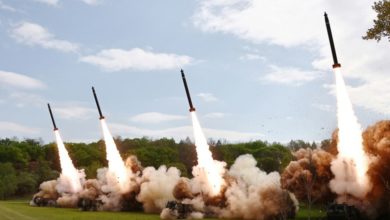
Iran is targeting the radars that serve as the “eyes” of air defenses in the Middle East, striking several such systems in recent days, diminishing the ability of the US and its allies to detect enemy missiles, the WSJ reports.
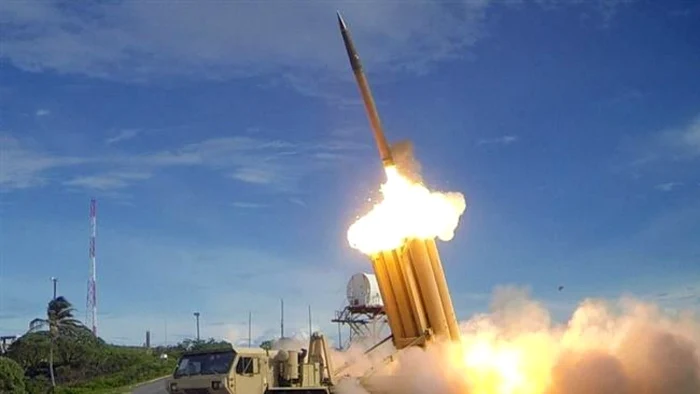
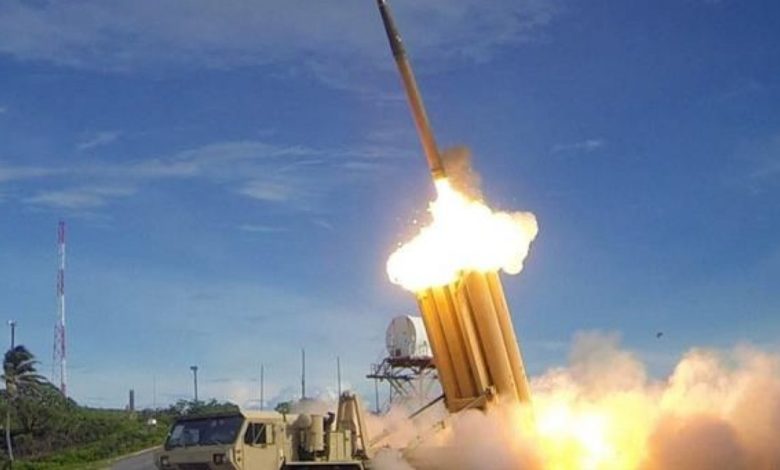
THAAD missile defense system stock photo
The Iranian strikes, launched in retaliation for the US and Israeli bombing campaign, targeted radar, communications and air defense systems in Qatar, the United Arab Emirates, Jordan, Bahrain, Kuwait and Saudi Arabia, according to US officials, military analysts and commercial satellite images.
Such attacks are frequently carried out with kamikaze drones, such as the Shahed models, which cost a fraction of the price of the missiles for which the sophisticated US systems were designed. Iran has launched fewer missiles in recent days.
“Overall, our defenses are working pretty well. However, it's clear that the Iranians have a clear idea of what kind of targets they want to continue to hit, and that includes command and control centers and our ability to detect enemy missiles and drones,” explained Ravi Chaudhary, former assistant secretary of the US Air Force for installations.
A spokesman for US Central Command said the military remains at full combat capability despite the Iranian attacks. The US is beefing up its defenses in the region by sending additional equipment and interceptors, US officials said.
The US claims it is diminishing Iran's ability to launch attacks on a daily basis. Admiral Brad Cooper, the commander of US forces in the Middle East, said Thursday that ballistic missile attacks have dropped by 90 percent and drone attacks by 83 percent since the start of the war.
The US and its partners in the region use a network of THAAD, Patriot and other air defense systems to intercept missiles, drones and missiles launched by Iran and its affiliated militias. These batteries depend on radar to detect targets, and the systems are rare and expensive. The conflict has also depleted stocks of interceptors used by the US to repel missile attacks.
Damaged high-value radar systems
One of the most significant strikes damaged a sophisticated early warning radar system at the Al-Udeid base in Qatar, which is home to the largest US military base in the region. The attack damaged the AN/FPS-132 radar, rendering it inoperable, according to satellite imagery and a US official.
The AN/FPS-132 radar is designed to track multiple targets simultaneously and is one of five such fixed systems in the North American early warning network, which protects the US from enemy missiles, according to the International Institute for Strategic Studies. The system can cost up to $1 billion.
“These are rare strategic resources,” pointed out Thomas Karako, director of the Missile Defense Project at the Center for Strategic and International Studies in Washington.
Satellite images captured by Planet Labs show damage to Qatar's radar facility. The photos show debris on the northeast side of the radar, facing Iran, along with water leaks, likely from firefighting efforts, according to Sam Lair, a researcher at the James Martin Center for Nonproliferation Studies.
“This demonstrates the fragility of such advanced radars,” said Lair, who published an analysis of the satellite image.
Iran also hit a TPY-2 radar attached to a THAAD battery in Jordan, according to satellite imagery and a US official. Satellite images reviewed by the Wall Street Journal show damage to three radar systems at Camp Arifjan, a base used by US forces in Kuwait, as well as damage to a satellite communications system at the US Fifth Fleet headquarters in Bahrain.
In Saudi Arabia, a March 1 satellite image shows smoke rising from a radar installation building at Prince Sultan Air Base.
Missile Defense Challenges
Key US radar systems are strategically deployed around the world to protect against threats from Iran, North Korea, Russia and other adversaries. The US Navy also has several guided destroyers in the region capable of taking down ballistic missiles and other aerial threats.
These systems have played an important role in the current conflict with Iran. When Iran fired a missile at a military base in Turkey where the U.S. stores nuclear weapons, a U.S. radar in southeastern Turkey detected the missile and relayed the alert to a U.S. ship in the eastern Mediterranean, which shot down the missile. The radar in the town of Kürecik had been installed by the Obama administration to bolster NATO's defenses against Iran.
The US military has only seven operational THAAD batteries, including two in Guam and South Korea. Of the five rotating US THAAD batteries, two are in the Middle East – in Israel and Jordan – to counter Iranian threats. An eighth THAAD battery was delivered last year but is still undergoing testing, officials said.
Saudi Arabia and the United Arab Emirates have purchased their own THAAD systems from the US and have said some of them are operational.
In many attacks, Iran has used kamikaze drones that explode on impact. Flying low and slow, drones are difficult to intercept by some traditional air defenses. Drones have played a central role in Iran's retaliation, hitting oil facilities, military bases and skyscrapers in the Gulf.
Iran is now launching fewer missiles than in the initial wave of attacks, but drone strikes have continued at a sustained pace. After an initial surge of more than 500 drones in the first two days of the conflict, the Emirates have been targeted by more than 100 drones daily, according to the Ministry of Defence.
Both sides have limited stocks of ammunition. Senior Pentagon officials warned before the war that the US and its allies had a limited number of interceptors for air defense. The US Secretary of Defense, Pete Hegseth, however, assured that the US has enough ammunition for the conflict.
Iran is believed to be capable of producing thousands of drones, which it has also exported to Russia. Moscow has used Iranian drones and similar models made in Russia for strikes on Ukraine. Russia also shares intelligence with Iran that could help target military forces.
“The issue of complex and integrated air and missile strikes is about that, and we have to deal with the whole spectrum of threats, not just ballistic ones,” Karako said. “You also need defense for defensive systems.”