Trump and the “Iran ulcer”. An operation to end the era of Tehran. Or set the entire Middle East on fire [ANALIZA]

Trump is drawing new borders — no longer with compasses on a map, but with drones and algorithms, assuming that unresolved problems will not go away on their own. However, winning a war and building a lasting peace are two completely different things.
And this is where the fundamental questions arise.
Trump seems to understand something that the globalists at the State Department did not: a weak, divided Iran is safer for the region than a strong Islamic republic with nuclear ambitions and a network of proxies spread across the Middle East.
Therefore, Trump has given political legitimacy to “decapitation of the state”, turning the elimination of the leadership of a quasi-nuclear state into a standard tool of Realpolitik. In this way, the very idea of state sovereignty was undermined.
By this logic, victory would look like this:
- 1
in five years, Israel lives without an Iranian nuclear threat and without Iranian proxies in neighboring countries;
- 2
Saudi oil flows without Houthi attacks;
- 3
American bases in the Gulf remain in place,
- 4
and a fragmented Iran is plunged into internal disputes.
This is not a utopia – rather a minimum program. Its realistic nature is what makes it attractive to Washington.
The question is not whether such a victory would be desirable, but whether it is achievable at a price the allies are willing to pay and whether it will actually lead to peace.
The most important risks
The Kurdish direction will immediately trigger a response from Turkey, a NATO member with the second-largest army in the alliance. Ankara has been conducting operations against the Kurdistan Workers' Party for decades and views the Kurdish center on its southern border as an existential threat.
The balkanization of Iran may therefore lead to intervention within NATO itself.
The scale of potential destabilization is enormous. At the time of its collapse, Yugoslavia had approximately 23 million inhabitants, Iraq in 2003 – over 25 million. Iran today has over 90 million inhabitants. The destabilization of such a state would not be a local crisis, but an event with tectonic consequences for the entire region.
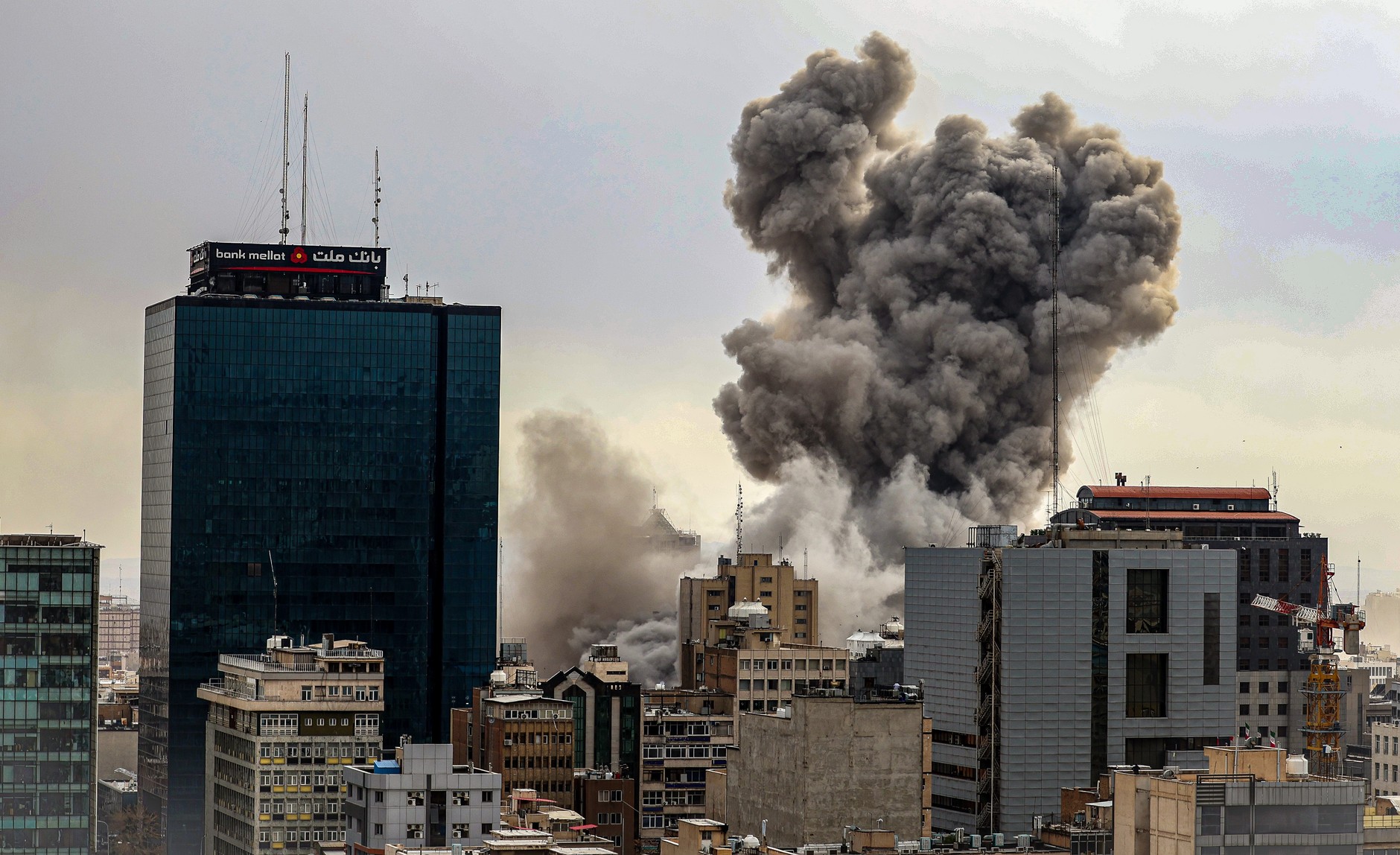
Clouds of smoke over Tehran, March 2, 2026.Contributor / Contributor / Getty Images
Iranian society is highly divided. The regime is not based only on the “hated clique of mullahs and the Revolutionary Guard Corps”, but also on institutions built over 48 years and on 25-35 percent. loyal Shiites from deeply religious provinces and small towns. The remaining 65-75 percent society is divided into numerous environments:
- leftist heirs of the Tude party,
- pro-Western liberals,
- Pahlavi monarchists,
- Piran nationalists
- and ethnic movements.
Israel: war for the strategic peace of the region
For Israel, the current war has a completely different dimension than for the United States.
Israel's strategic culture has been shaped in the logic of a border state surrounded by hostile forces. Since its inception in 1948, every war has been seen not as a fight for influence, but as a fight for sheer survival.
This gives rise to a doctrine that is difficult to understand from the outside: threats must be eliminated before they become irreversible.
For Israel, victory does not mean weakening Iran, but rather dismantling the entire network of his proxies — a system that Tehran has been building for almost half a century.
Iran is losing the battle — but it wants to win the whole game
The attacks on the US embassy in Kuwait and Dubai airport are intended to convey one message: “you won't be safe anywhere”.
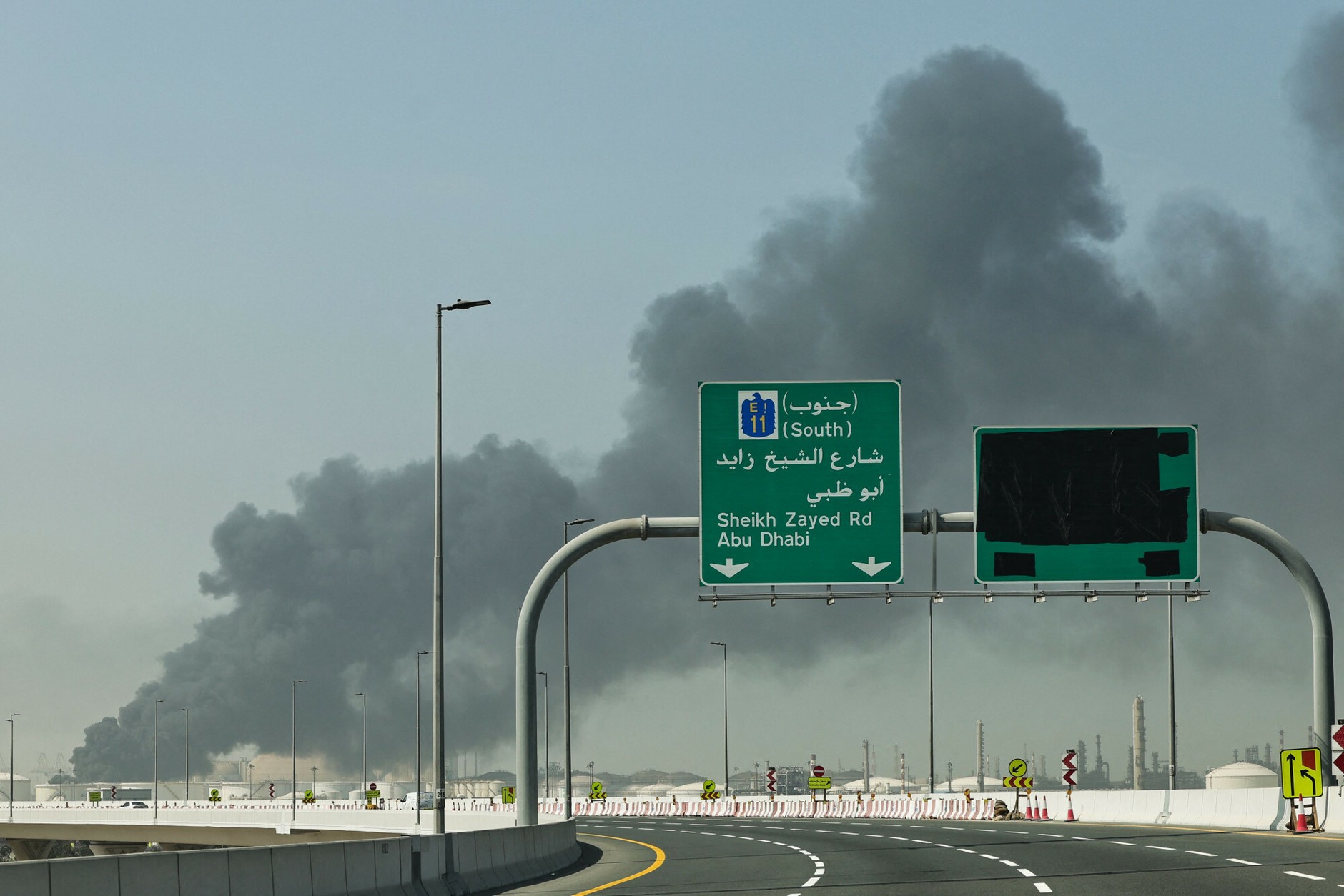
Smoke over Dubai after the Iranian attack, March 1, 2026.FADEL SENNA/AFP/East News / East News
Tehran's strategy is clear: it is not about winning on the battlefield, but about transforming the entire Persian Gulf into a zone of permanent discomfort.
Who wasn't invited to the table?
First of all, Pakistan is a nuclear state bordering Iran. Islamabad will not allow the emergence of a “Taliban empire” on its borders and may enter Iranian Baluchistan to defend its own interests.
The second underestimated player is India, which is investing billions in the Chabahar port and the transport corridor to Central Asia.
Beijing buys the ashes, Moscow fuels the fire
A new player will appear almost immediately in the war-ravaged areas – China. They may recognize the de facto collapse of Iran and turn parts of it into debt-ridden protectorates under the Belt and Road initiative.
Russia, however, can take advantage of the conflict differently: transfer S-400 systems across the Caspian Sea, encourage North Korea to conduct nuclear demonstration tests and activate its regional allies.
However, the biggest beneficiary of this war may turn out to be Vladimir Putin. An increase in the price of oil means more money to wage war against Ukraine.
Even the impossible is possible
Trump did something that seemed unimaginable not long ago. However, the disappearance of Iran does not mean a vacuum – this space will immediately be filled by other players:
- Shiite militias without central command,
- fragments of nuclear materials without state control,
- Turkish divisions in Kurdistan,
- Pakistani and Indian interests in the southeast
- and Chinese engineers with contracts to rebuild the ruins.
And no war ends without negotiations.
Three scenarios are possible:
- 1
Iran's capitulation along the lines of Libya — the new authorities agree to fully dismantle the nuclear program in exchange for the lifting of sanctions.
- 2
China mediation — Beijing acts as a neutral broker, strengthening its position in the Middle East.
- 3
The “Korean” model of freezing the conflict — a de facto ceasefire without a peace treaty and a fragmented Iran functioning as a failed state under informal international control.
Trump will only reach for the phone when the cost of further war exceeds the cost of an agreement. On paper, a U.S. victory still seems possible. In reality, however, his price increases with each additional player who was not previously included.
And the fire of war – as usual – spreads completely differently than planned in the strategists' offices.