Those close to Trump had serious reservations about the option of war with Iran. Revelations about the 180 degree change

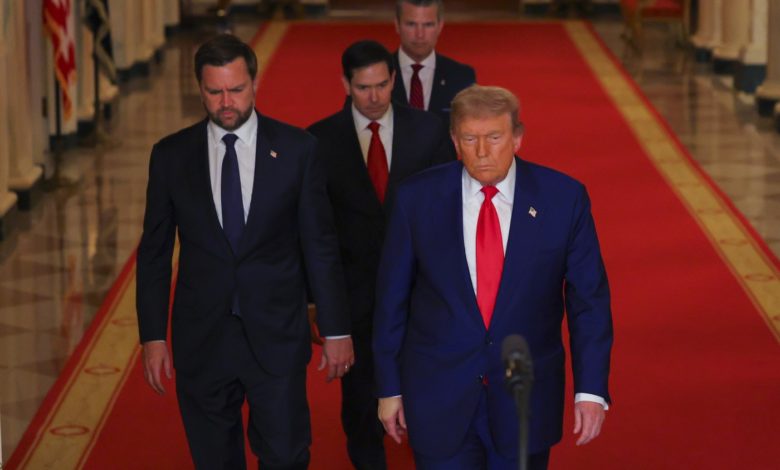
When Donald Trump weighed the possibility of conflict with Iran, many of the most pro-war pleas came from outside the White House rather than from the US president's inner circle. In the end, the more vocal actors were able to cover the more subdued calls for caution, several aides and others familiar with the discussions told CNN, offering new insight into the differences of opinion that existed within the administration before Operation Epic Fury.
When the president first talked about the prospect of war against Iran, some of the most serious reservations were expressed by his immediate subordinates.
Vice President JD Vance, a former Marine who has built a political image as a critic of foreign wars, drew attention to the dangers of an unpredictable new conflict in the Middle East.
Vance radically changed his position
As Trump still appeared to favor the military option, Vance changed his stance, this time urging the president to strike quickly and decisively. The vice president argued that there must be as few American casualties as possible and that Iran must be prevented from striking first.
Vance's shift in position, described by two people familiar with the events, reflected how the president's closest advisers approached a war that few saw as imperative at first, but which all eventually supported.
The Chief of the Joint Chiefs of Staff, Dan Caine, spoke in turn about the potential repercussions of an attack against Iran.
Secretary of State Marco Rubio, already busy dealing with the fallout from the Venezuela operation, offered timid support at first.
Chief of Staff Susie Wiles has spent the past few months focused more on policy matters, planning a midterm election campaign focused on domestic priorities that she feared have been overshadowed by Trump's foreign policy priorities.
Despite expressed misgivings, Vance and other high-ranking officials offered little resistance to the war when they came to see it as inevitable. Thus, they spent the period leading up to the February 28 attack rushing to implement the president's wishes rather than trying to change them.
“This is not a 'rival' White House; the president does not have different political minds at each other's throats in open debate,” said Curt Mills, executive director of The American Conservative, a voice deeply skeptical of foreign intervention. “If the president wasn't willing or able to say no, we were going to war,” he added.
Electoral risks
Those same advisers are now scrambling to craft a long-term strategy for a fight without a clear goal but with many risks for Trump's presidency and, in some cases, their own future political aspirations.
Vance's support for war has alarmed the non-interventionist Republican wing he has cultivated for years in the run-up to the 2028 election.
For Rubio, seen by many as Vance's main challenger for the next Republican presidential bid, a prolonged conflict risks jeopardizing the goodwill he has built up through a string of successful foreign moves during his tenure at the State Department.