Criticism of Trump on Iran War. “The arrogance of power” and “a war of punishment without an end solution”

“We are witnessing a combination of tactical brilliance and strategic confusion,” writes American journalist Nicholas Kristof in a New York Times op-ed about the first week of the Iran war.
- “Power confuses virtue and tends to think itself omnipotent.”
In the first seven days of the conflict in the Middle East, US and Israeli forces have launched thousands of airstrikes that have eliminated Supreme Leader Ali Khamenei and his top commanders. But analyzes by Washington officials point to a tough military campaign without a coherent end.
The hope of change and a warning
“We Iranians wanted this. You don't know what it's like to live under the yoke of one of the most brutal regimes,” one local wrote to New York Times columnist and two-time Pulitzer Prize winner Nicholas Kristof after an article criticizing the attack on Iran.
Such reactions are reminiscent of the enthusiasm at the beginning of the conflicts in Afghanistan and Iraq, where initial military successes did not guarantee stability, but preceded lasting wars with enormous human and financial losses, warns the journalist.
“If some Iranians are celebrating in the streets — so desperate for change that they welcome the bombing of their own cities — should we oppose it?”
For now, the journalist notes, the Iranian regime is not collapsing, but expanding the war. The Iranian people are not overthrowing their government, and the war is spreading throughout the region.
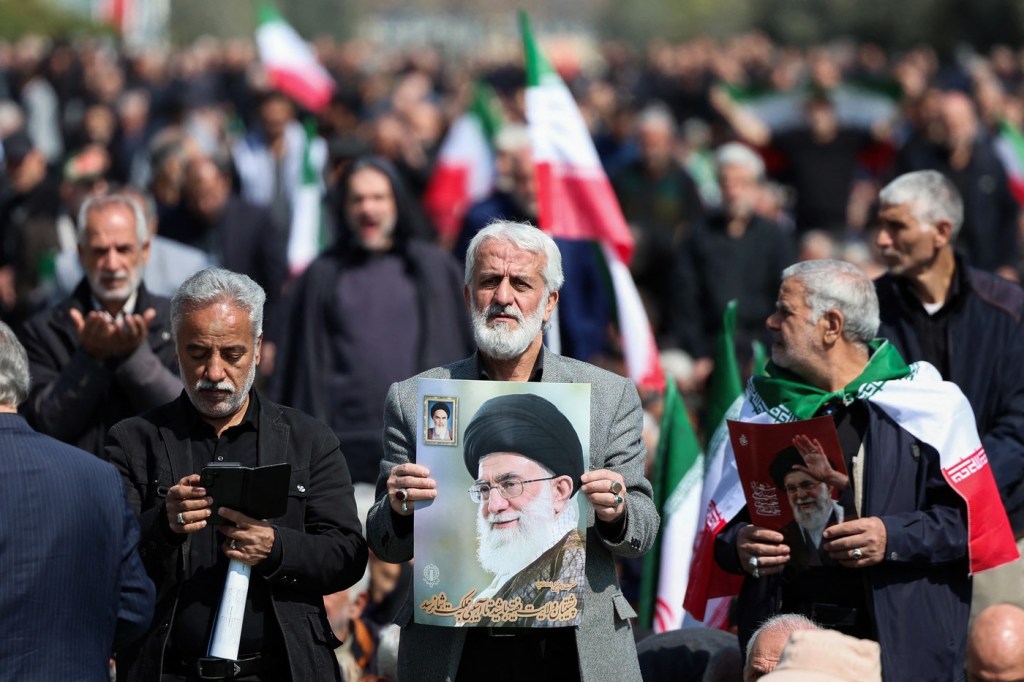
In the first week, clashes have already spread across the region, causing a blockade of shipping through the Strait of Hormuz and a spike in energy prices. Nicholas Kristof notes that, in addition to the loss of life, the operation had cost the United States about $5 billion by the third day of the war.
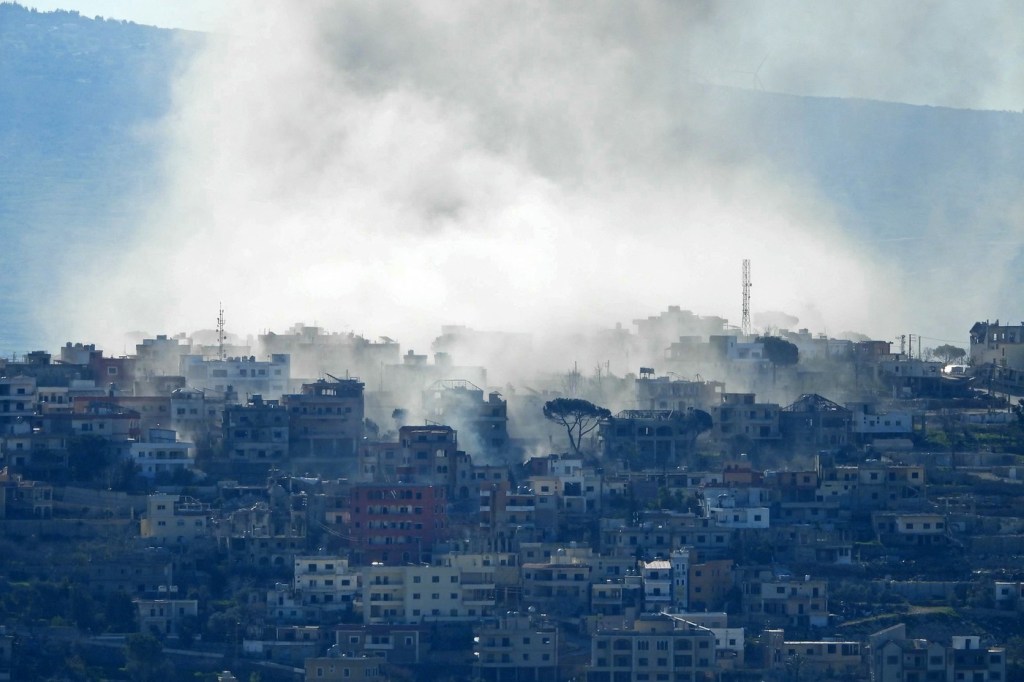
UNICEF also reported that 18,000 children were displaced in Lebanon after the war reached that country.
“The Trump administration could add to the chaos by supporting armed Kurdish separatists, which could push Iran toward civil war.”
A civil conflict in Iran, a country with a population four times that of Syria, could lead to a massive flow of refugees, especially if ethnic fighting spreads to neighboring countries, warns the journalist.
Even though Supreme Leader Ali Khamenei was killed, the journalist notes that he may have seen his own death as a form of martyrdom meant to strengthen the regime.
Currently, his son, Mojtaba Khamenei, is considered one of the leading candidates for succession, which could strengthen the role of the Islamic Revolutionary Guard Corps and interest in nuclear weapons.
The outcome of this war depends on the ability to sustain attacks, with ammunition depletion considered a real problem after consuming 20% of the world's stock of THAAD interceptors.
“The Arrogance of Power” and the Lessons of History
Beyond logistical limitations and the experience of failures in Iraq or Afghanistan, Nicholas Kristof believes that the current intervention is driven by what Senator J. William Fulbright called “the arrogance of power.”
Fulbright defined this concept in 1966, in the context of the Vietnam War, warning that “power confuses virtue and tends to consider itself omnipotent”.
“We act like scouts dragging reluctant old women across streets they don't want to cross,” said J. William Fulbright.
The journalist recalls that the “arrogance of power” led in Iraq to a $3 trillion war that benefited Iran, and in Afghanistan to spending $3.4 trillion to replace the Taliban with the Taliban. Kristof, who has reported from both conflict zones, fears that Trump's new war will end similarly.
“I fear that Trump's new war — in the nation sandwiched between Iraq and Afghanistan — will similarly end in mutilated corpses and dashed hopes.”
President Trump and Prime Minister Benjamin Netanyahu, considered by the journalist to be the architects of this conflict, are described as being affected by the same vision. Kristof recalls Netanyahu's 2002 statement on the positive effects of removing Saddam Hussein, but also Trump's 2012 posts in which he argued that attacking Iran could be used to distract from domestic political issues.
According to the journalist, we are witnessing a combination of “tactical genius and strategic confusion”, without clear objectives.
Tactical success, diplomatic deadlock
In the first week of the war, a harsh military campaign hit Iran's leadership. Since then, US and Israeli military officials have said a war of punitive airstrikes has killed senior members of Iran's military leadership, sunk much of Iran's navy and weakened the regime's ability to mount a strong armed resistance.
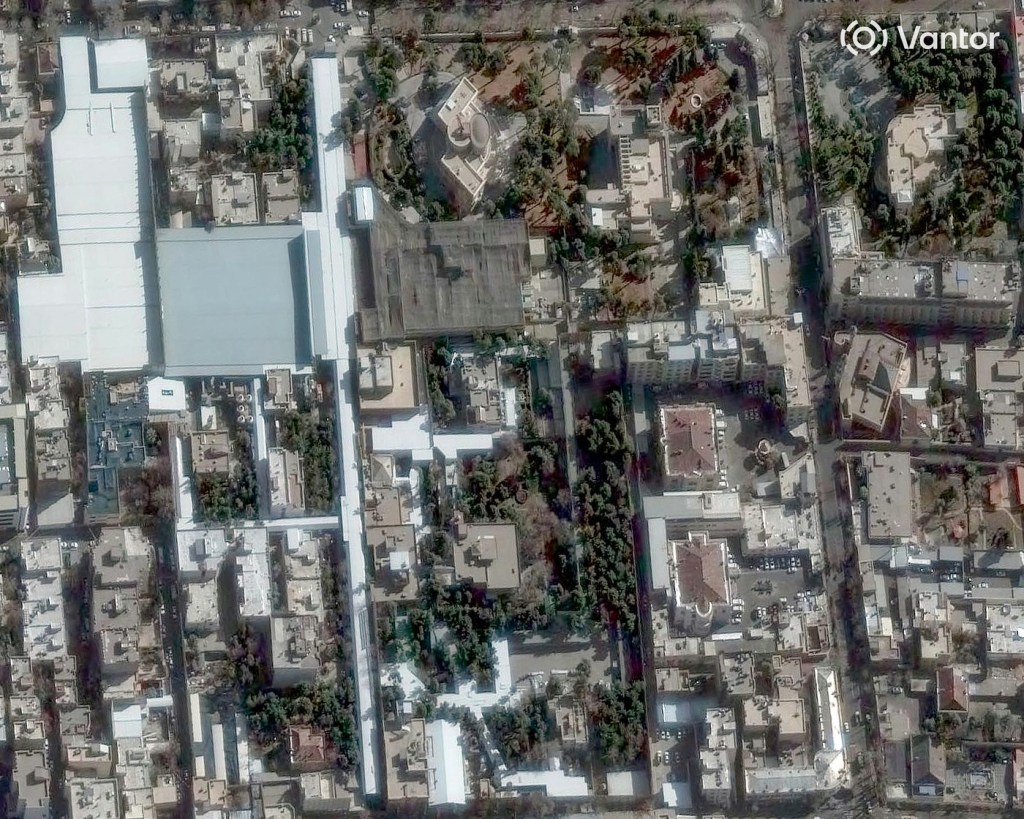
The attack on the government compound in central Tehran began on Saturday morning, 12 hours earlier than planned, after intelligence services confirmed the presence of Ayatollah Ali Khamenei and his top commanders.
Although the operation was considered a military success, it also killed a group of Iranian officials whom the White House had identified as willing to negotiate a quick end to the conflict. Thus, the tactical success eliminated people who could have facilitated a diplomatic solution, according to some US officials, cited by the NYT.
The attack on the compound in Tehran became emblematic. Iran, however, remained defiant, expanding the conflict in the region, which led to the first American casualties.
In this context, administration officials in Washington have tried to narrow the war's goal to eliminating the nuclear program, but President Trump has offered divergent explanations.
Trump initially called for a mass uprising against Iran's leaders. Later, in the absence of evidence of a government overthrow, he indicated that he was not interested in the future of the country after the end of the campaign. On Friday, the president said he would get directly involved in choosing Iran's next leader, warning on Saturday that new groups of people and areas could become military targets.
The shifts in narrative and the expansion of violence sent oil prices soaring, causing economic shocks, the NYT notes. The first week of war in the Middle East included the use of artificial intelligence to select targets and the first destruction of an enemy ship by a submarine torpedo since World War II.
The Pentagon reported costs of about $6 billion as Iranian officials launched “Operation Madman,” a strategy aimed at reducing adversaries' appetite for war over time.
The impasse of the succession in Tehran
In the early days of the war, Donald Trump and Benjamin Netanyahu bet on an internal uprising in Iran, but mass protests did not materialize.
The US president reversed his public stance overnight, saying on Friday that he would accept keeping a religious leader in Tehran, provided the new leadership treated the United States and Israel “fairly”.
The White House had initially identified pragmatic Iranian officials for a quick negotiation, but they were killed during the initial attacks on Tehran.
“The attack was so successful that it took out most of the candidates. They're all dead,” Donald Trump said last Sunday.
For now, the basic structure of power in Iran remains intact, the NYT writes. The heads of government branches and many top political leaders are still alive, and military commanders have been replaced.
This situation has led Donald Trump and his advisers to look for a new strategy. After the president called for Iran's “unconditional surrender” on Friday, US officials are bracing for a conflict that could last for weeks.
Although the president has said he will be directly involved in choosing a successor should the government fall, US officials are struggling to identify a leader who is willing to work with the United States while also having the support of the Iranian people.
Intelligence reports suggest that no matter who takes power, the theocratic structure of the government will likely remain unchanged, according to the NYT.
Against this backdrop, some White House officials warn that the president may be too quick to declare victory, although the absence of docile Iranian leaders — caused by the removal of the initial targets — indicates that the administration has no immediate solution.
In the absence of an immediate solution in Tehran, the White House, through the voice of spokeswoman Anna Kelly, reiterated the central objectives of the intervention: “destroying Iran's ballistic missiles and navy, eliminating the ability to arm proxy groups and preventing it from obtaining nuclear weapons.”