The price of diesel has already increased the prices of some products and services in Romania. What other increases await us


The increase in diesel prices has brought in less than three months price increases of up to 7% for products and services in Romania, according to the calculations of an energy expert, which thus confirms the predictions of carriers from the last period.
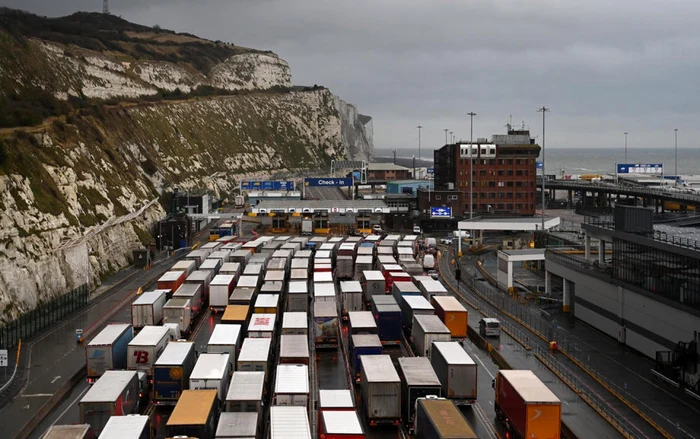
The rise in diesel fuel has led to higher prices in the chain. Photo EPA-EFE
In the economy, there are price increases that are immediately visible and price increases that infiltrate discreetly into all prices, being indirect costs. Diesel is part of the second category, being an essential element for forming the prices of all products and services that also involve transport.
The increase in the price of diesel in the first 64 days of the year produces chain effects that, although they seem small individually, spread to almost all sectors of the economy.
The analysis of oil flows, costs and the price at the pump in Romania, carried out by Asociația Energia Inteligentă, highlights the effect of the diesel price increase in the first 64 days of the year compared to December 2025.
During this period, diesel fuel rose by 14% due to the increase in the price of the Brent barrel.
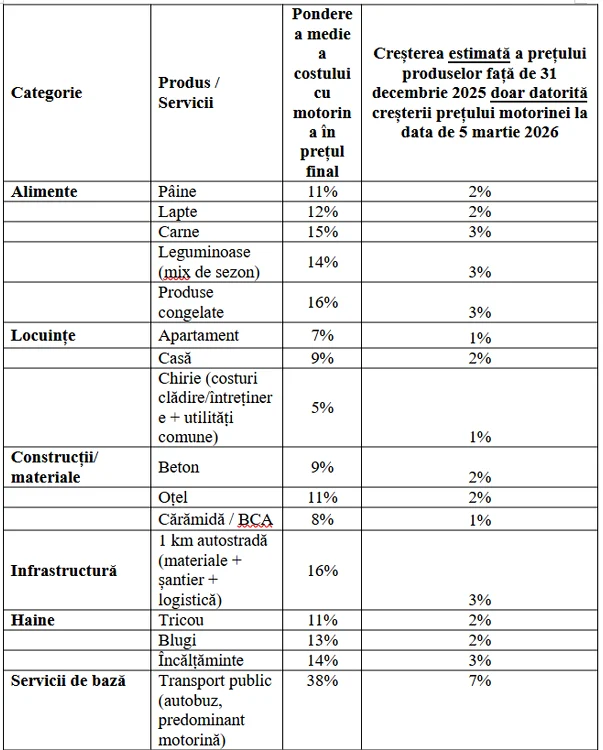
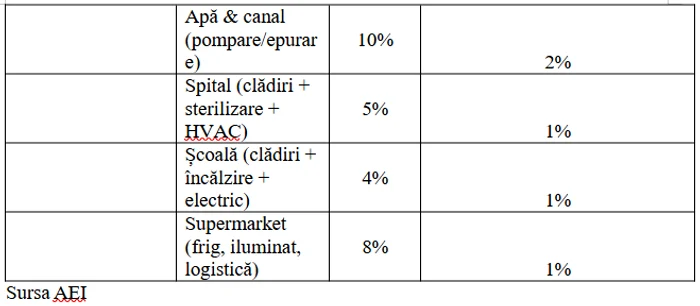
“In the food area, the impact is immediate. Grain transport, product distribution and warehouse logistics are heavily dependent on diesel. Thus, bread and milk register an estimated increase of around 2% compared to December 2025 from this factor alone. For meat, pulses or frozen products, where the logistics chain is more complex and involves refrigerated transport, the impact reaches around 3%“, points out Dumitru Chisăliță, president of AEI.
According to him, homes do not escape the effect of fuel either. “Construction materials are transported almost exclusively by trucks, and construction equipment runs mostly on diesel. Under these conditions, the cost of a new apartment increases by about 1%, and of a house by about 2%, solely due to the increase in the price of diesel. Even the rent indirectly reflects these costs, with an estimated increase of about 1%, through maintenance, logistics and ancillary services costs”claims the energy expert, listing the main areas that saw price increases during the mentioned period and the causes that produced them:
- The building materials sector is feeling the same effect. Concrete and steel increase in price by about 2%, while brick or BCA increases by about 1%. Transporting raw materials, operating machinery and industrial logistics are all dependent on fuel.
- Visible impact in infrastructure. Building one kilometer of highway involves hundreds of trucks, excavators, bulldozers and heavy machinery. Under these conditions, the cost of a kilometer of highway increases by about 3% just because of diesel.
- The textile industry is not immune either. Transportation of raw materials, production and international distribution contribute to estimated price increases of approximately 2% for T-shirts and jeans and approximately 3% for footwear.
- Basic services. Public transport, where buses run predominantly on diesel, is growing by around 7%. Other essential services — such as water and sanitation — increase by about 2 percent, as pumping and logistics operations are indirectly dependent on energy and transportation costs.
- Public institutions are more moderately affected. Operating costs for hospitals and schools rise by about 1%, and the operation of supermarkets — where logistics and supply chain play a major role — adds about 1% to prices.
Romania, the 8th highest diesel price in the EU
The fact that Romania has reached the 8th place in the European Union for the price of diesel should be an alarm signal, not just a momentary statistic. Diesel fuel is not just any product – it is the fuel that powers agriculture, transport, construction and, by implication, the real economy.
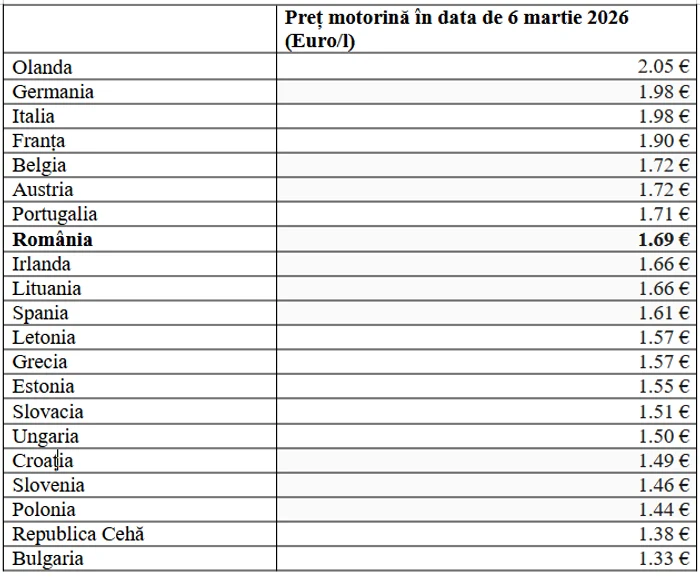
“There are enormous differences compared to the neighbors. In Romania, the price of diesel is €1.69/l, diesel in Bulgaria is €1.33/l, that is, the difference is 27%. Romania is the second largest producer of crude oil, with the most complex petroleum structure in Europe and it has a more expensive diesel than in Bulgaria.
Taken individually, these percentages seem small. But the economy works by accumulation. When almost every sector adds a few percent for the same reason, the end result is constant pressure on the cost of living.
Diesel does not appear on the label of the products in the store. But it is present at every stage of their journey to the shelf. And when its price goes up, the whole economy moves a little more expensive”said Dumitru Chisăliță
Carriers have warned since February that price increases are coming
Carriers have warned since the beginning of last month that they have to increase transport costs, estimating that there will be increases of even 10%, costs that will affect the prices of all the goods on the store shelves.
From January 1, 2026, carriers in Romania feel the effects of the increase in fuel excises, which put pressure on operating budgets, given that fuel represents an important share of the total cost of a journey.
Carriers estimate an increase of at least 10% in transport rates as a result of the accumulation of factors that make the operation of fleets more expensive in Romania and in the rest of Europe.
“Government Decision No. 1094/2025 regarding compensation for the increase in diesel excise duty expires on 30.03.2026. If the diesel excise duty refund scheme is not extended until the end of 2026, transport prices will certainly increase (by at least 10%).
As for the increase in the road tax (the introduction of the ToolRo tolling system from 01.07.2026 for trucks over 3.5 t, the rate is below the one in Bulgaria. OGnr. 23/2025 increased the rates for eggplants already, I think that the transporters also increased transport prices by 5-8% last year due to the increase in the rates for eggplants. All these increases will be seen in the prices on the shelf, but also in the price of tickets for road passenger transport“, stated for “truth“, Beniamin Lucescu, president of the Federation of Romanian Transport Operators (FORT).
Charging per kilometer will make transport rates even more expensive
Mihai Teodorescu, director of Eltra Logis, one of the main players in the niche logistics, transport and storage market, stated that Romania is preparing to introduce a new road toll system pay as you gowhich will replace the wreckage for vehicles over 3.5 tons.
According to him, charging per kilometer, differentiated according to vehicle mass and emission class, will lead to higher costs for domestic and transit transport.
“We are in a moment of structural recalibration of road transport at European level. Increasing infrastructure charges, increasing fuel excises and introducing traffic restrictions in key transit states are fundamentally changing the way transport fleets are planned and operated. These developments have a direct impact on fuel costs, tolls, delivery times and resource efficiency, exerting constant pressure on operating margins. In this context, the adjustment of transport tariffs becomes a strategic decision necessary to ensure the sustainability of operations in the medium and long term, the continuity of services and the maintenance of the standards of quality, safety and predictability that our customers rely on. Our priority remains the responsible adaptation to these changes, through optimization, investments and transparent dialogue with partners in the logistics chain“, declared Mihai Teodorescu.
Several European states have announced increases in highway tolls
An analysis of international transport carried out by Eltra Logis based on internal data shows that the new traffic restrictions imposed in Hungary also have a significant impact. The Hungarian authorities have restricted the access of heavy trucks to certain national roads, forcing transporters to drive exclusively on highways. For Romanian operators, these measures mean detours of more than 200 kilometers, fully charged, which generate additional costs of around 200 euros per trip, along with up to three times longer delivery times and difficulties in planning routes.
Transporters pointed out that these restrictions directly affect competitiveness and may contravene the principle of free movement of goods in the European Union.
At the same time, at the European level, the year 2026 brings a series of adjustments that contribute to the increase in the price of road transport. Several countries, including France, Poland, the Czech Republic, Belgium and the Netherlands, have announced increases in motorway tolls, expansion of toll road networks or the introduction of CO₂-related charging per kilometre.
In parallel, European environmental policies encourage the transition to low- or zero-emission fleets through tax exemptions or reductions for clean vehicles. Although necessary in the long term, these measures require considerable investment for carriers, which is inevitably reflected in the cost structure.