When talking to voters about an election that promises to be the most consequential for Hungary in decades, it doesn't take long until the conversation turns to allegedly secretly recorded intimate video of Prime Minister Viktor Orban's rival, Peter Magyar.
In mid-February, journalists began receiving messages containing a photo of a bedroom with the caption “coming soon.” The photo was widely shared on social media, but no video has emerged. Magyar said he suspected that his opponents were planning to publish a sex tape “recorded using secret service equipment and probably fake” showing him and his then-partner in an intimate situation.
Opposition leader and head of the center-right party Tisza accused Orban's ruling Fidesz party of preparing a smear campaign in an already toxic election campaign. And now that the deadline for filing candidates has passed on Saturday, political analysts are anticipating intensifying smear and disinformation campaigns.
So will the tape be coming soon? And if so, how will this affect the campaign, in which polls show that Fidesz is losing about 9 percentage points? Could this affect the result? “We can't be sure of its impact until we know its content,” says Peter Kreko, executive director of Political Capital, an independent political research consulting firm. — I wouldn't dare make a prediction because it depends on what's on the tape.
Hungarian politicians won elections after sex scandals. In 2017, Zsolt Borkai, the mayor of Gyor with ties to Fidesz and a former Olympian, was embroiled in a major scandal after an anonymous blog published photos of him attending a group sex party on a yacht in the Adriatic Sea. Borkai was re-elected to the position two years later, although he resigned shortly thereafter.
Magyar is “very good at preventative communication,” Kreko notes. — He tried to gain an advantage by admitting to having engaged in consensual sexual intercourse. This was a smart move because it potentially minimizes his losses upfront, he adds.
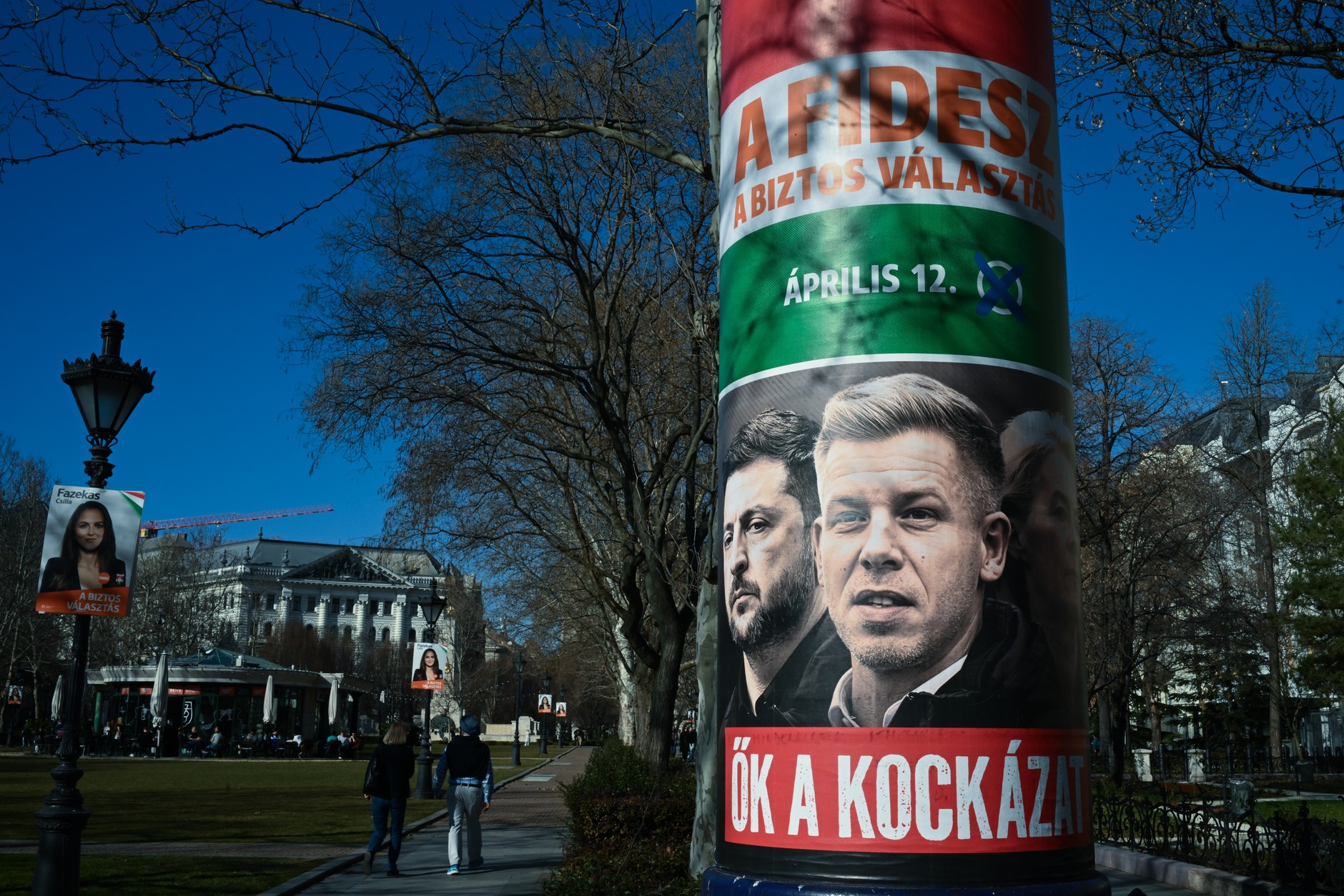
An election poster of the Hungarian ruling party Fidesz, depicting Ukrainian President Volodymyr Zelensky, opposition politician Peter Magyar and European Commission President Ursula von der Leyen, displayed on a street in Budapest, March 5, 2026.Artur Widak/NurPhoto via Getty Images / Getty Images
A leading opposition activist, who is not a member of Tisha but supports Magar, said he was unsure whether the recording would harm efforts to remove Orban from power. He asked to remain anonymous so as not to strain his relationship with Magyar.
“There's already a little enthusiasm for it,” he admits. – It's not very popular. For many people on the left and in the center of the political scene, Magyar and Tisza they are simply useful tools to get rid of Orban – says.
In the politician's opinion, Tisza's victory would reflect a broad anti-Orban coalition rather than sympathy for Magyar – just like the victory of the Labor Party in Great Britain in 2024, which resulted not so much from public enthusiasm for Keir Starmer, but from the desire to end the rule of the Conservatives. So perhaps voters wouldn't care what baggage Magyar carries with him.
Will Putin save Orban?
People don't just prepare for a sex tape. Andras Racz, analyst at the German Council on Foreign Relations, observes the intensification of Russian influence operations.
So far, this front has been relatively calm. However, Racz believes this will change. During a panel discussion in Budapest this week, he predicted a significant increase in Russian disinformation activities aimed at helping the Hungarian prime minister.
— Orban's government is here the best asset Russia has ever had in the EU and NATO – he notes. — It would be foolish of them not to do everything in their power to keep Orban in power.
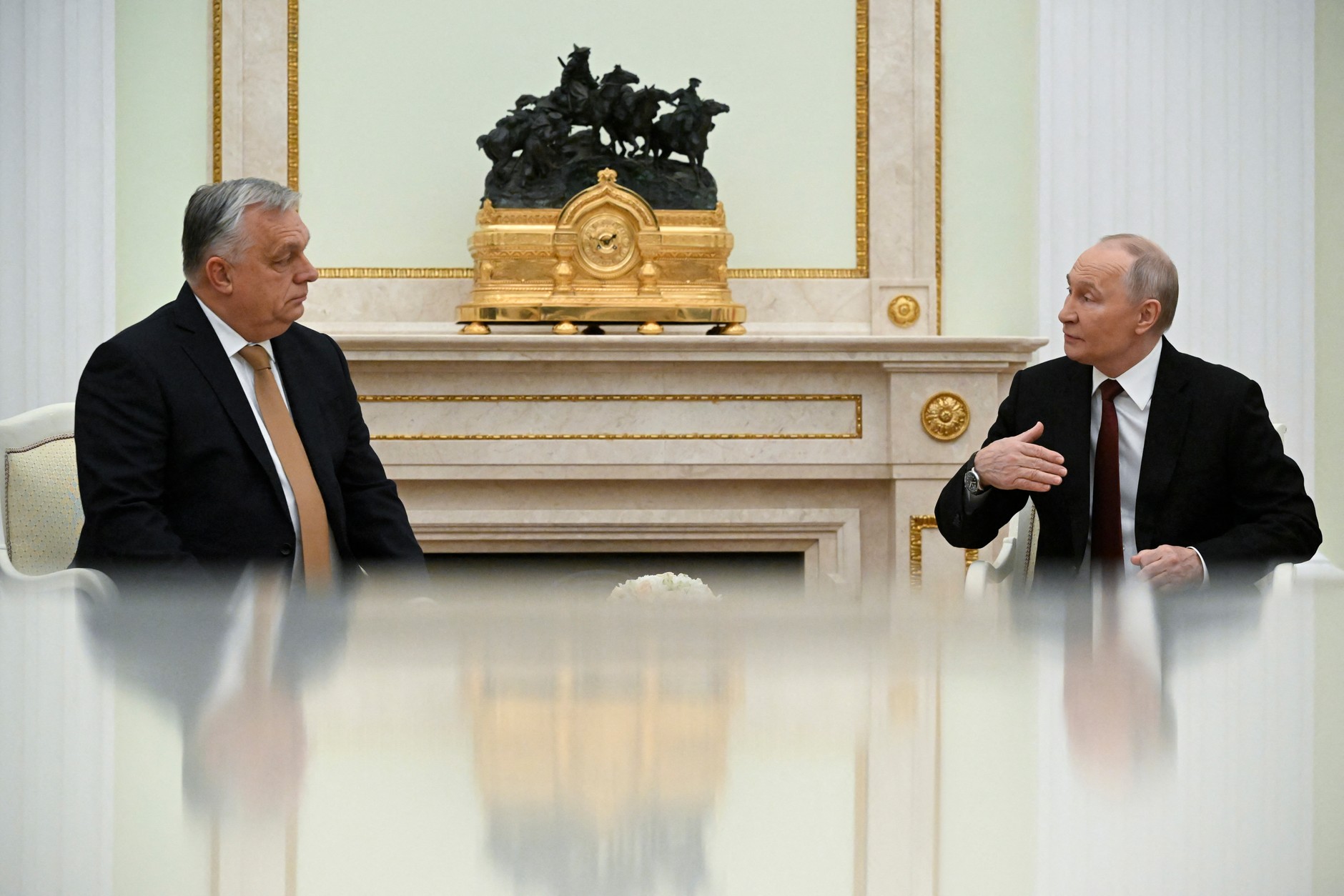
Hungarian Prime Minister Viktor Orban and Russian President Vladimir Putin at the Kremlin, Moscow, November 28, 2025.ALEXANDER NEMENOV / AFP POOL / AFP / AFP
Szabolcs Panyi, an award-winning journalist with Direkt36, an independent, non-profit investigative website, also expects activities to intensify in the final weeks of the election campaign. Citing multiple European sources related to national security, he reported that a team of “political technologists” linked to the Kremlin was tasked with influencing the elections in Hungary. According to him, these activities will be supervised by Sergei Kiriyenko, first deputy chief of staff of Russian President Vladimir Putin.
It is not known how effective such actions will be. In September, Russia launched an influence campaign against Moldova's ruling party, co-founded by President Maia Sandu, in an attempt to tip the scales of the parliamentary elections in favor of the pro-Russian party. Ultimately, it ended in failure: the pro-Western ruling party in Moldova retained its majority, decisively defeating the pro-Russian opposition.
However, there is a fundamental difference between Moldova and Hungary. The Moldovan authorities have taken large-scale measures to counter the Russian campaign. The ruling party in Hungary unlikely to take the same action.