“Banditism” versus “terrorism”. Cash, gold, oil and a big political row


The long-running dispute between the authorities of Hungary and Ukraine has entered a new, much more severe phase. Hungarian Prime Minister Viktor Orban accused Kiev of “state banditry”, responding to the earlier words of the head of Ukrainian diplomacy Andriy Sybiha, who accused Budapest of “terrorism and extortion”.
The diplomatic temperature is rising, and the conflict goes beyond the incident with the money convoy. Moscow may take advantage of the tensions — unless the political cards change the April elections in Hungary.
On the night of Thursday to Friday, March 6, the Oszczadbank press office reported the “unjustified detention” of the Hungarian services of seven employees of the bank convoy who were traveling from Austria in two armored vehicles.
As the bank explained, it was about routine transportation of foreign currencies and precious metals between Raiffeisen Bank Austria and the Ukrainian Oshchadbank. The institution demanded the immediate release of the employees and the return of the transported property, as well as allowing the convoy to return to Ukraine.
The reaction of the authorities in Kiev was exceptionally harsh.
Hungary took hostages and stole money. This is state terrorism and simple tribute
– said the Minister of Foreign Affairs of Ukraine, Andriy Sybiha, on the night of March 6.
He also announced he would ask the European Union to clearly assess “Hungary's illegal actions, kidnapping of hostages and robbery.”
Details of the case were revealed only on Friday morning. The Hungarian National Tax and Customs Administration (NAV) announced the initiation of criminal proceedings on suspicion of money laundering. According to the office, the investigation is being conducted in accordance with Hungarian criminal law with the participation of the Anti-Terrorism Center.
NAV noted that $40 million was transported in two armored vehicles. (approx. PLN 158 million), EUR 35 million (approx. PLN 150 million) and 9 kg of gold.
As added in the announcement, This year alone, over USD 900 million (over PLN 3 billion), EUR 420 million (almost PLN 2 billion) and 146 kg of gold bars have been transported through Hungary to Ukraine.
The head of the Hungarian Ministry of Foreign Affairs, Peter Szijjarto, said that the case raises many questions.
That's a huge sum of cash. Why did Ukrainians have to transport so much money? If this is a regular transaction between banks, why wasn't it made by transfer? Why transport such a huge amount of cash through Hungary at all?
– he asked.
According to Szijjarto, what is also questionable is the fact that the convoys are to be escorted by people linked – as he claims – to the Ukrainian special services.
What is this money going for? Whose money is this?
— continued the minister, at the same time suggesting that these may be “funds of the Ukrainian military mafia.” However, he did not specify what exactly he meant.
Without “Friendship”
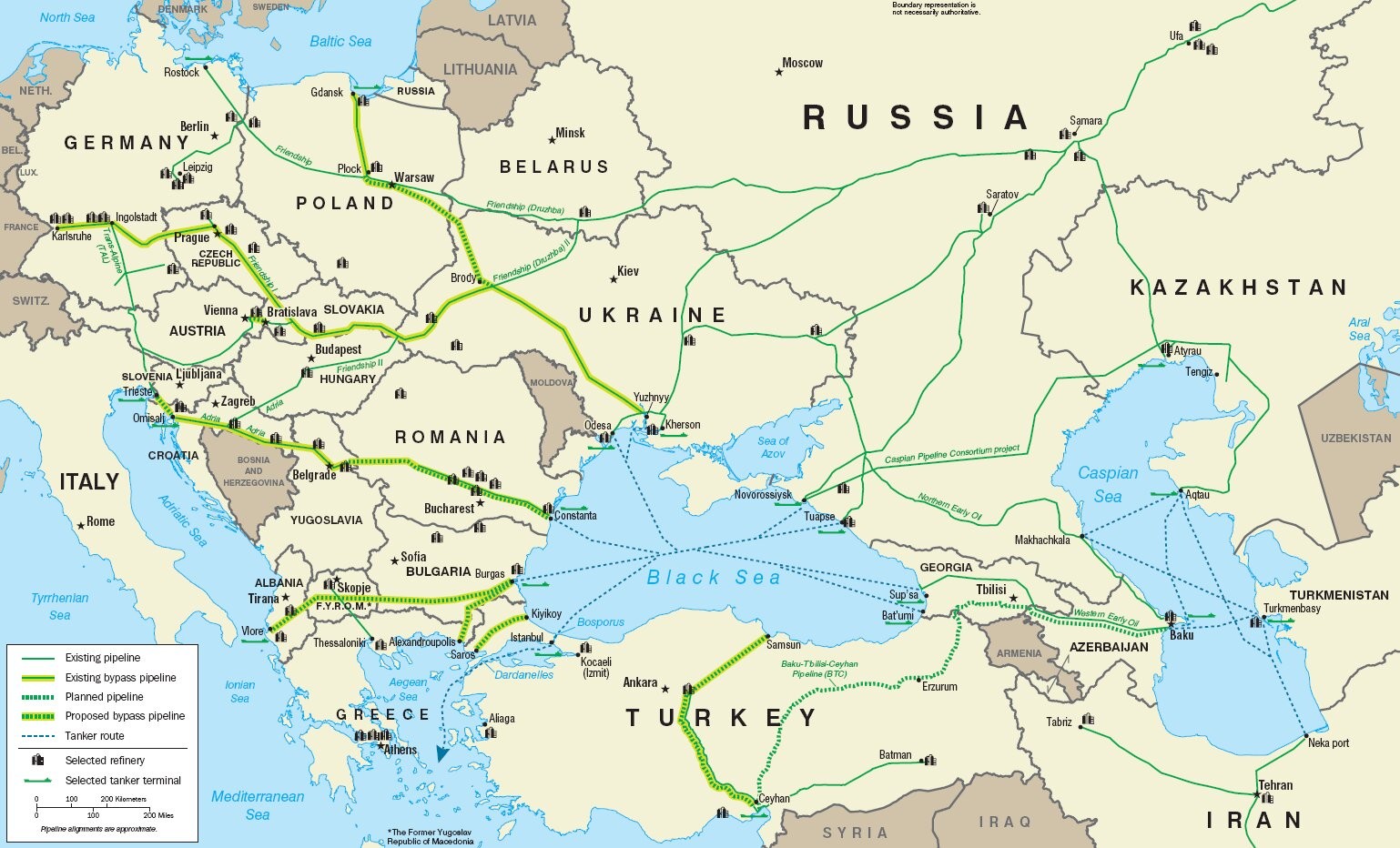
Map of the “Friendship” pipelinePublic Domain / Wikipedia Commons
On March 5, Ukrainian President Volodymyr Zelensky suggested that he was in no hurry to restore the pipeline's operation.
There are things you can't put a price on. They are killing us and we are supposed to supply Russian oil to Orban?
– he said.
At the same time, he noted that there are pressures in the European Union: without resuming oil transit, Ukraine may not receive a European loan of EUR 90 billion (approx. PLN 387 billion).
EU leaders agreed to allocate these funds during a summit on December 18, 2025. Under the plan, Ukraine would start repaying the interest-free loan only when Russia pays reparations to it. If Moscow refuses, frozen Russian assets would be used for repayment.
“You can't blackmail us!”
However, it was a political decision requiring further formal arrangements.
As long as Ukraine blocks the Druzhba pipeline, Hungary will block the Ukrainian military loan in the amount of EUR 90 billion (approx. PLN 387 billion). You can't blackmail us!
— Orban announced on February 20.
From that moment on, the conflict began to escalate rapidly. Orban published satellite photos that he claimed proved that there are no technical obstacles to resuming pipeline operation. Zelensky replied that such photos did not show all the details.
The Hungarian Prime Minister also threatened to use “political and financial force”, announcing: —We will win. And we will win by force. We have political and financial tools for this.
In response, Zelensky said he could “give the address of one person in the European Union” to Ukrainian army soldiers so that they could “call him and talk to him in their language.”
On Friday morning, Orban criticized this statement and again accused Ukraine of “state banditry against Hungary.”
Until order is restored, we will use all available means. We have stopped deliveries of gasoline to Ukraine and we are not sending diesel either. The electricity is flowing for now, but we will also stop all important cargo shipments through Hungary until we receive approval for oil supplies
– he announced.
On Thursday, Hungarian Energy Minister Gabor Czepek announced that Budapest had given Ukraine three days to restore the Druzhba pipeline's operation or allow an international group of inspectors to check its condition. If Kyiv does not do this, he added, Hungary will use “all available legal means” against Ukraine within the European Union.
Hope in the elections
Kremlin spokesman Dmitry Peskov said on Friday that “the temperature of political rhetoric in Europe is constantly rising and everything is becoming more and more sharp. He also joked, suggesting that Brussels should defend one of the members of the “Euro-Atlantic family”:
Maybe it's time to apply NATO Article Five
— ironically referred to the provision of the NATO statute stating that an attack on one member of the alliance is treated as an attack on all.
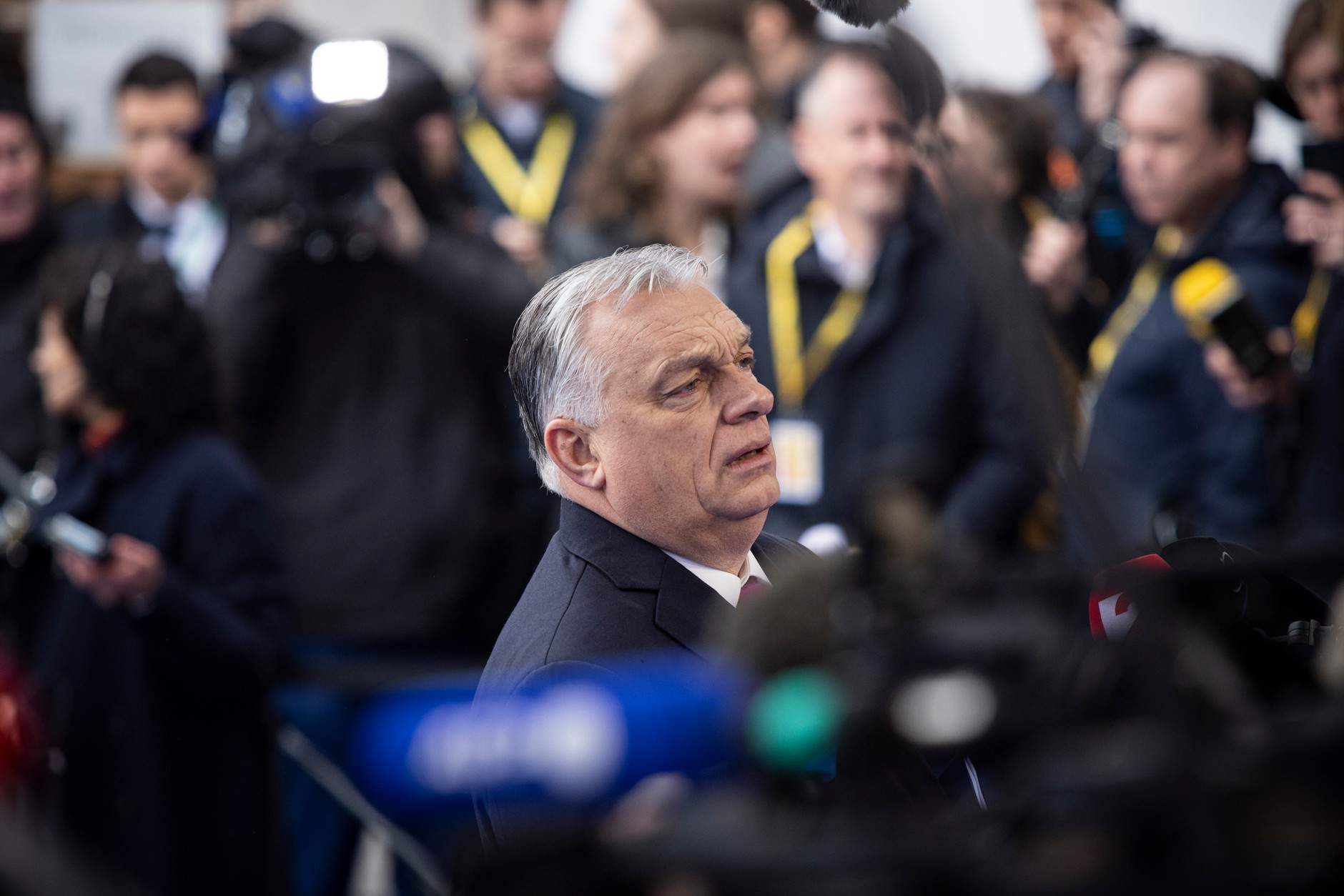
Hungarian Prime Minister Viktor Orban before an informal meeting of EU leaders, Belgium, February 12, 2026.NurPhoto / Contributor / Getty Images
The draft final communiqué from that meeting — seen by Politico — said EU leaders “welcome” the loan agreement and “look forward to disbursing the first tranche to Ukraine in early April.”
However, in the current situation, another scenario may prove equally likely. The European Union and Ukraine can simply wait for the parliamentary elections in Hungary, scheduled for April 12.
Reutea emphasizes, however, that the result of the vote remains very uncertain because many voters have still not decided who to vote for. However, one thing is certain: Today, Orban faces the most serious political challenge in his 16 years of rule.
And it is possible that in just over a month, European institutions will not have to wonder how to neutralize Budapest's anti-Ukrainian policy.