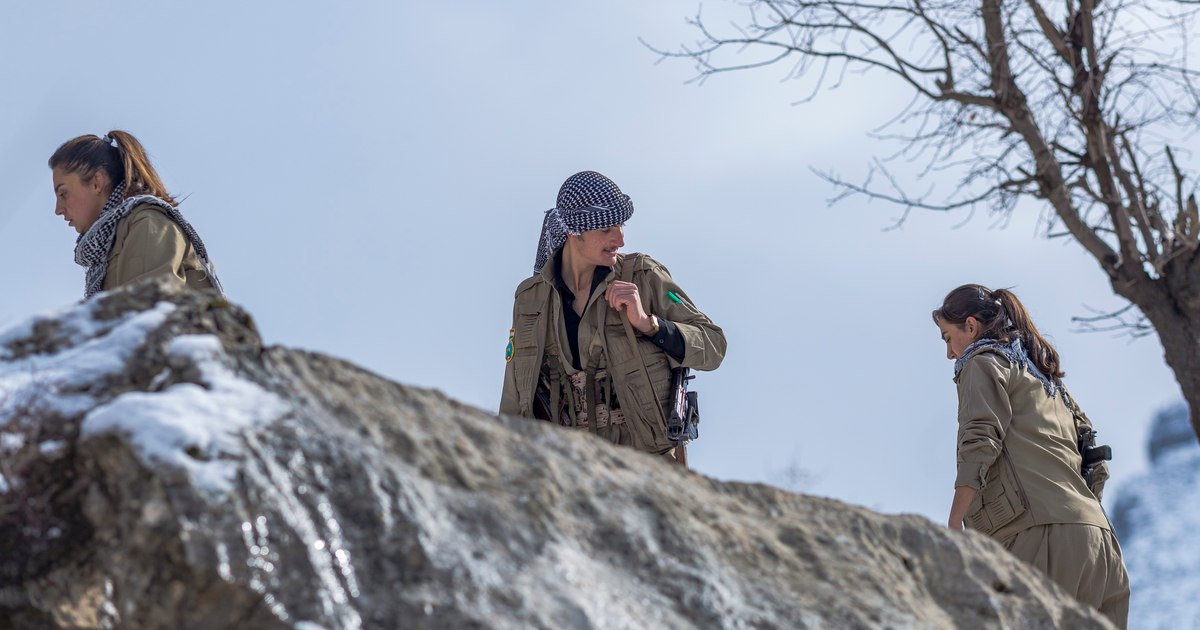
The Kurds are one of the most numerous ethnic groups in the world that do not have their own state. Their number is estimated between 30 and 40 million people, most of them living in the mountainous areas on the borders of Armenia, Iraq, Iran, Syria and Turkey. In the context of tensions in the region, the administration of US President Donald Trump would consider using Kurdish fighters to put pressure on the regime in Tehran.
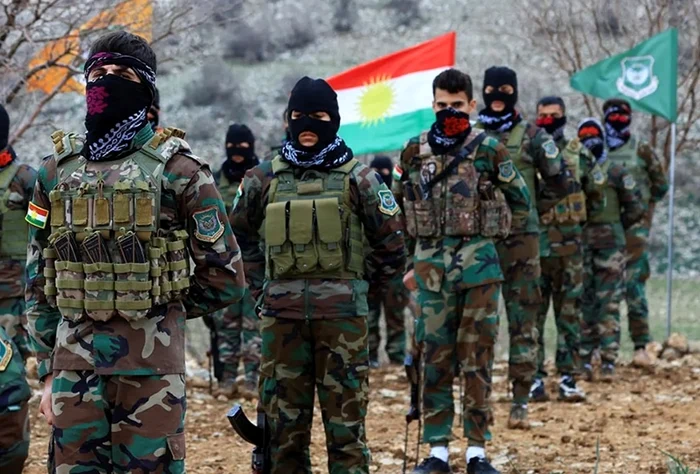
Who are the Kurds PHOTO / Fox News capture
According to The Guardian, the Kurds trace their historical origins to the Medes, an ancient people of the Middle East. However, about a century ago, with the collapse of the Ottoman Empire and the drawing of new borders in the region, they were left without a state of their own.
Over time, the Kurds have been involved in political and military conflicts in the area. Their communities were often forced to defend themselves, relying on local militias called peshmerga. From this experience also emerged an expression that became famous among the Kurds: “they have no friends but the mountains“.
Although there are cultural and regional differences, the Kurds have a distinct identity. They speak a language related to Persian, but with numerous dialects, and have their own traditions, costumes, music and gastronomy. Most are Sunni Muslims, but there are also important religious minorities in Kurdish communities.
Repressions and conflicts in several states
After World War II, various authoritarian regimes in the region harshly repressed the Kurdish population. Entire communities were displaced or destroyed, and external powers often tried to use the Kurds for their own geopolitical interests, causing internal divisions and dire consequences for the population.
In Turkey, conflict between security forces and the Kurdistan Workers' Party (PKK), a leftist organization that initially fought for an independent Kurdish state and then for autonomy, has left more than 40,000 dead and displaced hundreds of thousands of people from the country's southeast.
In Iraq, Saddam Hussein's regime used chemical weapons against the Kurdish population in the north. After the 1991 Gulf War, however, the Kurds managed to obtain a semi-autonomous region, which they still administer today.
In Iran, Kurdish areas have a long history of resistance to central authority, dating back to the 1979 revolution. Kurdish regions were also involved in the 2022 protests sparked by the death in police custody of Kurdish teenager Mahsa Amini. New anti-government protests that broke out in late 2025 resulted in thousands of deaths in January 2026.
In Syria, the Kurds have tried for the past decade to build an autonomous entity during the civil war. Although they played a key role in the military campaign of the US-led coalition against the Islamic State group, their political project failed to consolidate, notes The Guardian.
Why are they considered effective fighters?
A central role in the Kurdish communities is played by the peshmerga, a term that means “those who seek deathThese forces are known for their effectiveness on the battlefield, particularly due to their terrain knowledge, mobility and high motivation, even though they are more modestly equipped than regular armies.
The experience gained in the fight against the Islamic State organization has strengthened the peshmerga's reputation and created close ties with US officials and the military. These relations could become important if Washington decides to support Kurdish opposition groups in Iran to put pressure on the authorities in Tehran.
According to analysts, with air support and American military advisers, the peshmerga could take control of some territories in the Kurdish regions of Iran. However, experts believe that a deeper offensive inside the country would be unrealistic.
The aim of such a strategy would rather be to force the Iranian military to redeploy its troops and resources to the border areas, but also the possibility of encouraging other ethnic minorities in Iran to revolt against the regime.
However, the plan could encounter numerous obstacles. Kurdish leaders in northern Iraq have already signaled that, at least for now, they intend to remain neutral.
The decision reflects the historical experience of the Kurds, who have often been caught between major conflicts in the region. For many of them, this reality reinforces the conviction expressed in the old proverb: “we have no friends but the mountains'.