Will Ukraine join the EU by 2027? We reveal Brussels' secret plan


Four years after the launch of Russia's full-scale invasion and with Kiev pushing for EU membership in 2027 to be included in the peace deal with the Kremlin, this initial idea would mean a radical change in the way new countries are admitted to the bloc. The plan envisages Ukraine gaining a seat at the EU table before carrying out the reforms necessary to obtain full membership privileges.
European officials and the Ukrainian government say Kiev's application for membership is urgent. Russia will probably try to “stop our aspirations to join the EU,” as Ukrainian President Volodymyr Zelensky told reporters in Kiev on Friday. – That's why we say give a date. Why a specific date? Because this date will be signed by Ukraine, Europe, the USA and Russia, he added.
The EU idea echoes Emmanuel Macron's “multi-speed” EU project, which the French president has talked about repeatedly since taking office in 2017. According to an EU official and two European diplomats, the latest version of the project has been informally called “reverse enlargement” because it effectively brings countries into the bloc at the beginning of the process of meeting membership criteria, rather than at the end.
EU officials say the idea is attractive because it would give Kiev time to complete reforms of democratic institutions, the judiciary and the political system, while reducing the likelihood that Ukraine will abandon hope of joining the EU and turn away from the West. However, several obstacles stand in the way, such as Hungarian Prime Minister Viktor Orban, who opposes Ukrainian membership.
Based on interviews with five diplomats from different countries, three EU officials and two Ukrainian representatives who were granted anonymity, POLITICO identified five steps of Ukrainian membership.
Step 1: Prepare Ukraine
The EU accelerated Ukraine's accession process. Kyiv received informal guidance on cluster negotiations – legal steps on the path to membership.
The bloc has already provided Ukraine with details on three of the six negotiation clusters. At the informal meeting of European ministers in Cyprus in March, the EU wants to provide the Ukrainian delegation with details of the next steps so that the next work can begin.
— Despite extremely difficult circumstances, in the face of ongoing Russian aggression, Ukraine is accelerating its reform efforts — Marilena Raouna, deputy minister for European affairs of Cyprus, which holds the presidency of the EU Council, tells POLITICO. As the diplomat adds, the meeting on March 3 will aim to confirm this support.
But “there will be no shortcuts” on reforms, says one EU official. The same message was echoed by two senior diplomats from countries that are allies of Ukraine and all EU officials interviewed by POLITICO.
— EU membership only brings benefits when it undergoes transformation as part of the enlargement process – that is the real superpower of EU membership, says one source.
The European Commission must reconcile two things: the need to act quickly, but also to carry out reforms in Ukraine.
For its part, Kyiv says it is ready to perform the required tasks. — We will be technically ready by 2027. Zelensky said on Friday. — You are talking about ending the war and guaranteeing security at the same time. And the EU is a guarantee of security for us.
Step 2: light membership
EU governments asked European Commission President Ursula von der Leyen about actions aimed at breaking the deadlock on the admission of new countries during a meeting in Brussels on Friday, according to diplomats who took part in the discussion or were informed about its content.
Sources said she outlined the various options and models being considered by the EU. She was among them the concept of the so-called reverse extension.
— It would be a kind of recalibration of the process – the country joins the EU and then gradually acquires rights and obligations – says an official familiar with the content of the discussions. — It would therefore be necessary to rethink how to join the EU based on the completely different situation we find ourselves in today compared to the situation in which the Commission established the accession criteria.
It's not about lowering the bar, but about sending strong political signal to countries whose accession is being held up due to war or opposition from capitals such as Budapest – not only Ukraine, but also Moldova and Albania.
— It is important to send a political signal, says one EU diplomat. — The war of aggression has been going on for four years. Ukrainians need support. The EU must provide this support, both political and psychological.
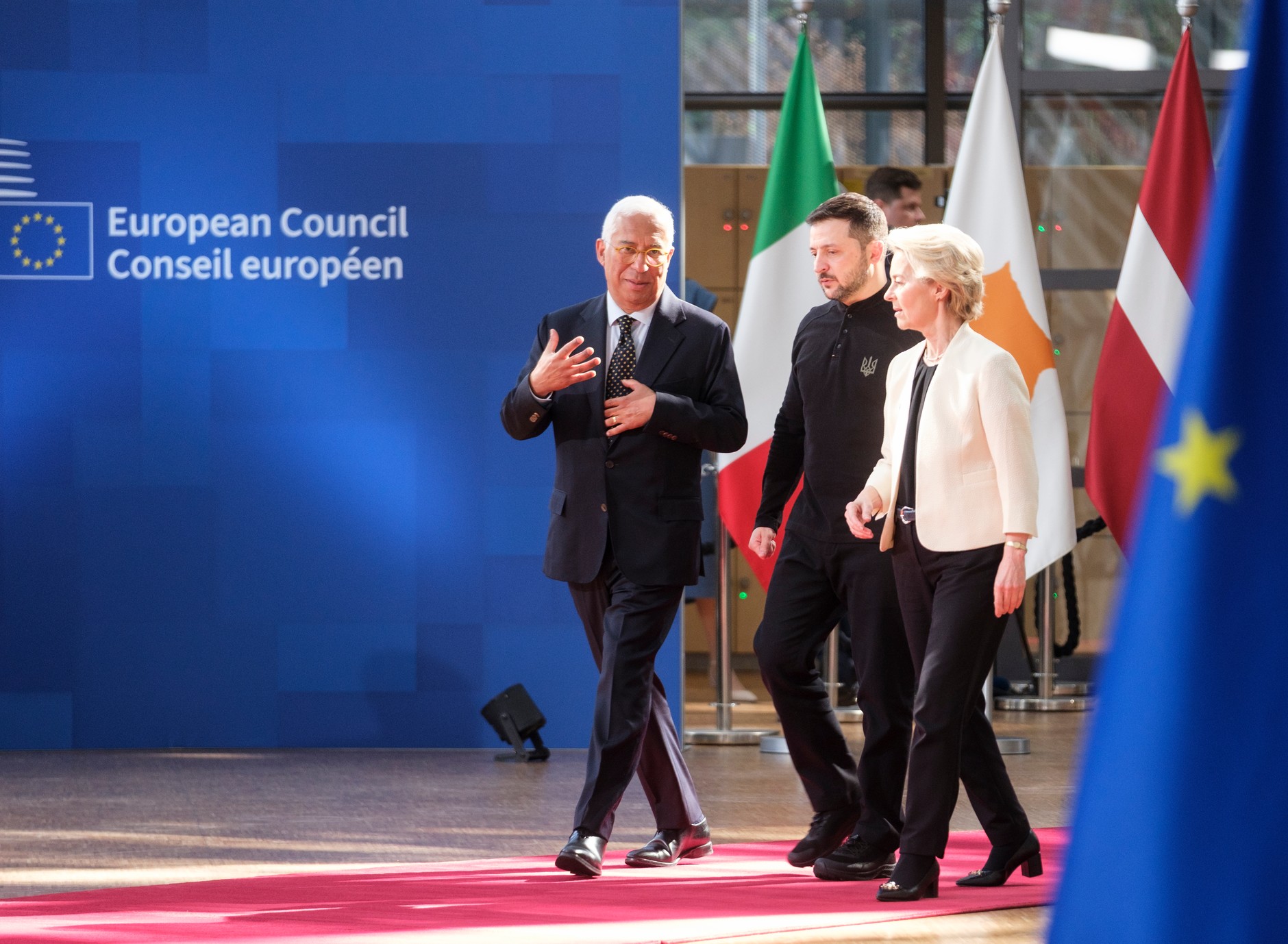
President of the European Council Antonio Costa, President of Ukraine Volodymyr Zelensky and President of the European Commission Ursula von der Leyen in Brussels, March 6, 2025.THIERRY MONASSE/Getty Images
While Zelensky has previously said Ukraine would not accept second-class member status, he may be open to a solution that codifies the country's path to membership before it becomes a full member of the bloc, noted a source familiar with Kiev's position.
The ultimate goal
A Moldovan official tells POLITICO that the country “wants to join a European Union that functions effectively beyond 27 member states, and we welcome discussions on the internal reforms necessary to achieve this goal.” At the same time, “full membership – with equal rights and full participation in the EU's decision-making process – must remain a clear and ultimate goal.”
Albanian Prime Minister Edi Rama told POLITICO last month that a creative approach to EU membership was a “good idea” and that his country would accept even the temporary absence of its own commissioner.
This idea has its own opponents in the EU. — In principle, you cannot discuss two categories of member states, says one official. — It would be unfair not only to Ukraine, but also to the European project. The message should be to accelerate reforms.
According to a senior diplomat, Germany is particularly opposed to the idea of creating multiple levels of EU membership and fears that countries that join the bloc before they are ready will receive promises that Brussels will not be able to fulfill. However, there is hope that if other EU powers such as Paris, Rome and Warsaw support the initiative, Berlin will be persuaded.
Step 3: Orban's departure
The challenge for Ukraine's membership prospects is to obtain support of all 27 Member Statesbecause any decision to expand the bloc requires unanimous support. Orban, Putin's closest ally in the EU, is strongly opposed.
However, the Commission and EU capitals are waiting for the April elections in Hungary and are working on ways to circumvent Orban's veto.
The Hungarian prime minister faces a tight race and lags in polls. In his campaign, he used the topic of Kiev's membership in the EU. Over the weekend he said that “Ukraine is our enemy” because of its desire to ban imports of Russian energy and that should “never” join the EU.
None of the officials POLITICO spoke to say they believe Orban will change his mind before the election.
The Hungarian prime minister's antipathy towards Kiev “is deep,” adds one senior EU diplomat. -It's personal case between Orban and Zelensky. It's more than just a strategic or tactical game, he says.
Orban and Zelensky have repeatedly attacked each other. Zelensky publicly accused Orban of “very dangerous actions” by blocking Ukraine's path to the EU, and also called Budapest “little Moscow.” The Hungarian prime minister called Ukraine “one of the most corrupt countries in the world” and accused Zelensky of threatening Hungary's sovereignty.
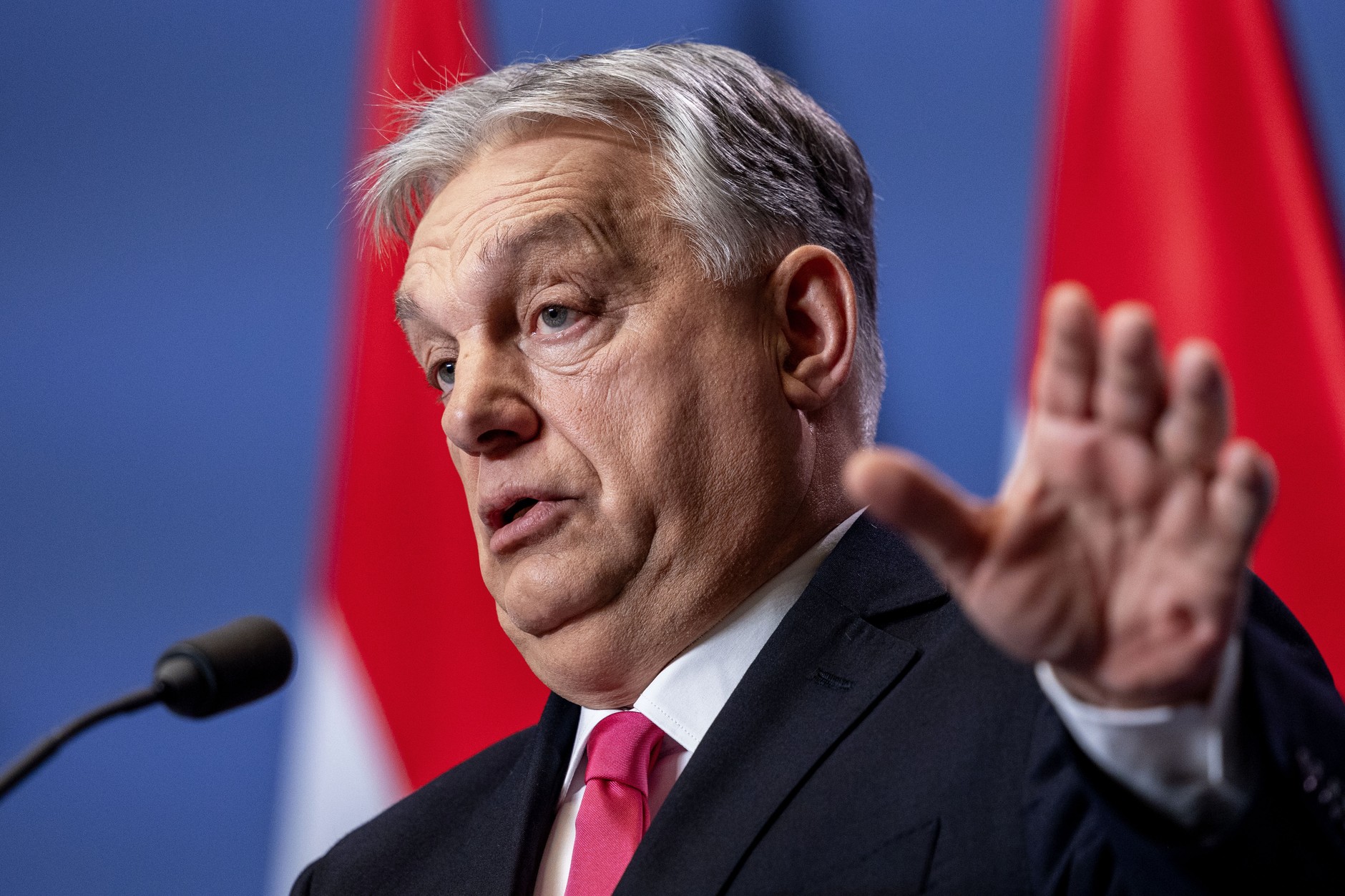
Prime Minister of Hungary Viktor Orban, January 5, 2026Janos Kummer/Getty Images
Several EU officials say they hope that if Orban loses the election, his rival Peter Magyar, the conservative leader of the opposition Tisha party, will change his position on Ukraine, given that he promised last year to put the issue to a referendum.
However, if Orban is re-elected, we will move on to step four.
Step 4: Playing the Trump card
While Orban's opposition to Ukraine joining the EU appears unchanged, there is one person who European leaders believe could change his mind. It's Donald Trump.
The President of the United States, who is a close ally of Orban and supported him before the elections in Hungary, does not hide that wants to be the one to persuade Ukraine and Russia to reach a peace agreement.
Since Ukraine's accession to the EU by 2027 is included in the 20-point draft proposal to end the war, it is hoped that Trump will contact Budapest to reach an agreement.
Zelensky hinted at that hope on Friday. As part of the peace proposal, he said, the US “assumes an obligation being a guarantee that no one will block” elements of the agreement. – We are talking about whether the United States of America will cooperate politically with some European entities so that they do not block the agreement – he added.
As one EU diplomat notes, the Trump administration previously put pressure on Orban during negotiations on EU sanctions packages against Moscow.
Step 5: Hungarian voting rights
If Trump's negotiating skills fail, the EU has one more card to play: the reapplication of Art. 7 of the EU treaty towards Hungary, say two EU diplomats.
Article 7, applicable where it is considered that a country may violate the fundamental values of the Unionis the most serious political sanction that Brussels can impose. It suspends member rights, including the right to decide on the admission of new member states.
The EU has no intention of taking such action yet, assuming the move would work to Orban's advantage ahead of the April elections. Capitals are assessing support for the use of this tool, preparing for a situation where Orban will be re-elected and will continue to obstruct EU decision-making. There is such a move “totally possible”as one diplomat notes.