SAFE – Security Action for Europe, or the Instrument for Enhancing the Security of Europe – has become the subject of heated public debate in recent weeks. Mostly completely unnecessary. It is difficult to identify a solution that is equally beneficial for Poland, and the critical theses repeated in the discussion are not confirmed by the facts – writes Mikołaj Raczyński, vice-president of PFR.
What is it about? Most often, we hear three arguments: that Poland could finance defense expenditure just as well on its own by issuing its own bonds, that the difference in financing costs is small or uncertain, and that SAFE carries additional risks – for example currency risks. On the other hand, there is a suggestion that in practice the program will primarily strengthen the industry of other countries.
The problem is that all these theses are based on incorrect reference points. SAFE is not just a financial instrument. This is a decision about whether Poland will remain mainly an arms importer in the coming decade of the largest defense investments in Europe or will become a co-creator of new industrial and technological potential.
The difference starts with the cost of capital
The most frequently repeated argument is: Poland could borrow these funds itself. Yes – but more expensive. The public debate often ignores the fact that this type of defense expenditure is not financed directly from the state budget. In practice, they are financed by special-purpose funds, such as the Armed Forces Support Fund operated by Bank Gospodarstwa Krajowego.
Therefore, the appropriate point of reference is not the cost of State Treasury bonds, but the cost of financing BGK. Today, the cost of long-term BGK Eurobonds is around 4.4%. And this is assuming that the scale of emissions remains limited. If BGK were to issue additional billions of euros on the market annually, the cost of financing would be even higher. SAFE means financing closer to 3-3.2%.
Where does this difference come from? The European Union – through the European Commission – finances itself cheaper than most member states because investors consider its debt to be safer and require a lower risk premium. With a scale of several dozen billion euros, this difference translates into tens of billions of zlotys over the entire financing period. Citibank economists estimated the potential benefit for Poland at approximately PLN 48 billion. Estimates of the Ministry of Finance range from PLN 36-60 billion.
There is sometimes an argument that the final cost of SAFE is not yet known. In practice, this does not change the logic of the comparison. If the cost of SAFE was higher at the time of issue, it would simply mean that the cost of issuing BGK on the market would be higher. The difference in the risk premium between issuers is key – and it works to SAFE's advantage.
Stability instead of risk rollover
The second element of the bill is less visible but equally important: refinancing risk. The model proposed by SAFE critics is based on issuing bonds and renewing them every few years. In practice, this means one thing: the state assumes the full risk of future interest rates. Today, financing can cost around 5%. In a decade it may as well be 7%. or more. SAFE allows you to largely lock in the cost of financing for many years in advance. In corporate finance, such risk protection is standard when financing large infrastructure or industrial investments. In the case of state security spending, the argument for cost stability is even stronger. This is also important in the context of the structure of Polish debt. Poland has a relatively short average maturity of liabilities. Basing a large part of financing on five-year issues further increases the sensitivity of public finances to future interest rate cycles.
What about currency risk?
The argument of currency risk also often appears. In practice, it is based on simplification. If financing through the issue of BGK Eurobonds were an alternative to SAFE, the currency risk is identical. However, if someone assumes financing only in Polish zloty and renewing the bonds every few years, the problem does not disappear. If the zloty weakened significantly during this time – enough to offset the benefits of lower interest rates – the cost of refinancing would still increase as market conditions deteriorated. It is also difficult to talk about a significant currency risk in an economy that has very large currency reserves. SAFE therefore does not create a new type of risk. First of all, it stabilizes the cost of financing over time.
Economy, not just finances
However, reducing SAFE only to the cost of money would be a serious simplification. The program also has – and in the longer term, perhaps primarily – an industrial dimension. Today, Europe is entering a period of the greatest defense investment in decades. Security spending is growing in almost all NATO countries, and the scale of investments will amount to hundreds of billions of euros. If such funds are to be spent over many years, a natural question is: where will the added value be created? SAFE increases the likelihood that a significant part of these expenses will remain in Poland – and more broadly in Europe.
The program clearly creates new opportunities for Polish companies. At the same time, the “buy European” direction encourages global manufacturers to locate production, technology and competences on our continent. It is already clear that companies from the defense sector are analyzing various forms of transferring production and technology to Europe – from joint ventures to industrial investments.
Economic history knows many such moments. The automotive industry developed in a similar way in China, where market access was linked to technology transfer and the building of local production capabilities. Years later, we can see how effectively Chinese companies have turned this model into building their own competitive advantages and expanding on the global market. If a similar mechanism works in Europe in the defense sector, it will be a huge opportunity first for Poland, and more broadly for the entire European economy.
An impulse for new technologies
Economic history shows another important mechanism. Large defense programs very often became a catalyst for breakthrough innovations. Many of the technologies that constitute the foundation of the modern economy – from the Internet to satellite systems – were originally developed in the security sector. This is due to a simple fact: defense investments often finance the development of the most advanced technologies, which only later find wide application in the civilian economy. In recent years, Poland has built an increasingly stronger ecosystem of technology companies operating in areas such as unmanned systems, cybersecurity, space technologies and advanced data analytics. In some of these segments, Polish companies are already successful on international markets.
SAFE is primarily a financing instrument for the classical defense industry. However, large investments in this sector almost always trigger development in other technological industries – from electronics and software to space technologies and data processing. In this way, a new part of the economy with high added value is created – based on technologies that are initially developed for security needs, and over time find wide application in the civil economy.
Window of opportunity
Today, Europe is entering a period of the greatest defense investment in decades. Poland is in a special situation: it is a NATO frontline state, a rapidly growing economy and one of the largest security investors in the entire EU. In moments like these, rare windows of opportunity arise. The use of SAFE allows you to take full advantage of this window – cheaper, more stable and in a way that builds Polish industrial and technological competences.
Without SAFE, we risk that much of the massive defense spending will remain solely imported technology and equipment, and financing these investments will be more expensive and more susceptible to future market fluctuations. Therefore, SAFE is not just a financial decision. This is a decision about whether in the coming decade of huge defense investments, Poland will be only a sales market or one of the countries where a new European security industry will be created.
Mikołaj Raczyński
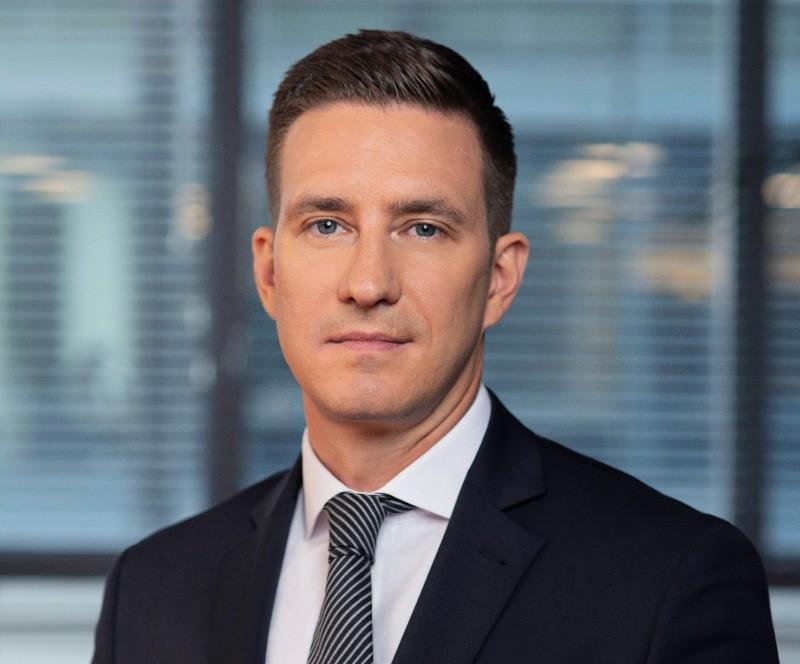
Mikołaj Raczyński is vice-president of the Polish Development Fund, where he is responsible for investments. He has a CFA title and an investment advisor license. Previously associated with, among others, with Noble Funds TFI and WOOD & Company. Twice winner of the Golden Wallet and twice awarded the title of the Best Macroeconomic Analyst of the Stock Exchange and Inwestorów Gazeta “Parkiet”.