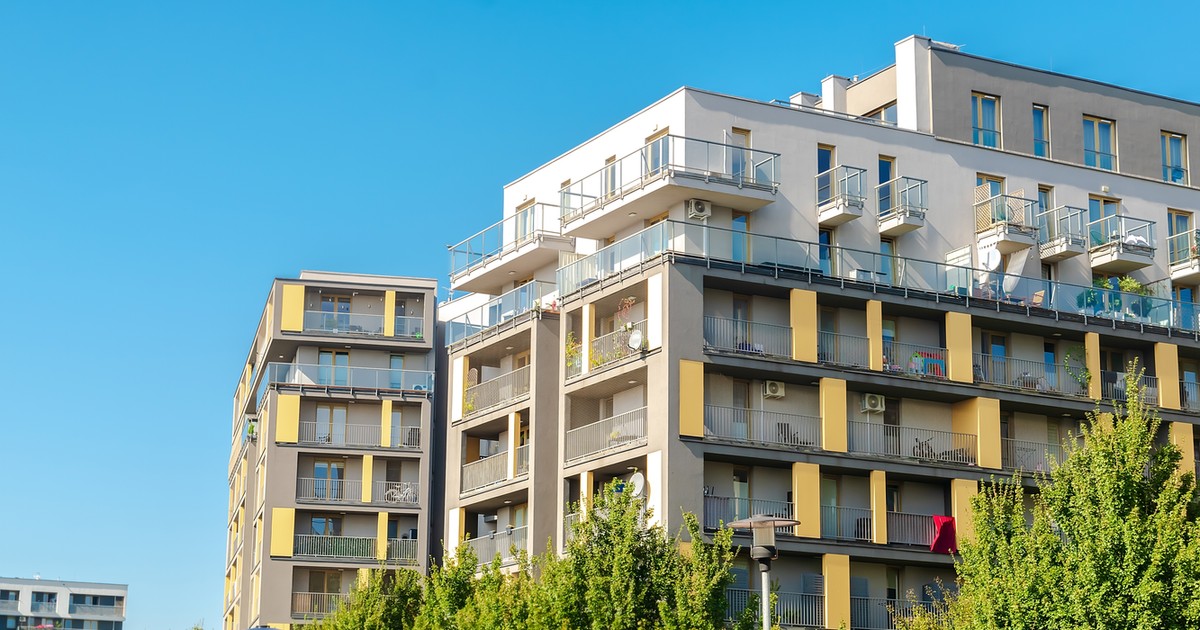
The Hamburg-based company TAG Immobilien is becoming one of the most important players in the Polish institutional rental sector (PRS).
Read also: Budget negotiations in the EU are gaining momentum. Poland defends its interests [WYWIAD]
Its path to the Vistula began in 2019 with the acquisition of Vantage Development, a the real breakthrough was 2021, when the company purchased the developer Robyg for “an impressive amount of PLN 2.5 billion, or EUR 550 million”. The goal, as the company itself reports, was clear: accelerate its development and become a leading provider of apartments for rent in Poland.
From ownership to rent: the new reality of Poles
Although Eurostat data indicate that 87 percent inhabitants of Poland still own real estate, the market structure is changing rapidly.
Sebastian Becker, author of the article in “Frankfurter Rundschau”, notes that “Poles have less and less capital to buy real estate.” Lifestyle is also driving this change, with mobile business workers increasingly preferring the flexibility of renting.
In its reports for 2026, the American consulting company CBRE predicts a phase of stable growth of the Polish real estate market, which makes it a tasty morsel for Western capital. Currently, TAG Immobilien manages a portfolio of 3.5 thousand in Poland. modern premises, which at 83.5 thousand apartments in Germany is only a bridgehead for the planned expansion.
Read also: The Prime Minister announces a return to cryptocurrency regulation. “You can't pretend to be stupid”
“Opposite wind” from the parliamentary benches
However, German investments arouse strong political resistance, especially within the ranks of Law and Justice. PiS politicians are concerned about the purchase of apartments by foreign funds, arguing that it affects the purchasing abilities of Polish families.
“Today, Poles can no longer afford to buy a flat. This is exactly what these funds benefit from. Currently, we observe a complete lack of government action in the field of housing policy” – thunders MP Piotr Uściński, quoted in the article.
The politician draws attention to the lack of mechanisms to protect the market against the takeover of premises by foreign capital, which, in his opinion, is done at the expense of citizens who remain without support programs.
Investments in the shadow of the threat of war
Interestingly, neither political reluctance nor the fact that Poland neighbors war-torn Ukraine prevents German investors from expanding. As the newspaper describes, German companies are even considering entering the Warsaw Stock Exchange, which would be a symbolic confirmation of their long-term presence in Poland.
However, the “Frankfurter Rundschau” daily points to geopolitical risk, which investors do not seem to overestimate.
Sebastian Becker reminds that “we cannot rule out a scenario in which Russia directly attacks NATO,” which could prove disastrous for long-term real estate investments. Nevertheless, the Hamburg giant seems confident in its strategy, assuming that Poland will remain one of the fastest growing countries in Europe.