An inevitable Russian victory is contradicted by the course of the war. Limited gains and stabilized front


There is nothing inevitable about Russia's victory in Ukraine, argues Lawrence Freedman, professor emeritus of war studies at King's College London, in an article published by The New York Times.
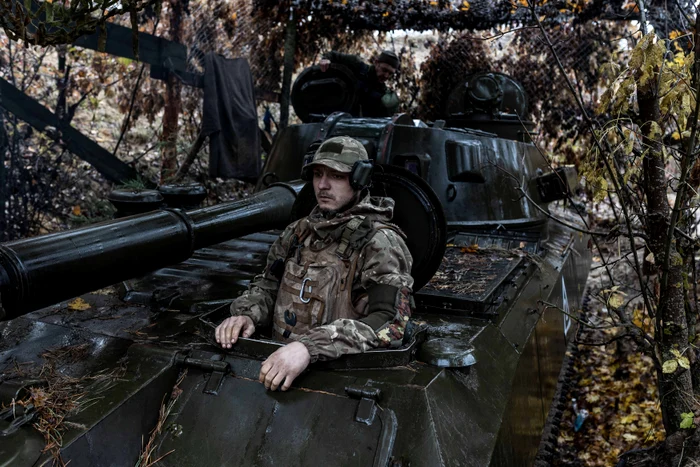
More than four years after the full-scale invasion, Russia has not gained a decisive advantage and its territorial gains remain limited, the analyst says. Although Russian forces continue to advance, progress is slow and difficult, and the military appears unable to effectively exploit any gaps in Ukrainian defenses.
“There is nothing inevitable about Russia's victory in Ukraine,” Freedman writes. He contests the idea, also floated by Donald Trump, that Moscow “holds all the cards” and that Ukraine should accept major territorial concessions to avoid greater losses. “If Russia holds all the cards, why has it achieved so little?” asks the author, pointing to the resilience and adaptability of a considerably smaller Ukrainian military.
Initial mistakes and turning into a war of attrition
According to the analysis, many of Russia's difficulties stem from the early days of the February 2022 invasion, when Russian forces underestimated the adversary and launched simultaneous offensives from multiple directions. The plan for a quick assault on Kiev failed, the supply lines became vulnerable and the troops were forced to withdraw. What had been conceived as a short war turned into a protracted conflict.
At the beginning of 2024, Moscow seemed convinced that it could win a war of attrition. Ukraine had been hit by the failed 2023 counter-offensive and was facing mobilization difficulties, while Russia continued recruitment and its economy was functioning, albeit under pressure.
However, the subsequent Russian offensive produced modest gains relative to the costs. Freedman estimates that in a single year Russia would have suffered around 400,000 casualties – dead, wounded or missing – to occupy around 0.8% of Ukraine's territory.
The goals of the Kremlin, not yet achieved
According to the analyst, neither the military nor the political objectives of President Vladimir Putin for the so-called “special military operation” have been met. Ukraine maintains its independence and, instead of being demilitarized, currently has one of the largest and most experienced armies in Europe.
Meanwhile, NATO has expanded with the addition of Sweden and Finland, and Germany is once again strengthening its military capabilities.
Freedman notes that Russia has become increasingly dependent on China, while oil revenues have fallen and the economy is plagued by high interest rates, inflation and modest growth.
Limited gains and stabilized front
The author notes that Moscow presented the capture of cities such as Kupiansk and Pokrovsk as major successes. However, Kupiansk has largely been recaptured by Ukrainian forces, and fighting for Pokrovsk continues, despite repeated claims of an imminent fall.
Even if Russia were to fully control Pokrovsk, the city's strategic value would be questionable, Freedman argues, given the considerable human and material resources consumed.
Ukraine, for its part, consolidated strong defensive lines around an urban arc consisting of Kostiantinivka, Drujkivka, Kramatorsk and Sloviansk. Moscow has demanded the surrender of these cities without a fight, but, according to the analyst, there are no guarantees that it will be able to capture them even by 2027.
War of infiltrations, not of great offensives
Freedman warns that it would be premature to declare the Russian offensive a total failure as fighting continues. However, the current characteristics of the front – where troops can be detected and struck quickly – make it extremely difficult to conduct rapid and large-scale offensives. Consequently, Russian advances depended mainly on small-scale infantry infiltrations.
He points out that President Putin seems willing to bear very high costs to pursue his geopolitical ambitions, and this factor may explain why the war continues. In Russia, the perception of defeat could only arise in the case of a clear and sustained withdrawal of troops.
Recent data cited by independent analysts show that Russian forces occupied about 126 square kilometers in February – the smallest monthly advance since last summer – while Ukraine reported recapturing some frontline towns.
For Freedman, the bottom line is clear: the disparity between the Kremlin's initial goals and the results achieved so far undermines the argument that Russian victory is inevitable.