You don't have to be on a battlefield to feel it. How might the war in Iran affect me personally?


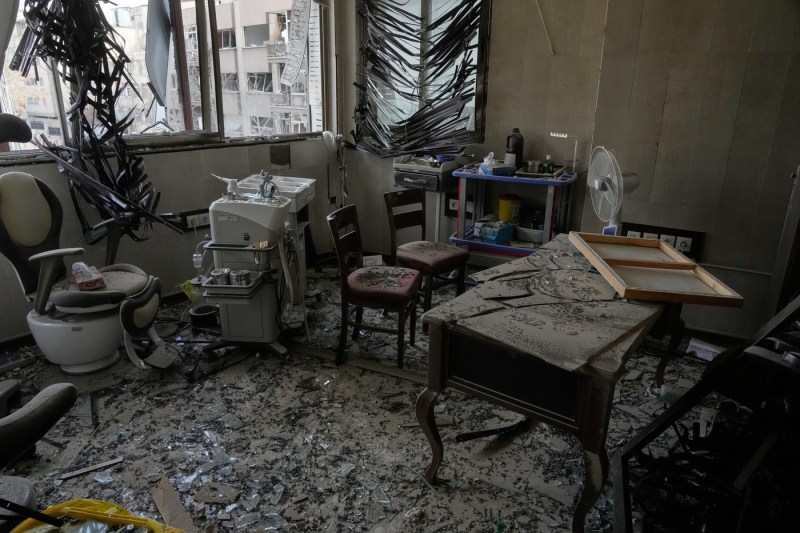
Image from a medical office of a hospital in Tehran, affected by the US-Israel raids Photo: Profimedia
What is the effect on prices, savings and rates on current or future credit.
First, let's say that the trade relations between Romania and the Islamic Republic of Iran are about 170 million euros annually. We export 120 million euros annually (mainly cereals – 110 million euros). We export 50 million euros annually (mainly plastics and plastic articles).
1. Energy and global prices
Even if Romania does not trade directly with Iran, global markets are interconnected.
Oil and gas prices may rise if the conflict disrupts supplies through the Strait of Hormuz – a key route for global oil shipments. When oil prices go up, fuel, transportation and energy costs go up almost everywhere.
Higher energy costs can contribute to general inflation, meaning you could see higher prices at the pump, on your electricity bills or for goods transported.
Example: A disruption of about 20% of global oil exports can push crude prices significantly higher, even if the conflict is far away.
2. Inflation and the cost of living
When energy prices rise globally, it doesn't just affect fuel:
Transportation costs become higher, leading to more expensive imported food and consumer goods. Companies can pass on increased costs to consumers → general inflationary pressure
The NBR can react by tightening policies (raising interest rates) to combat inflation, which can affect mortgages, loans and savings.
So, even if Romania is not a direct party to the war, your purchasing power may be affected.
3. Financial markets and investments
Geopolitical shocks tend to make investors more nervous: stock markets may become more volatile, investors may pull money out of riskier assets and seek “safe havens” such as gold or government bonds.
If you have investments linked to global markets or savings in foreign currency, you may feel this war indirectly
4. Migration and refugee pressure
Major regional conflicts often lead to increased migratory flows
Historical experience (eg Syria) shows that large refugee flows can affect labor markets, housing supply and public services even in remote regions.
Europe could face increased migratory pressure, which has social and economic effects in many countries in the region and beyond.
Even if you don't personally interact with refugees, national policies might change in response (immigration rules, social spending, security policies).
5. Cyber security and supply chain risks
Modern wars are not fought only with bombs:
Cyber attacks on companies, infrastructure, or financial systems elsewhere may occur as part of broader conflict strategies.
Global supply chains (electronics, auto parts, food) can be disrupted, increasing costs or causing shortages.
Conclusion
You don't have to be on a battlefield to feel the effects of a major geopolitical conflict. Global markets, energy and finance are closely linked – and distant disruptions can be reflected in inflation, prices, investment and economic policy in one's own country, even if it is geographically distant.
This article is an excerpt from the Economix newsletter that Dan Popa sends out every Thursday morning. If you wish, you can subscribe to the EconoMix newsletter here.