Why Washington and Tel Aviv see attacking Iran as an opportunity not to be missed. A dangerous time in the Middle East


The decision of the United States and Israel to open a new war front against Iran marks a moment of maximum tension, with consequences that are difficult to anticipate. Israel cited the “preventive” nature of the attack to justify it. Only the term implies the existence of an imminent threat. And the public evidence, so far at least, points to no such urgency. Rather, it appears to be a war of choice, not one imposed by circumstance.
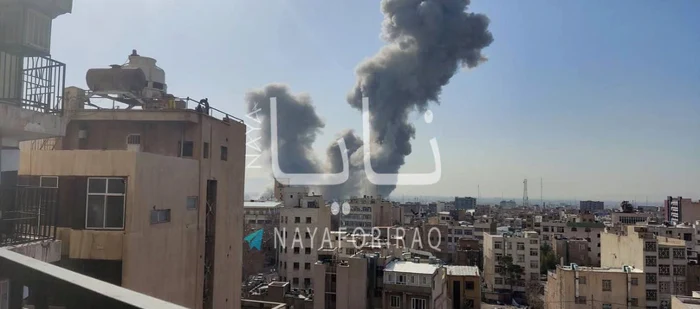
Locations in Tehran hit by Israel and the USA/PHOTO:X
The calculation made in Washington and Tel Aviv seems clear: the Islamic regime in Tehran is vulnerable. The economy is in a severe crisis, social unrest was brutally repressed earlier in the year, and the defense structures are still feeling the effects of last summer's war. In this logic, the moment would be a favorable one to strike decisively, the BBC reports.
But it is, at the same time, another blow given to an already shaky international system. The principle of self-defense, invoked by the leaders of the two countries, is difficult to support legally, in the conditions of a major imbalance of power between the US and Israel, on the one hand, and Iran, on the other.
Wars, once started, often get out of hand
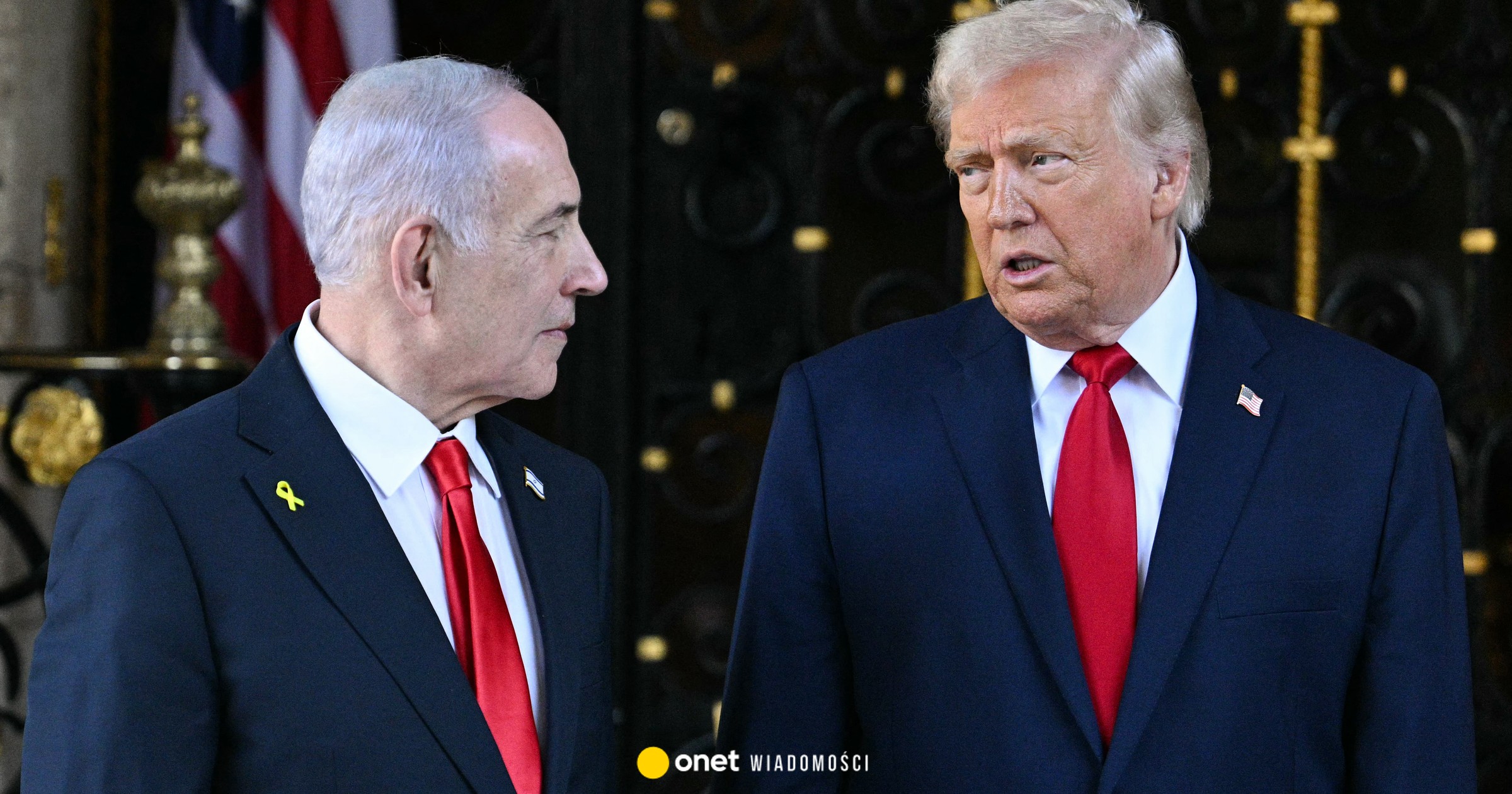
President Donald Trump has called Iran a global danger, and Prime Minister Benjamin Netanyahu has reiterated the idea of an existential threat to Israel. Undoubtedly, the Islamic regime is an avowed opponent of both states. But armed conflict is, above all, a political act. And wars, once started, often get out of hand.
For Netanyahu, the confrontation with Iran is a decades-old obsession. Domestically, he faces general elections at the end of the year, and the experience of the past two years of conflict with Hamas shows that his political position tends to strengthen in times of war.
In Trump's case, the goals have oscillated. At the beginning of the year, he was telling Iranian protesters that “help is on the way.” Meanwhile, the speech focused on the Iranian nuclear threat — despite the fact that, after last summer's war, the same Trump declared that Iran's nuclear program had been “annihilated.”
Tehran has consistently denied it is pursuing nuclear weapons, but the level of uranium enrichment exceeds the threshold justified by a civilian program. The regime may want to keep the nuclear option. However, to date, no evidence has been made public that Iran was on the verge of producing a bomb.
Both Trump and Netanyahu have sent direct messages to the Iranian population, suggesting that the war could usher in the “hour of freedom” and the chance to topple the regime. However, recent history shows that regime change does not occur only through aerial bombardment.
Saddam Hussein was ousted in 2003 by a massive US-led ground invasion. Muammar Gaddafi was overthrown in 2011 by rebel forces backed by NATO air power. In both cases, the result was state collapse and years of violence. Libya remains a fragile state and Iraq is still dealing with the aftermath of that war.
There is no democratic alternative ready to take over
Even if, hypothetically, the airstrikes would decisively weaken the Iranian regime, there is no democratic alternative ready to take power. In almost five decades, the Islamic Republic has built a complex system, supported by ideology, networks of interests and coercive force.
At the center of this system is the supreme leader, Ali Khamenei. Its removal would not automatically mean the collapse of the regime. The power structure is supported by the Islamic Revolutionary Guard Corps (IRGC) — the Guardians of the Revolution — a military and ideological force created precisely to defend the system from internal and external threats.
Trump's offer of “immunity or certain death” for those who would give up their guns seems unlikely to resonate in a system where martyrdom is central to political and religious discourse.
Moreover, Trump's transactional approach — the “art of negotiation,” in his own words — meets a reality dominated by ideology and faith in Iran. These variables are much harder to quantify than strictly material costs and benefits.
The distrust is deep
In his first term, Trump withdrew the US from the Iran nuclear deal, known as the Joint Comprehensive Plan of Action (JCPOA), a pillar of the Obama administration's foreign policy. There were indications that Tehran would be open to a revised version of the deal, if only to buy time. But American demands on the ballistic program and support for Iran's regional allies were deemed unacceptable — tantamount to a strategic capitulation.
For Iran's leaders, giving up its missiles and network of regional influence could have meant an even greater vulnerability than the risk of military confrontation.
Now, Tehran will calculate how to survive this new conflict and how to manage its consequences. Its neighbors, especially Saudi Arabia, are watching the escalation and the uncertainty it brings with concern.
The Middle East has a long history of crises that transcend the region's borders. A new, intensified conflagration deepens the instability of an already tense and fragile world.