“They took off directly from the trucks.” New details and pictures with Ukraine's blows on Russia's strategic aerodromes

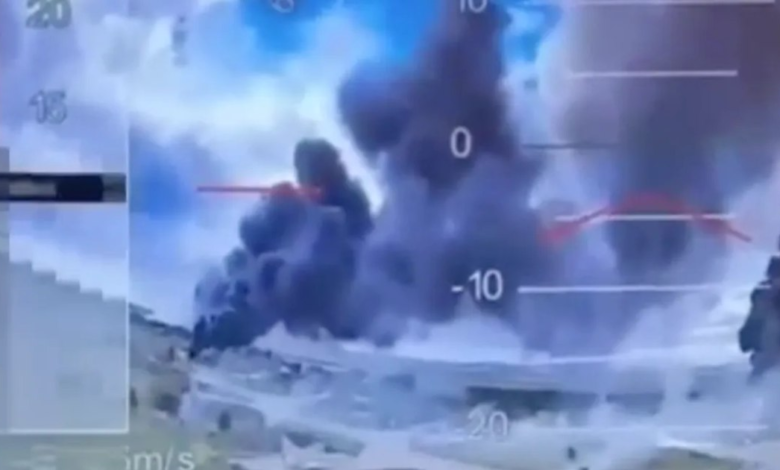
In a new signal that the war triggered by the Kremlin escapes from the control of Moscow, several strategic aerodromes of the Russian aerospace forces (VKS) have been hit, almost simultaneously, by drones inside the Russian Federation. According to images and video materials published in Russian social networks, Ukrainian drones attacked at least four military bases where bombers with nuclear capacity are stationed.
Drone launched from trucks near the base of Olenegorsk
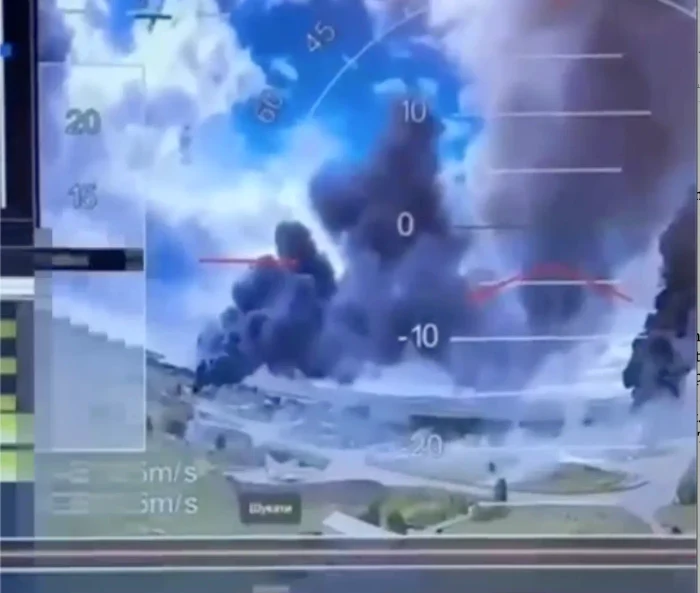
The most notable video sequence, which has circulated intensely on Russian Telegram channels, shows the moment when an attack drone comes off vertically from a truck near the “Olenia” air base in the Archangelsk region. According to local sources, the driver of the truck – which is stated that it would not have known the content of transport – was later detained by the Russian security forces.
The operation, which seems to have involved Done FPV (First Person View), shows a significant evolution in the ability of Ukraine's security service (SBU) to carry out deep operations, directly in the heart of Russia's military infrastructure.
Four bases attacked, in one day
So far, independent sources have confirmed blows on the following strategic aerodromes:
Olenia (Archangelsk region)-Base of TU-95MS bombers.
Belaia (Irkuțk region) – images with drones were published at low altitude over the perimeter of the aerodrome.
Diaghilevo (Saratov region)-where TU-22M3 aircraft are hosted.
Ivanovo (Moscow region) – possible target in the logistics network of air forces.
The media sources indicate that the operation bore the code name “Spider”, an action planned by SBU against air infrastructure that supports Russia's ability to launch cruise missiles, including H-101. According to monitoring groups, eight IL-76 transport aircraft would have been observed in recent days, landing on ENGELS-2-which suggests accelerated ammunition or equipment transport.
After a massive attack on the aerodromes, over 40 Russian aircraft were damaged, including Bombardiers A-50, TU-95 and TU-22M3, writes Focus.
The monitoring channels claim that the destruction of three TU-95MS aircraft at the Belaia Air Base in the Irkuțk region was confirmed preliminary.
Most TU-95MS aircraft, which launched H-101 cruise missiles above Ukraine, were redistributed here, 4,300 km from the border with Ukraine.
In addition, all 4 TU-95MS aircraft that were on the Olenia aerodrome were destroyed.
In total, over 95 strategic bombers and about 20 other military aircraft were attacked.
The nervous system of the defense industry, directly targeted
The attacks were not limited to the air infrastructure. In a telephone conversation intercepted by Ukrainian intelligence services (GUR), a woman from Saransk (Republic of Mordovia) confirms the destruction of a strategic factory over 550 kilometers of border. According to her, they “threw half of Saransk in the air”, and the region is facing massive internet interruptions and communications blockages.
The attacked unit produces fiber optic systems – an essential element in military communications, including for the drones used by Russian forces. The lack of the Internet has generated panic among the population: “The Ministry for Emergency Situations has sent a message, but today the network no longer works. We know nothing,” says the woman, visibly disturbed.
Internal terror and weaknesses exposed
The fact that Ukrainian drones can be launched directly from the Russian territory, hidden in seemingly civil vehicles, indicates serious breaches in Russia's internal security system. The tactic reminds of insurgent methods, but combines the technological expertise with thorough recognition actions of the vulnerable infrastructure.
At the same time, for Ukraine, these blows are not just symbolic. They put Russia under direct pressure to maintain the rhythm of the rocket attacks on Ukrainian cities – given that missile production, despite sanctions, remains dependent on identified and finished production centers.
The red lines become more and more unclear
These attacks raise questions about the possible reactions of the Kremlin, which so far avoids recognizing the extent of losses, but seems more vulnerable to an asymmetric war type that it cannot control. Russia's response has so far been confused: between denial and symbolic reprisals.
At the same time, the international community assists in an extension of Ukraine's range, without formally violating the lines imposed by the Allies – the drones are not ballistic missiles, and the fact that they are launched from the territory of Russia complicates the legal and military picture.
From communications factories at bombing bases, recent attacks indicate a new type of war – one that enters the territorial depths of the Russian Federation. And for the leadership from Kremlin, this new front is not only military, but also politically: the Russian population begins to feel, directly, the reality of a war that the official propaganda presents as a “special operation” under control.