The revolution that sowed hatred between Iran and Israel. How the two nations went from cooperation to all-out war

The relationship between Israel and Iran, transformed into a veritable “cold war” of the Middle East, is going through almost half a century of chronic hostility. Although initially Tehran represented for the Jewish state a crucial strategic ally in a region dominated by Arab adversities, the establishment of the theocratic regime in 1979 radically reversed the axis of power, transforming the former partnership into an existential confrontation.
The conflict between Israel and Iran began half a century ago PHOTO shutterstock
Israel attacked Iran's capital with missiles this morning. Heavy explosions took place, including near administrative buildings located near the offices of Supreme Leader Ayatollah Ali Khamenei. At the same time, President Donald Trump announced that the US has started a military campaign against Iran. It is the second US attack on Iranians in the past eight months, following the events of the summer of 2025, when the US military struck Iranian nuclear facilities in support of Israel. It was the so-called 12-day war.
This is just the latest stage in a conflict that has lasted more than half a century between Israel and Iran. It all started after the political changes in Iran in the 70s and the country's transformation into an Islamic theocracy led by ayatollahs. For Islamic Iranians, Israel is an “illegitimate Zionist regime”, an “occupier” and an imperialist force that must be removed from the area. For their part, the Israeli authorities consider Iran a constant threat, especially through the regime of the Ayatollahs, who over time have financed terrorist groups in Israel's neighboring states.
From enmity to friendship. Israel's only ally in a Muslim world
The story of relations between Iran and Israel obviously begins with the founding of the state of Israel in 1948, through the intervention of the great Western powers. Obviously, the appearance of Israel on the map of the Middle East led to widespread protests from Arab communities and Muslim populations, considering the partition of Palestine as an injustice. Moreover, from an ideological and religious point of view they did not accept the presence of Jews in a predominantly Islamic area. Originally, Iran, a state with a majority Muslim population, joined the anti-Israel movement in the late 1940s.
In 1947, Iran was among the 13 countries that voted against the United Nations Partition Plan for the British Mandate of Palestine. Two years later, Iran also voted against admitting Israel to the United Nations. Iran, along with India and Yugoslavia, predicted that the emergence of the state of Israel would lead to an escalation of violence and the emergence of new conflicts in the area. Shah Mohammad Reza Pahlavi predicted that the partition of Palestine would lead to endless fighting for several generations. Moreover, in the spring of 1948, 30,000 Iranians gathered in Tehran to protest the establishment of Israel.
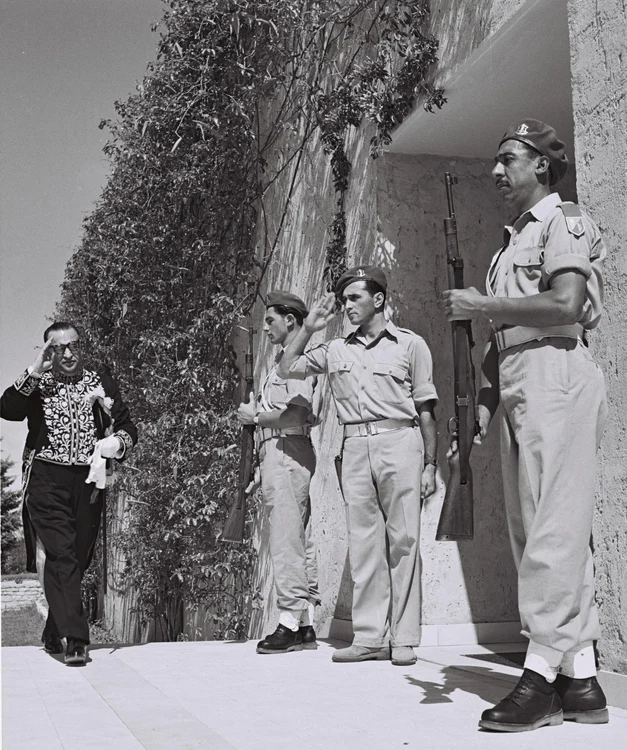
The Iranian minister visiting the president of Israel PHOTO wikipedia
However, after the establishment of the state of Israel became a reality, Iran adopted a pragmatic attitude being the second Islamic state after Turkey to recognize the sovereignty of the state of Israel. It was the only Islamic state in the area that accepted the presence of Israel and even maintained diplomatic and cooperative ties with it.
In particular, after 1953, with the seizure of power by Shah Mohammad Reza Pahlavi, the relations between Iran and Israel became very close from an economic point of view, but also from a logistical-military point of view. Especially when Shah Mohammad Reza Pahlavi was a follower of modernization and did not share the pan-Arab agenda. He was obviously an ally of the United States, opening the country to Western influences. For its part, Israel located in a hostile Arab world tried to find its geopolitical “anchors”, elaborating the so-called “periphery doctrine”. In short, finding non-Arab allies in the region.
On the list were Iran, Turkey and Ethiopia, states that were supposed to counterbalance the growing hostility of the Arab states. The best example of Israel-Iran collaboration was during the Six-Day War, when the Israelis were attacked by neighboring Arab states. Iran remained neutral but provided oil and resources to the resistance. In addition, the Israelis and Iranians had a joint military project called “Flower Project” through which they wanted to develop a new type of missile. Not to mention the very close economic, cultural and diplomatic ties. Iran supplied Israel with oil after the 1973 crisis, and Israeli and Iranian intelligence services cooperated against Soviet influence and radical Arab nationalism.
It was the era of the ayatollahs. The “Cold War” of the East
The Pahlavi Shah's reforms in Iran were contested especially by Ayatollah Khomeini, a powerful Islamic religious leader. He led the uprising of June 5, 1963, opposing the Shah and the “White Revolution”. Initially the revolt failed and the ayatollah was exiled. Later, however, the overly accelerated pace of modernization, doubled by the abuses and censorship of Shah Mohamed Reza Pahlavi's regime, led to radicalization and revolt. “The accelerated pace of development exacerbated the unequal distribution of wealth and led to a variety of social problems in Iran. Dissatisfaction with government policies was spreading across various segments of Iranian society.”specified Shiva Balaghi.
On February 1, 1979, Ayatollah Khomeini returned by establishing the Islamic theocracy, with far-reaching consequences in Iranian society and the world. First, the West's most important ally in Central Asia collapsed.
Later, the Iranian Revolution of 1979 served as a model for other anti-Western Islamic groups. But most importantly in the equation of Israel-Iran relations, the regime change in Tehran produced a definitive rift between the two states. Basically, it was the zero moment of the conflict that has lasted until today and is escalating at these moments.
In 1979, Iran severed diplomatic and trade ties with Israel. Iran's Islamic leaders declared Israel an “illegitimate Zionist regime,” a symbol of Western imperialism in the Middle East, and an ideological enemy that needed to be wiped off the face of the Earth, “Israel must be wiped off the map”said Ayatollah Khomeini, after taking power in Iran. He also stated at the same time that Israel is “a cancerous tumor in the heart of the Islamic world”. Israel's embassy in Tehran was closed and handed over to the Palestine Liberation Organization. For its part, from that moment Israel considered Iran a threat to the stability of the Middle East. To top it off, there was, even under these auspices, a brief period of covert cooperation between Israel and Iran during the Iran-Iraq War of 1980-1988.
However, a real “Cold War” had begun between Israel and Iran, also known as the “proxy conflict”. First, after 1980, Iran begins the “shadow war”. In 1982, when Israel intervened in the civil war in Lebanon, Iran supported the establishment and arming of the Shiite group Hezbollah. In parallel, it finances and arms the Palestinian Sunni resistance movement, Hamas. The organization is ideologically affiliated with the “Muslim Brotherhood” and considers the entire area of Israel to be Islamic territory that must be liberated. Basically, Iran has built a “Shiite arc” of influence around Israel, with militant groups, with terrorist actions in Lebanon, Syria, Iraq and later also Yemen. Israel perceived this expansion as an attempt at strategic encirclement.
The Gulf War and the start of the season of sabotage and assassination
The transition from proxy “cold war” to open hostility began in the early 1990s, shortly after the collapse of the Soviet Union and the defeat of Iraq in the Gulf War. Israeli Prime Minister Yitzhak Rabin's government has adopted a more aggressive stance toward Iran, and Iranian President Mahmoud Ahmadinejad has made bellicose statements against Israel. At the same time, Iran started the nuclear program which greatly worried Israel, but also the United States. Not to mention the fact that Iran was involved, by supporting Hamas, Hezbollah and the Houthis in all kinds of attacks during the 90s.
Since 2000, the international community has been discovering undeclared nuclear facilities in Iran. Israel claims that the ultimate goal is to obtain nuclear weapons, which would pose an existential threat.
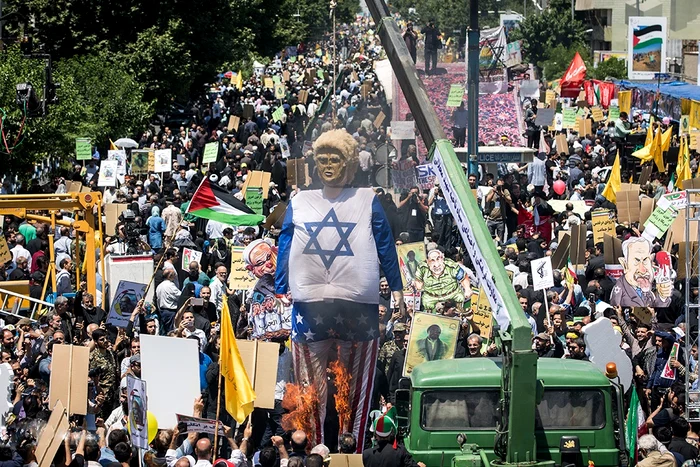
Anti-Israel demonstrations in Iran PHOTO wikipedia
Severe international sanctions followed, but also attacks by Israel on various strategic levels. For example, the Israelis sabotaged nuclear facilities, launched cyber attacks such as the Stuxnet virus, and carried out assassinations of Iranian scientists involved in the nuclear program.
In 2015, Iran signs the nuclear agreement with major powers (JCPOA), which temporarily limits its nuclear program. Israel, however, harshly criticized the agreement, considering it insufficient and temporary. At the same time, various Iranian and Israeli groups have been involved in direct military confrontations, such as the 2006 Lebanon War. Iran and Israel have also provided support to opposing factions in the civil wars in Syria and Yemen, and have continued cyber attacks and sabotage against each other, including attacks on nuclear and oil facilities.
“The War Between Wars”
Perhaps the most important moment that took the conflict between Israel and Iran to another level was the so-called “war of wars”. It all started with a 2023 Hamas attack on Israel, an attack said to have been backed by Iran. Israel responded with strong attacks and a long-term military campaign against Syria controlled by the Bashar al-Assad regime, targeting Iranian bases in this country as well as the Iranian consulate in Damascus. It was known that Bashar al-Assad was supported by Iran during the civil war and as a reward it allowed the Iranian military presence on the territory of Syria. In turn, Iran responded to these Israeli campaigns in Syria with a direct attack on Israel.
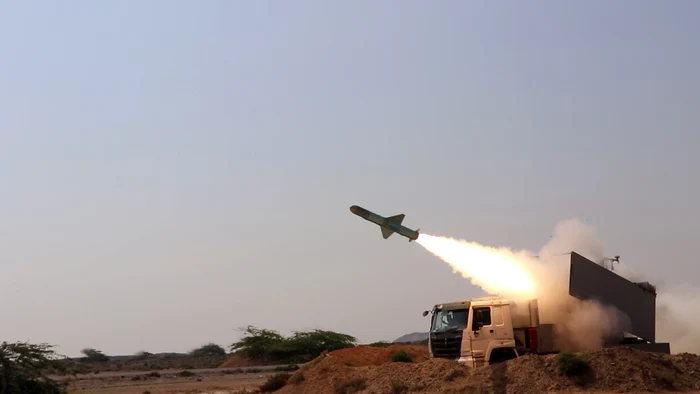
Naval exercises Iran PHOTO epa efe
The conflict escalated after October 7, 2023, with mutual attacks, both through intermediaries and directly. Islamic militias from Syria, Iraq and Lebanon were also involved. The operations were prolonged and in 2024-2025, amid the war in Gaza, tensions between Iran and Israel escalated to a period of direct conflict. Both states have carried out missile attacks on each other, and Israel has assassinated targets in Iran and Syria.
In 2025, Israel carried out attacks against Iranian nuclear and military targets, triggering the 12-day Iran-Israel War, involving the US military.