“Defense for hard money”. US strategy requires Europe to pay for security, otherwise it is left on its own


For a country like Romania, which has constantly relied on the strategic partnership with the USA, the Defense Strategy of the Trump administration is an alarm signal, says political scientist Sergiu Mișcoiu.

Trump is sending a tough message to Europe. PHOTO: EPA EFE
The Trump administration on Friday, December 5, published the new National Security Strategy, a 33-page document with a strong nationalistic character, which anticipates the “civilizational decline” of Europe, advocates stopping “mass migration” and reaffirms the goal of “American supremacy” in Latin America, according to an international analysis.
“In everything we do, we put America first”notes Donald Trump in the preface of the document, noting the need to “protect the country against invasions“.
The strategy announces the US intention to end “the era in which the US supported the entire world order, like Atlas”, marking a departure from the global role assumed after the Second World War, according to Agence France Presse,
The document warns that, “if current trends continue, the European continent will be unrecognizable in 20 years”against the background of policies that Washington considers destabilizing: massive migration, censorship of freedom of expression and repression of political opposition, and declining birth rates. The US also accuses a “loss of national identities” in Europe.
The document would question NATO's future, asking whether member states that will become “majority non-European” will still share the same vision of the alliance.
In addition, the report makes US military aid explicitly dependent on trade concessions and trade policy alignment.
Miscoiu: “If Europe wants further support and defense, it will have to pay for it”
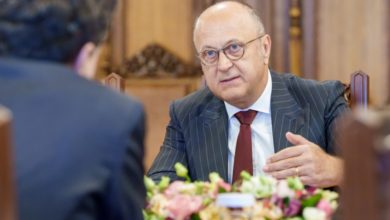
Political scientist Sergiu Mișcoiu, professor at Babeș-Bolyai University in Cluj and at Paris-Est Créteil University, explains for “Adevărul” what effect this strategy has on Romania's security and what we should do.
The professor summarizes the change regarding international security: “The document is well-constructed, clear and, even if it doesn't suit us, it puts Europe in front of a reality: America will strictly analyze what it gets in exchange for its support.”
One of the major changes observed in the strategy is the shift towards a foreign policy dominated by transactionism. Miscoiu emphasizes that this logic is “the main feature of the new American foreign policy”, and the implicit message is clear: “If Europe wants continued support and defence, it will have to pay for it“.
In addition, the axis of strategic competition is moving decisively towards Asia: “Competition with China is central to the strategy. The western world relevant to the US is that west of the United States, not Europe.”
For Europeans, including Romania, the consequences are huge. Where previous US strategies talked about “defense of European allies at all costs”the new document no longer contains such firm commitments.
“Now the American umbrella has a doctrinal basis that clearly says it will not work as we have been led to believe.”
The end of the US-Romania special relationship
The American strategy, paradoxically, validates the European discourse about the need for autonomy. “We are facing a formal decision: we must do everything to defend ourselves together with our European partners, increase our collective resilience and strengthen our strategic autonomy“, says the teacher.
The message is reinforced in an unusually direct manner: “We do not have any kind of guarantee formally offered by the United States of America.”
For a country like Romania, which has constantly relied on the strategic partnership with the USA, this wording is an alarm signal, says Mișcoiu.
In the Romanian public debate, the idea persists that Bucharest has a privileged relationship with Washington, but the new strategy dismantles this perception.
The teacher explains: “These guarantees that appear now are guarantees related to the effective interest of the States of America as an investor, as a stabilizing factor, as a defender of its own interests in Europe. We are leaving the paradigm in which Europe was protected by the United States by virtue of certain ideas, principles. The document shows that the promotion of liberal democracy, the world institutional order and other such principles previously existing, all of these are reconsidered and changed with a pragmatic strategic behavior of the United States that defends its possible interests that they have in all countries of the world, including Romania. The United States is pursuing its own interests. If co-opting Russia into an anti-China alliance serves the American interest, then this will be the direction.”
What will Romania spend 5% of GDP on?
This paradigm shift places Europe in a zone of strategic uncertainty. American guarantees become conditional, and the conditions are political, financial and ideological. “The guarantees depend on the opinion that America will have at the time. There are no automatic promises“, emphasizes the expert.
Another controversial element of the document is the request that NATO states allocate 5% of their GDP for defense. The question is: will we be defended if we invest 5% of GDP on defense or is this conditional on buying American weapons?
“Both issues have to be taken together. I don't think it's conceivable that the U.S. is going to guarantee the security of Europe to the extent that European states are strengthening their own defenses themselves through their own forces and spending with the European arms industry. It's a direct invitation to buy from the United States of America, including with control from the United States of America over, for example, the planes and the directions they take and the missions these planes do. So basically everything it depends on the expenses that the Europeans will make in relation to the Americans. The Americans will sell, they will endow, they will provide maintenance, and they will be the ones to monitor, and the Europeans have to pay, and I think that, from Trump's point of view – and this is reflected in this strategy – it is not a matter of small things, but much more important amounts that go in this direction”, explains Miscoiu.
The logic is clear: if the Europeans pay, the Americans remain present. If not, Washington guarantees nothing.
But the American presence is not only military – it is also industrial. “Hitting American interests in a possible conflict would push the US to defend Romania. Only in this sense can we interpret the guarantees”, MIșcoiu shows.
Although the strategy does not directly nominate states, the professor notes a special relationship between Washington and Warsaw: “There is a much closer attitude towards Poland, for historical, pragmatic and ideological reasons.”
Poland has massively bought American weaponry, maintained a powerful lobby in Congress, and cultivated an ideological rapprochement with the Trump administration: “The Trump era means prioritizing those who 'sing your tail' and criticizing those who are not on the same page.”
In the context of the negotiations regarding the SAFE program – the European armament strategy – the professor draws attention to the fact that Romania has a limited margin of maneuver.
“If each country does its own procurement, without European coordination, the program will be a failure. We will have congestion in some areas and major shortages in others.”
In other words, chaotic acquisitions could weaken the very defense system that Europe is obliged to build.
“We have no other chance than to strengthen the common European defense”
Perhaps the most sensitive point concerns the message sent to Russia. According to the professor, the document can be interpreted in Moscow as an indirect encouragement:
“If an American doctrine talks about restoring strategic stability with Russia, it will read that it has a free hand in certain areas.”
The formulation of the strategy suggests that Washington is avoiding getting more deeply involved in the conflict in Ukraine at a time when competition with China is a priority.
“Russia will raise this document as a work of art”says the professor sarcastically, indicating that Moscow could interpret the text as legitimizing its own ambitions.
The new American strategic document is not just a change of tone, but a geopolitical pivot. Europe is invited – or forced – to massively increase defense spending, strengthen its military industry and take charge of its own security.
The essential message was thus summarized by Mișcoiu: “We have no other chance than to strengthen the common European defense. Automatic protection is gone. We are in a different logic.”