The issue of the Chagos Islands causes a storm in NATO. Trump criticizes the British Prime Minister


What is the importance of the Chagos Islands?
Why did the dispute over the Chagos Islands arise?
What might happen if no agreement is reached on the islands?
What are the conclusions of Starmer and other US allies?
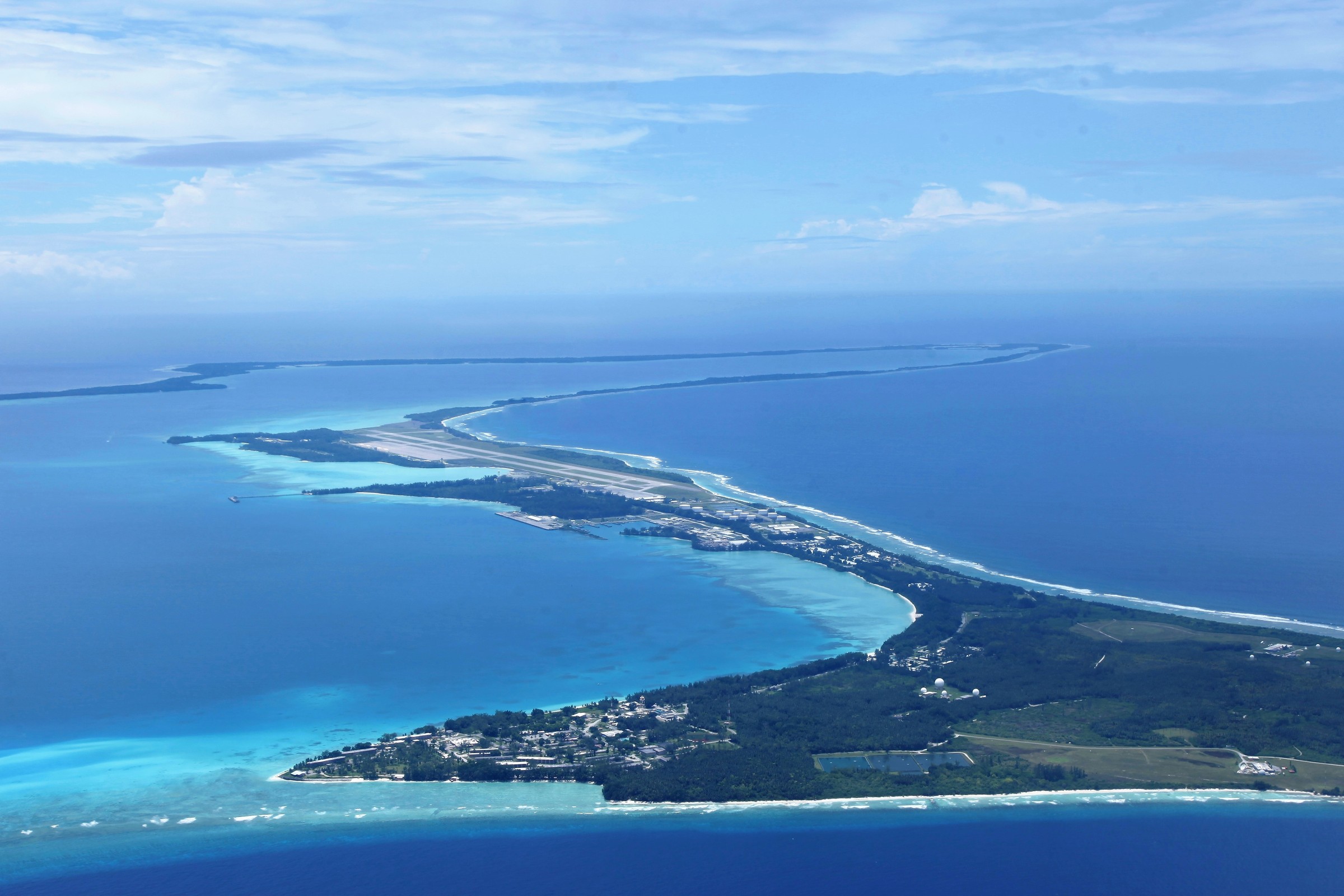
The British Indian Ocean Territory contains approximately 60 islands, most of which are tiny and uninhabited coral islets jutting out of the waves. The exception is Diego Garcíawhere there is a military base considered one of the most strategically important American outposts.
After long and arduous negotiations that began well before Starmer took office, Britain appeared close to reaching an agreement to hand over the territory of the former British colony to Mauritius and at the same time enter into a 99-year lease to maintain Diego Garcia. The aim was to prevent international legal tribunals from declaring Britain's occupation of the territory unlawful – and the agreement was endorsed by the US State Department just days before Trump criticized it.
Politico spoke to Ben Judah, former special adviser to British Foreign Secretary David Lammy, about why the territory matters and what it means for future Anglo-American relations.
What is so important about these islands?
There is an old saying that they are in the middle of nowhere, but they are halfway to everything. The Chagos Islands are some of the most strategic real estate in the world – if you want to be in a dominant position in the Indian Ocean, overlooking Africa, the Middle East and, of course, Asia.
Why has there suddenly been a dispute about them?
What made sense for the United States in the 1960s, maintaining colonial power, became a problem for both the United States and Britain. The reason for this is that the method of decolonization has left Britain's legal position on the verge of collapse. The International Court of Justice issued a non-binding resolution. The UK Foreign Office, the US Department of State and all other important legal departments around the world know that it is inevitable that a binding judgment will be made declaring the British Indian Ocean Territory an illegal occupation of the territory of Mauritius. This means that this key Anglo-American superbase will, in the eyes of the rest of the world, be located in illegally occupied territory.
So why should we care? The hard power reason is that there isn't just one island called Diego Garcia. There are 1,000 atolls around it, stretching over a huge area – from the tip of the Maldives to the deep waters of the Indian Ocean. If no agreement is reached and a binding judgment is issued – and this will happen – Mauritius will not only resign from the agreement, but also distance itself from the West.
This is a country of key importance in the great game for the Indian Ocean and will most likely rely on China. Mauritian authorities may even invite China to all other atolls. This may start with the arrival of a Chinese fishing fleet there, and then it may develop into the arrival of a Chinese research station. Suddenly, a Chinese base, supported by the full force of international law, may appear within Diego Garcia's striking and listening range.
So why is Trump exaggerating this issue?
The prime minister's mistake was to think that he still lived in the world of foreign policy, Western unity and deep consensus on the national interest. US Senator Arthur Vandenburg used to say that politics ends at the seashore – but that's no longer true. The British right is waging a diplomatic campaign in the United States to make the idea of British sovereignty over these territories, as some of the last remnants of empire, a kind of totem of what it means to be a global right – to oppose international law, to oppose any idea of giving up territories. Trump, who sees himself as the leader of the global right and is actually its leader, is influenced by the campaign led by people such as Boris Johnson, Liz Truss and Nigel Farage.
What lessons do Starmer and other US allies both in Europe and beyond draw from this?
The conclusion drawn in London is that in the 20th century the Anglo-American alliance was capable of subtlety realpolitikbecause there was a common sense of national interest on both sides. Now it's a thing of the past. Both societies have become emotional, turbulent, social media-driven, and simply unable to conduct politics as subtle as during the Cold War. This is my lesson.
I think the lesson we need to draw from this is to be aware of what our societies will be capable of – and what they will not be capable of – in the great game with China in the 21st century.