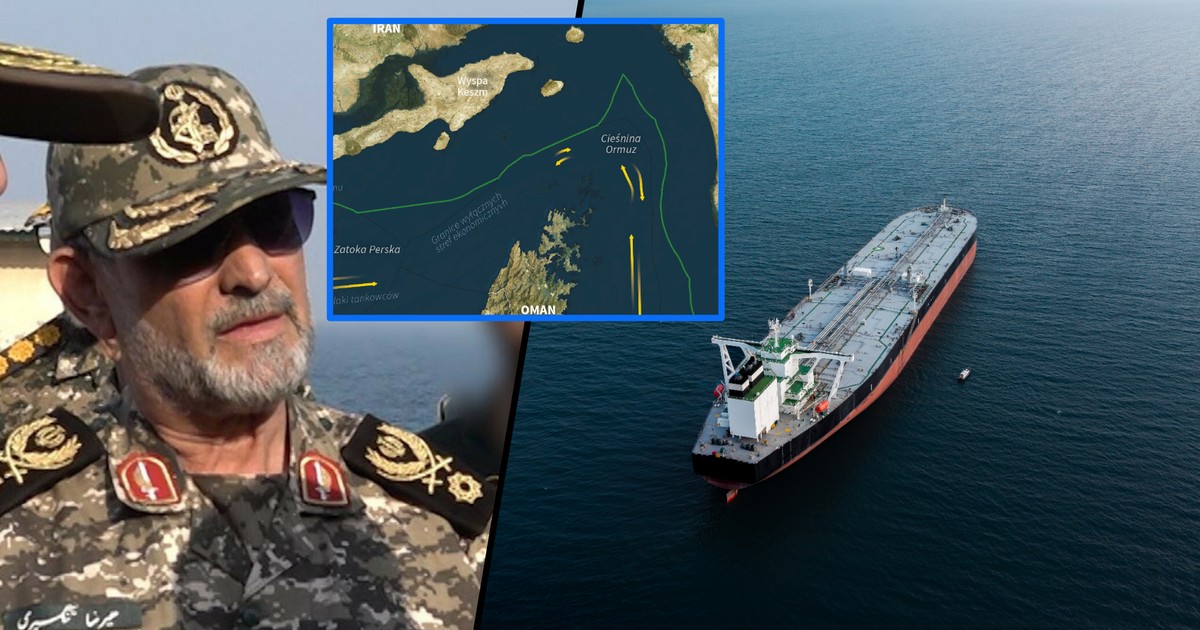
Strait of Hormuz it is a strategic waterway. Iranian Revolutionary Guards say the passage of ships through the strait has been stopped, says an official of the EU naval mission, quoted by Reuters.
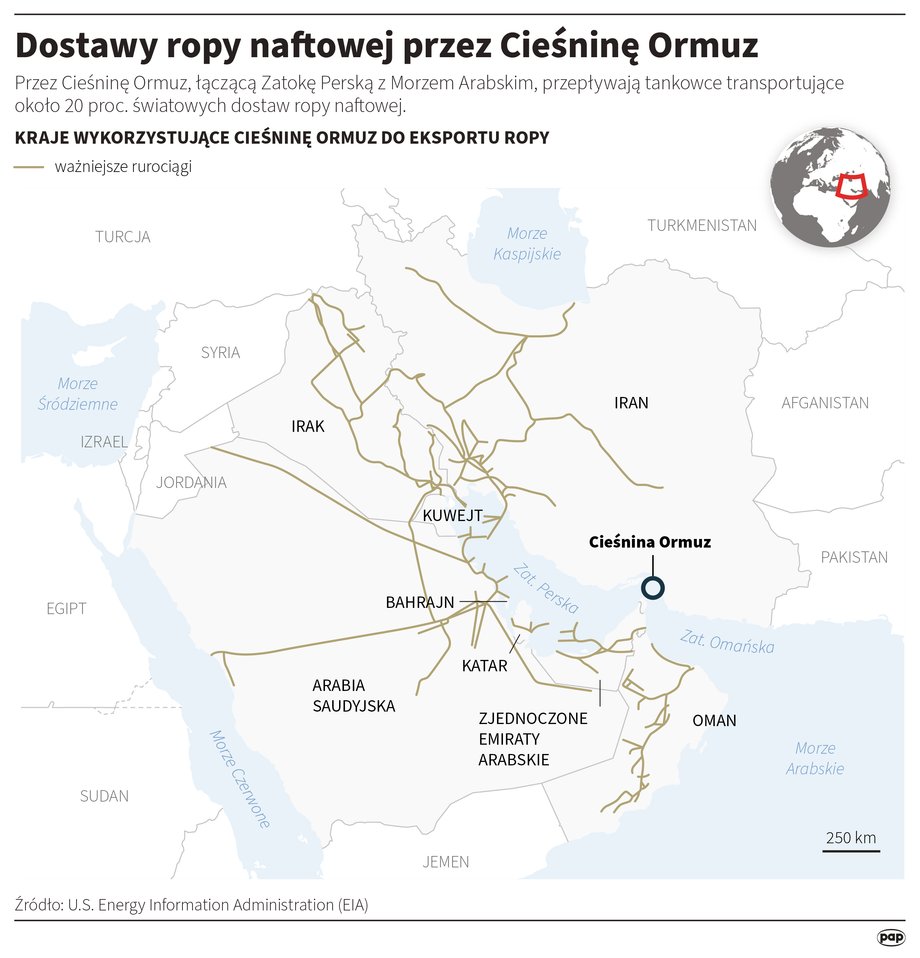
The rest of the infographic:
|
Adam Ziemienowicz / PAP / photos
An official with the European Union's Aspides naval mission said on Saturday that the ships had received a VHF transmission from Iran's Revolutionary Guard that showed “No ship can pass through the Strait of Hormuz”.
After the US and Israel attacked Iran on Saturdaythe Strait of Hormuz took center stage. The strait located between Iran and Oman is the world's most important oil export route, connecting the largest oil producers in the Persian Gulf with the Gulf of Oman and the Arabian Sea. The entire northern part of the strait is under Iran's jurisdiction.
Continued below the video:
Iran blocks the Strait of Hormuz
Information about the warnings issued from Tehran was confirmed by Farhad Patel, director of the Dubai-based Sharaf shipping agency, in an interview with TheNationalNews. As Patel points out, individuals linked to the interests of the United States or Israel are particularly vulnerable to repression by the Iranian armed forces. However, as the Dubai shipowner adds, other ships may also become the target of both intentional and accidental attacks.
See also: Will Donald Trump ask for NATO help after the attack on Iran? The expert explains
The official, who spoke to Reuters on condition of anonymity, said that Iran has not formally confirmed such an order. Tehran has been threatening to block the narrow waterway for years in retaliation for a possible attack on the Islamic Republic.
Blockade of the Strait of Hormuz. “Ships will seek shelter”
After receiving information about the closure of the Strait of Hormuz, the Greek Ministry of Shipping advised the crews of Greek-flagged ships to avoid the Persian Gulf, the Gulf of Oman and the Strait of Hormuz. The British authorities issued a similar recommendation.
“Ships that are already in an area at risk of hostilities will most likely seek refuge in the waters of neutral countries, such as the United Arab Emirates or Qatar, and some will even leave the area,” said Jakob Larsen, director of safety and security at the world's largest shipping association BIMCO.
See also: Orlen under pressure after the attack on Iran? Experts on the possible effects of war
Where is the Strait of Hormuz?
This strait, which is barely 30 km long, is crucial from the point of view of the global economy and supply chains, especially oil.
Already in mid-February, Iran announced a temporary restriction of access to a part of the Strait of Hormuz, which connects the Persian Gulf with the Gulf of Oman and through which more than one fifth of the world's oil production is transported. The reason for this decision were military exercises using live ammunition conducted in a water area closed by Iran.
Approximately 19-20 million barrels of oil and petroleum products flow through the Strait of Hormuz daily, which is approx. 27 percent global oil trade. Possible hostilities resulting a trade halt would be a global shock.
Source: Reuters, PAP