Construction of the USS Gerald R. Ford (named after the former US president, Gerald Ford), started in 2005 at the Newport News shipyard in the USA. The ship was christened in 2013 and handed over to the Navy in 2017.
USS Gerald R. Ford stayed formally commissioned by President Donald Trump on July 22, 2017. The ship left the naval base, Naval Station Norfolk, in 2022 and set off on its inaugural mission in the Atlantic Ocean.
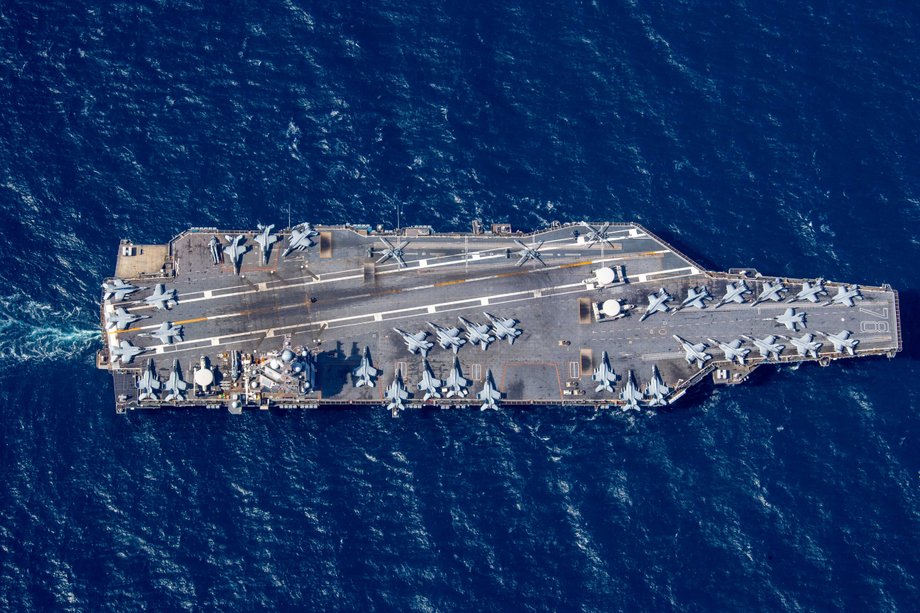
USS Gerald R Ford during its voyage across the Atlantic in 2023
|
US Department of War
USS Gerald R. Ford – features
| USS Gerald R. Ford | |
|---|---|
|
Length |
333 – 337 m |
|
Deck width |
78m |
|
Height |
76 m |
|
Dipping |
12 m |
|
Number of decks |
25 |
|
Power |
2 x A1B nuclear reactors (300 MW) |
|
Drive |
4 screws |
|
Speed |
56 km/h (30 knots / 35 mph) |
|
Loading |
100,000 t |
|
Number of aircraft |
75+ |
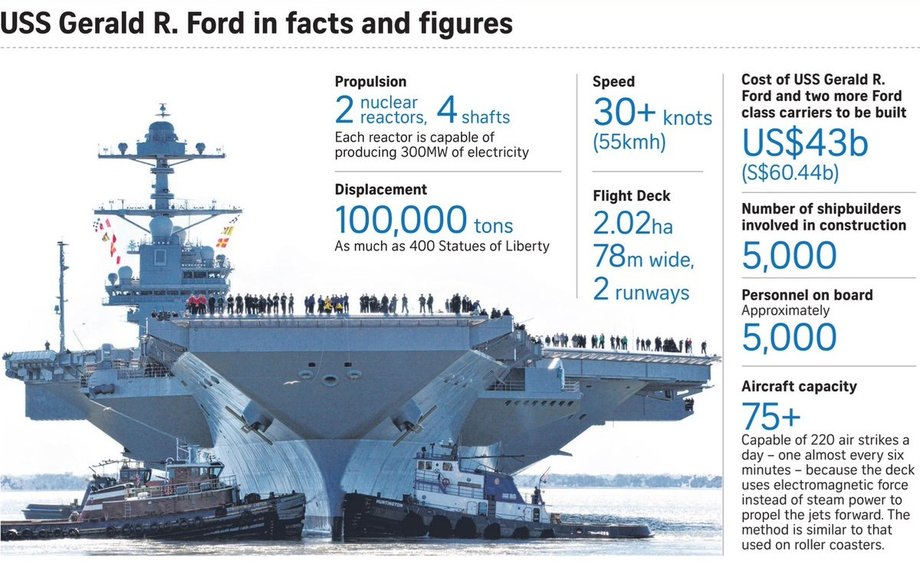
USS Gerald R Ford – features
|
reddit/moon_man104
In addition, the aircraft carrier is equipped with a modern, electronic radar system AN/SPY-3 and AN/SPY-4, electromagnetic catapult (thanks to which it can launch 25 percent more aircraft per day) and a narrower, but 6.1 m higher (compared to older Nimitz units) island located closer to the rear of the aircraft carrier.
It's not only that these days the world's largest aircraft carrierbut also the largest nuclear warship ever built.
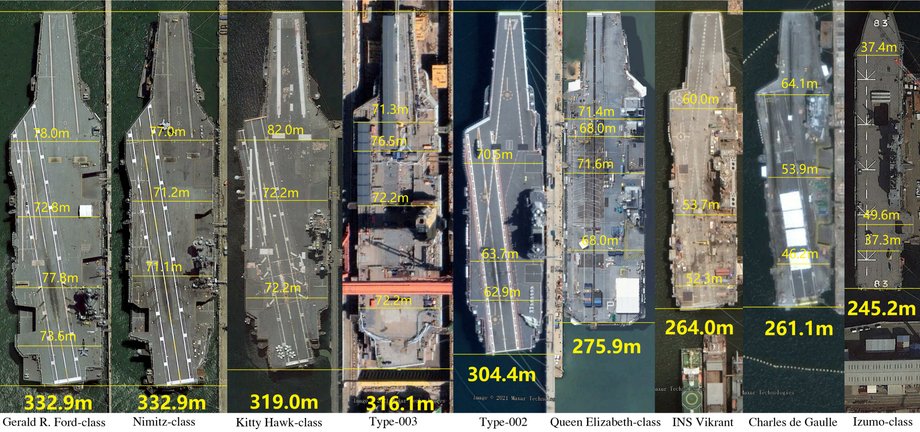
Aircraft carrier size comparison. The USS Gerald R. Ford is the same length as the Nimitz-class ships but is wider. However, it is much longer than the wider Kitty Hawk class ships
|
twitter/@horobeyo
USS Gerald R. Ford – size comparison
This is how the length of the USS Gerald R. Ford compares with the height of the Eiffel Tower.
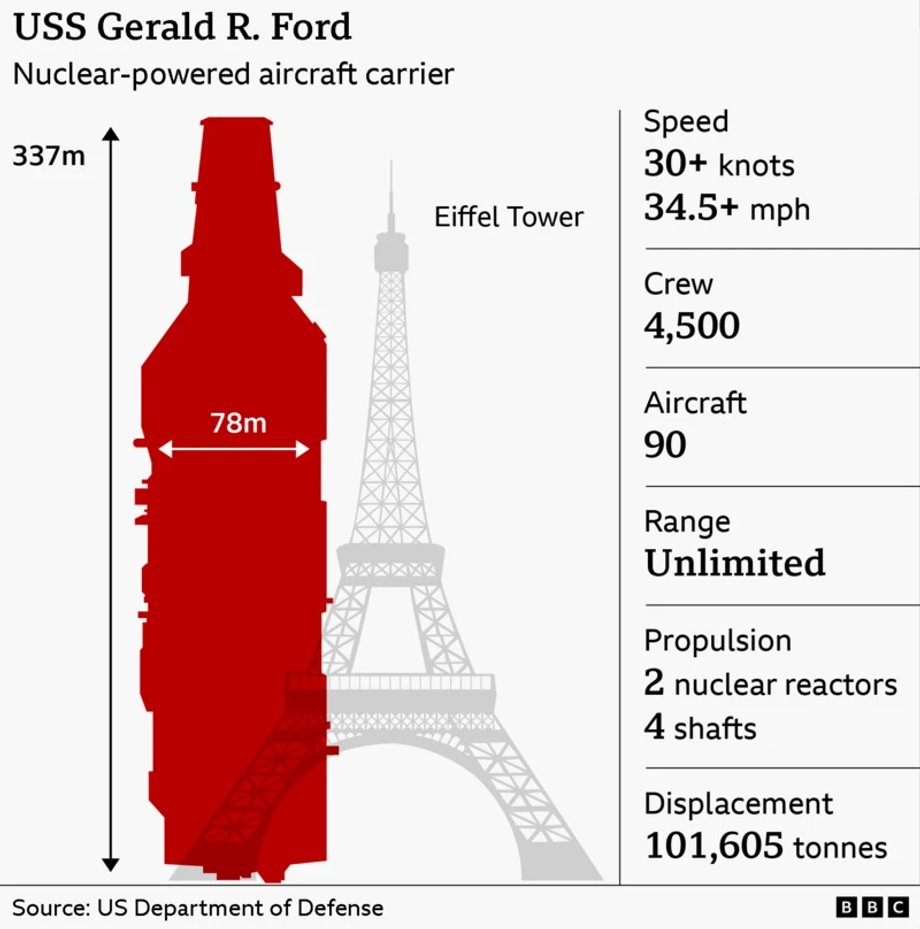
USS Gerald R Ford and the Eiffel Tower
|
US DEPARTMENT OF DEFENSE
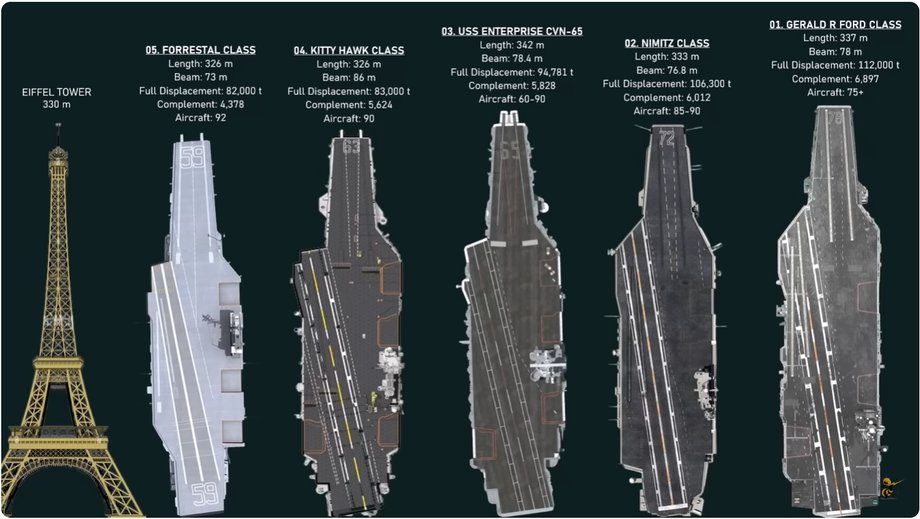
USS Gerald R Ford vs the Eiffel Tower
|
YouTube.com/@thebuzz4108
USS Gerald R. Ford – weapons and instruments
Missiles:
- 2 × RIM-162 ESSM – area and point defense missile system, operating at a longer distance (50 km) and at a much higher speed
- 2 × RIM-116 RAM – short-range system (below 10 km) designed to combat fast, low-flying missiles in the final phase
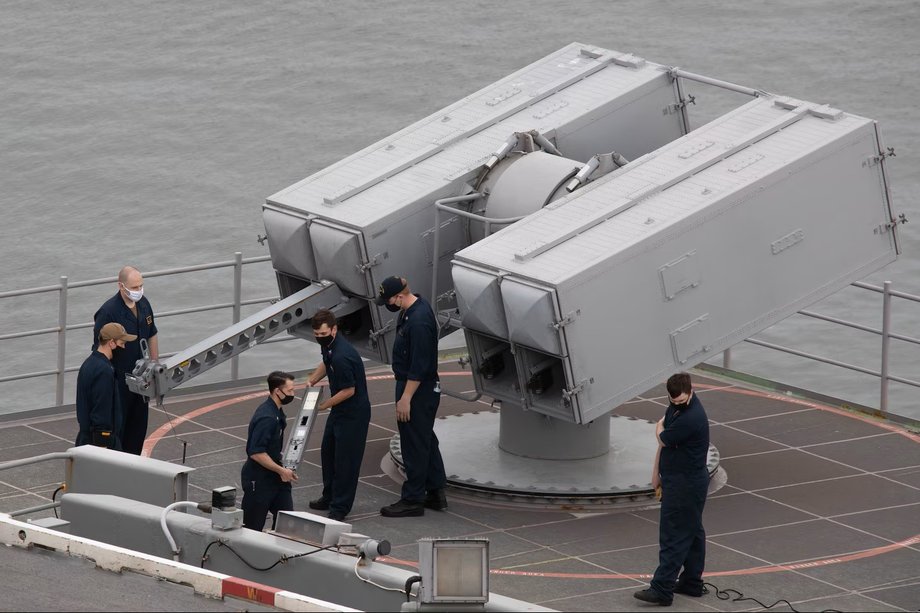
USS Gerald R Ford – RIM-162 ESSM launcher
|
US Navy
Works:
- 3 × Phalanx CIWS – automatic defense system against incoming threats, such as planes, missiles, but also small boats.
- 4 × Mk 38 25 mm – for protection primarily against various surface threats, especially small and fast units
- 4 × M2 .50 Cal. (12.7 mm) – against lightly armored vessels or low-flying aircraft
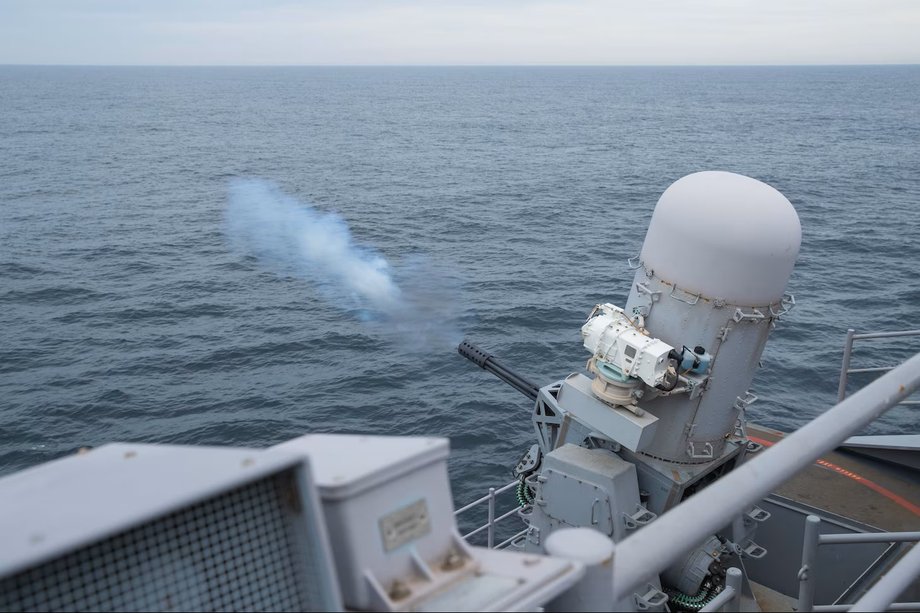
USS Gerald R Ford – Phalanx CIWS
|
US Navy
- Read also: The world's largest warship has arrived in Europe. Russia is dissatisfied
Strike group – not just the aircraft carrier USS Gerald R. Ford
Of course, the aircraft carrier does not sail alone, but is part of a larger group. The entire Carrier Strike Group focuses on:
- USS Gerald R. Ford (based in Norfolk)
- four squadrons of F/A-18E/F Super Hornet strike fighters
- EA-18G Growler electronic warfare aircraft (from the 142nd Electromagnetic Attack Squadron)
- E-2D Hawkeye warning aircraft
- C-2A transport plane – designed to transport supplies to aircraft carriers
- MH-60R/S multi-role helicopters – for strike tasks and combat support at sea.
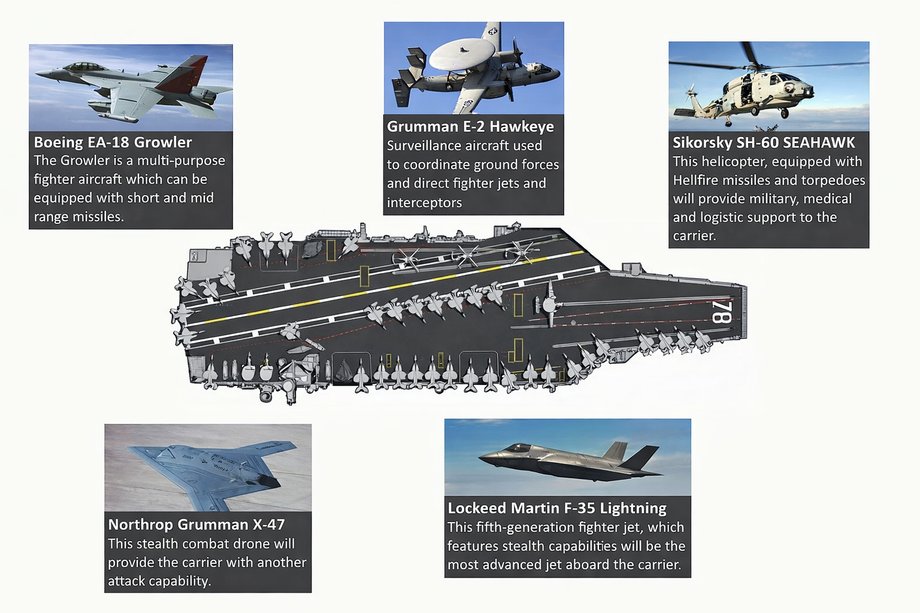
USS Gerald R Ford – planes
|
http://www.diseno-art.com/
The group's air defense commander is guided missile destroyer USS Winston S. Churchill, while the 2nd Destroyer Squadron includes USS Bainbridge and USS Mahan. This composition provides a layered layer missile defensemulti-level strike capability, electronic warfare and early air warning.
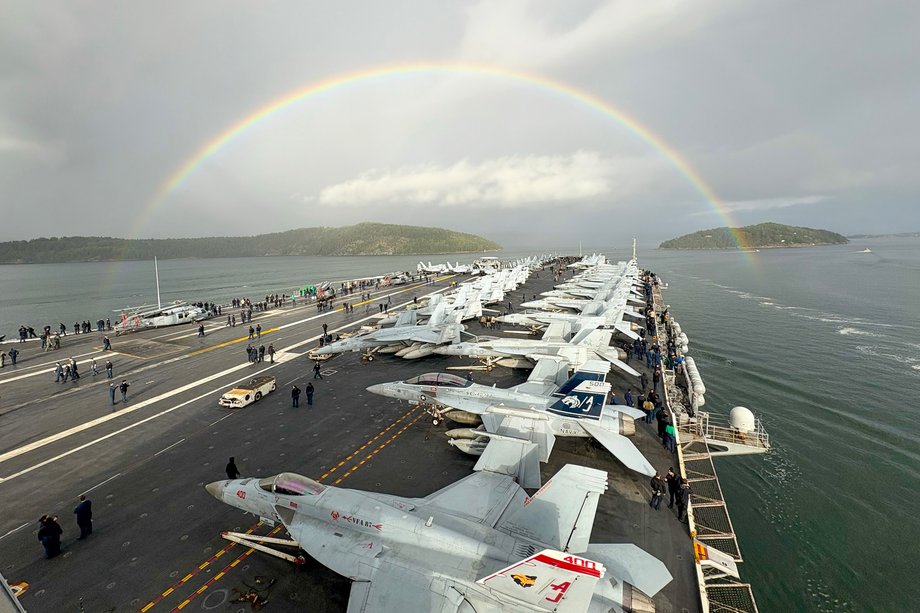
Planes on board the USS Gerald R Ford
|
US Department of War
The aircraft carrier strike group, centered around the flagship of the US Navy, constitutes one of the most powerful naval formations currently deployable.
USS Gerald R. Ford entering the Mediterranean Sea
Transit to the port of Souda took place after the ship entered the Mediterranean Sea via Gibraltar on February 20. This was part of increasing US military capabilities to support an attack on Iran.
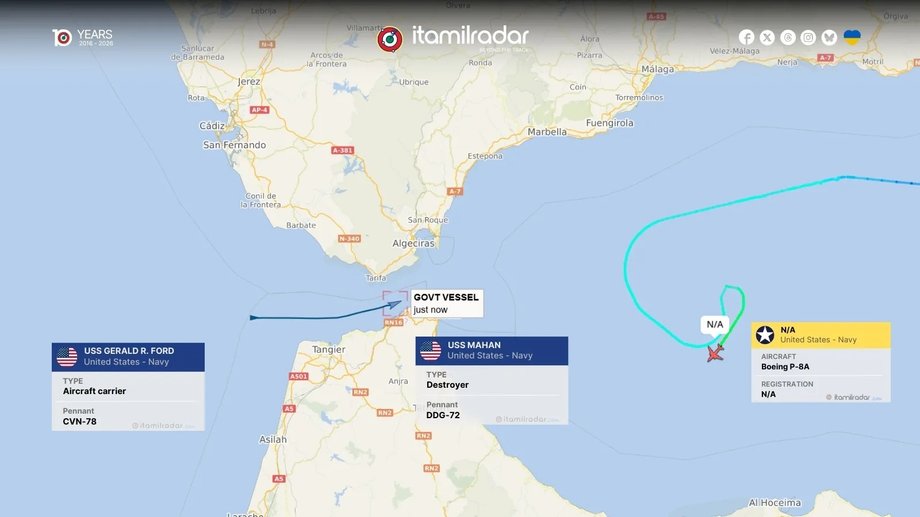
USS Gerald R Ford enters the Mediterranean Sea via Gibraltar – February 20, 2026
|
itamilradar
The first ship to enter the Mediterranean Sea was the Arleigh Burke-class destroyer USS Mahan, operating in front of the aircraft carrier. The aircraft carrier USS Gerald R. Ford followed the formation, moving east, and a U.S. Navy P-8A Poseidon fighter from Sigonella, Sicily, monitored the crossing. The group will join the aircraft carrier USS Abraham Lincoln and other warships already operating in the Middle East.
USS Gerald R. Ford in Souda, Crete, Greece
On Monday, February 23, 2026, the USS Gerald R. Ford arrived at the port of Souda Bay in Crete, a strategic NATO hub.
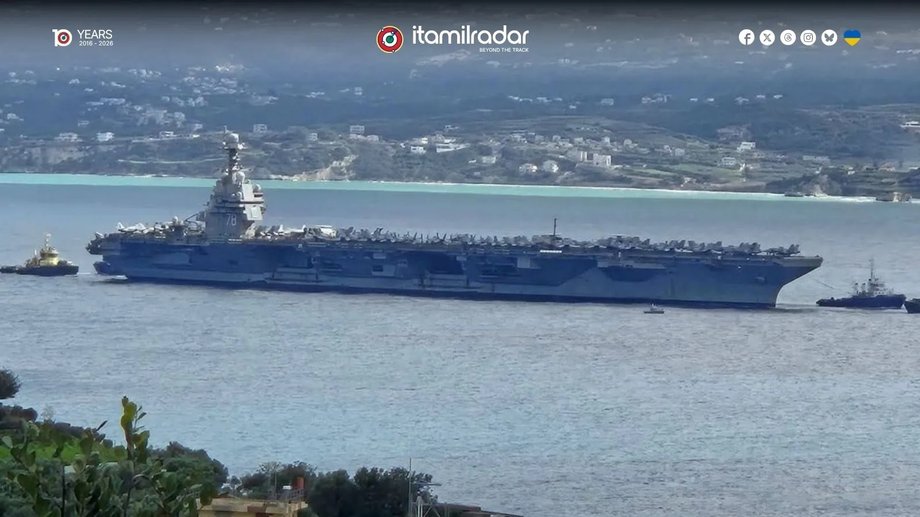
USS Gerald R Ford enters the port of Souda
|
itamilradar.com
A strategic break before heading east
Suda Bay has long served as logistics and operational center for US and NATO naval forces operating in the Mediterranean Sea. A stop here allows for resupply, crew rest, coordination with regional partners and final operational adjustments before continuing east.
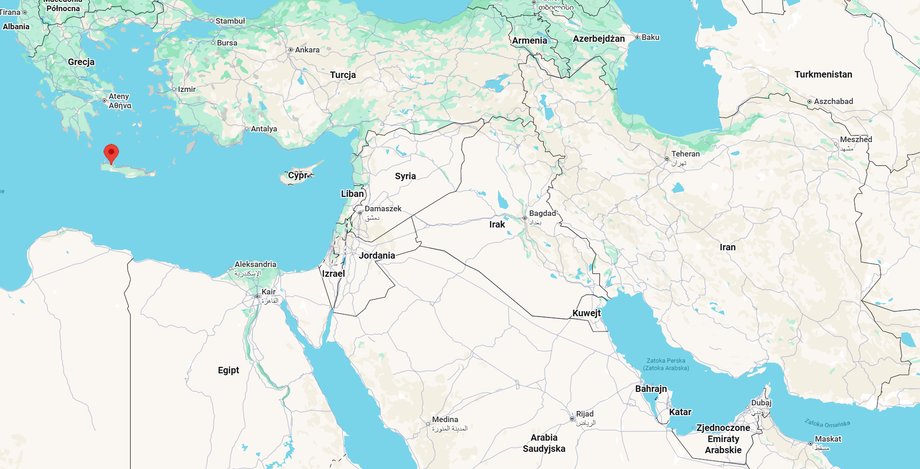
Location of the Gulf of Suda relative to Iran
|
Google (screenshot)
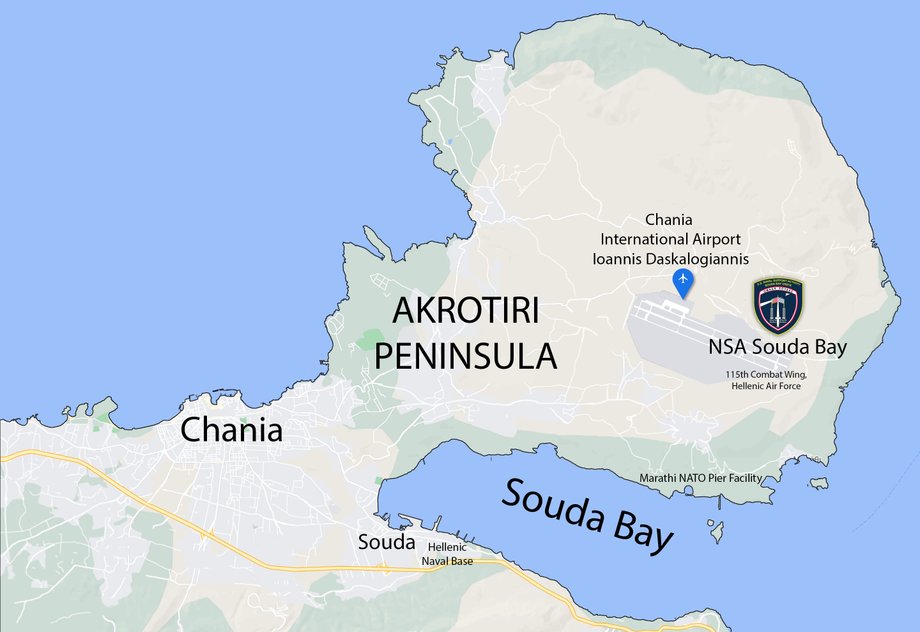
Suda Bay
|
CNIC
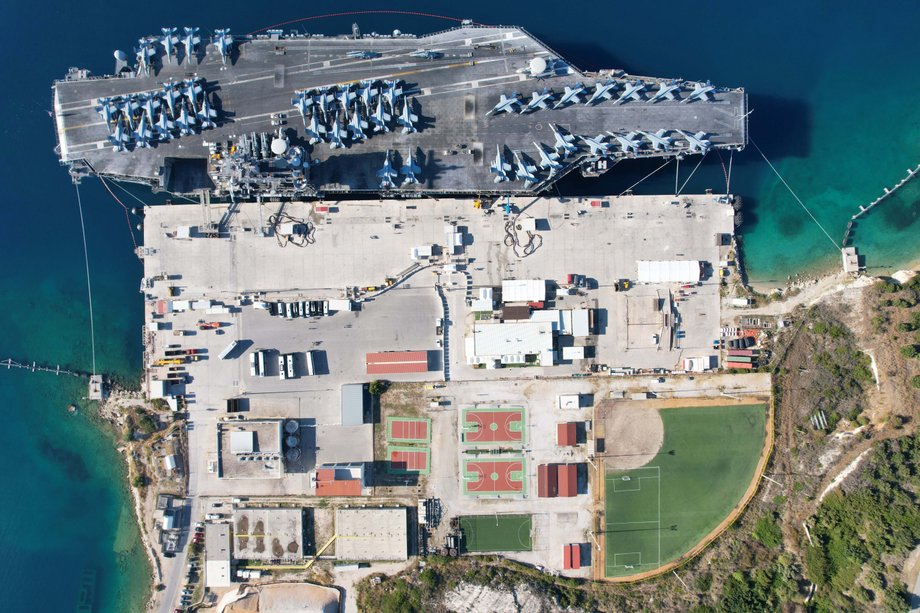
The aircraft carrier USS George HW Bush in Suda Bay
|
Nikolaos Fragos / US Department of War
Empowerment
In recent days, just before Saturday's attack on Iran, American air and sea movements towards Persian Gulf and the wider Middle East have accelerated. The United States has significantly strengthened its position in the region by deploying tankers, reconnaissance (ISR) platforms, fighters and additional naval units.
According to reports citing “The Wall Street Journal”, Americans gathered in the region the largest air force since the 2003 invasion of Iraq.
- 48 F-16 fighters
- 12 5th generation F-22 Raptor fighters
- 30 F-35 Lightning fighters
- 6 E-3G Sentry AWACS early warning aircraft
- 1 E-11A BACN relay aircraft
- at least 22 KC-135s and KC-46s flying tankers
- 13 C-17s and C-5s transports
- 6 EA-18 Growler electronic warfare fighters
- at least 24 F-15 fighters.
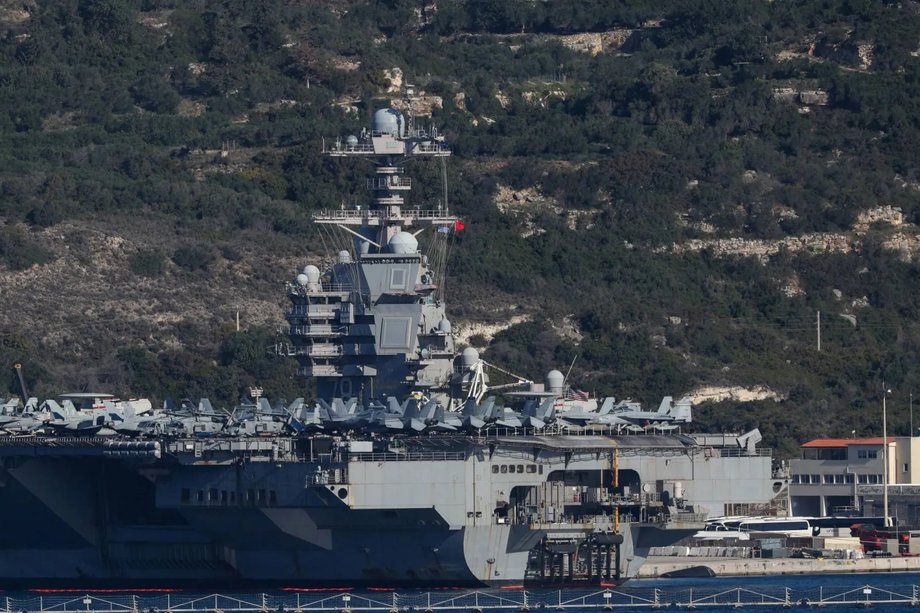
USS Gerald R Ford in Souda Harbor
|
Reuters
Placing an aircraft carrier strike group in the eastern Mediterranean expanded Washington's capabilities: created a buffer against resources in the Persian Gulfwhile complicating Iran's plans to defend or attack U.S.-allied countries.
Operating from the Mediterranean Sea allows aircraft to approach from less predictable directions than solely from bases in the Persian Gulf. This also reduces dependence on the regional bases of host countries in a crisis scenario.
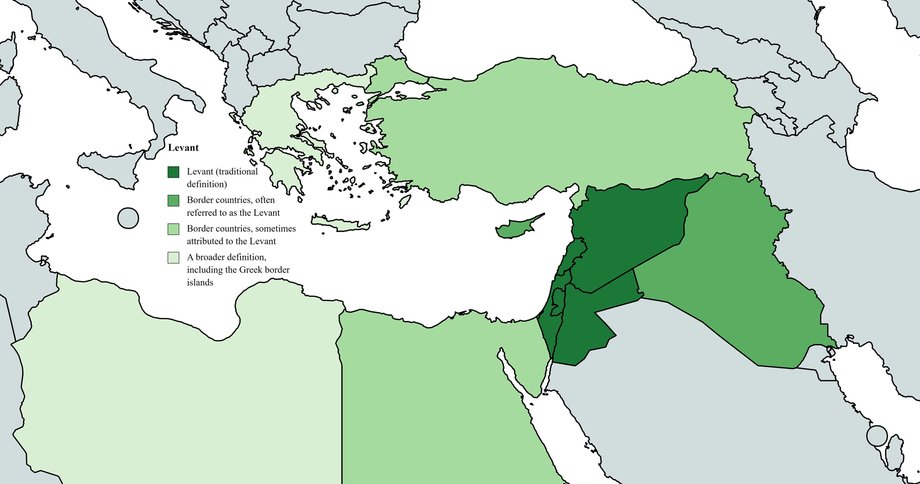
Countries included in the Levant
The carrier air wing provides a flexible combination of attack, air superiority, electronic warfare and early warning capabilities. The aircraft carrier, located in the eastern Mediterranean, would have operational coverage in multiple theaters, including the Levant.
From the eastern Mediterranean, Ford's air wing can provide allied nations, including Israel, defensive air cover in the event of a missile attack from Iran.
Simultaneously the carrier's aircraft are within operational range to conduct long-range strike missions against Iranian targets.