We are entering the phase where growth can no longer be based on consumption, but on investments and fiscal discipline, says the first vice-governor of the National Bank



Investors money, investments. Credit line: Andrew Brookes / ImageSource / Profimedia
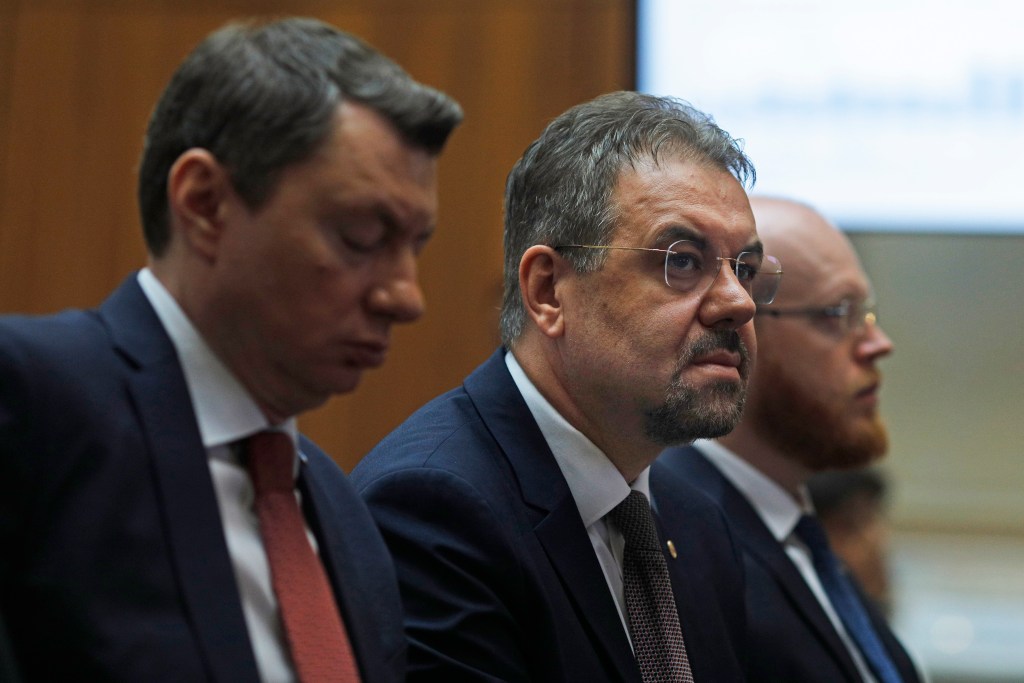
Romania is entering a phase of structural transition in which growth can no longer be based on consumption and fiscal incentives, but on investments, productivity and fiscal discipline, in a geopolitical context in which defense and security become dominant constraints, not options, writes Leonardo Badea, the first vice-governor of the BNR in an opinion text sent to HotNews.
See here the full text sent by the first vice-governor of the BNR Leonardo Badea
From stimulus through deficit to growth through productivity
Badea's firm message: the objective of policies is no longer to stimulate aggregate demand “at all costs”, because that perpetuates inflation and external deficits.
The focus is shifting to supply, he adds: infrastructure investment, structural reforms, reallocation of resources to high-value-added sectors and increasing total factor productivity (TFP).
Fiscal consolidation is justified as necessary to reduce crowding out, the sovereign risk premium and funding costs for the economy.
Security and defense become 'dominant' policies
Defense spending of at least 2.5% of GDP is no longer a political option, but a constraint imposed by geopolitical realities and NATO membership, Badea also writes.
Fiscal policy is now “dominated” by defense policy, the BNR official believes; hence the need to find the most efficient sources of financing for military spending.
The SAFE program is presented as an opportunity: long-term loans, at lower costs than the government in the market, with long maturities and grace periods, with positive externalities for the real economy.
Public investments and European funds as a “safety net” for growth
Investments through PNRR and EU funds (almost 2% of additional GDP) are seen by the first vice-governor of the NBR as the main mechanism for avoiding a prolonged recession and increasing potential GDP.
The central idea: quality public investment reduces logistics costs, increases the return on private capital, and pulls private investment behind it in the “signature” of infrastructure projects.
Badea points out that many private investments are “on hold” and can be unlocked as fiscal consolidation becomes predictable and OECD membership confirms the pro‑business direction.
The banking system as an anchor of stability
Although the economy had quarters with unfavorable dynamics, the quality of bank assets did not deteriorate significantly, explains number 2 of the BNR.
The banking system is described as solid, well capitalized and liquid, above the European average, being able to support lending and reinvestment.
Fiscal equity, governance and trust
The success of fiscal consolidation depends decisively on the perception of equity: if the private sector pays more and the state wastes, social tensions arise and defensive saving increases.
Key message: eliminating “fiscal surprises” and improving collection must be accompanied by reducing inefficiencies in the state apparatus.
Administrative digitization and the improvement of fiscal governance are not technical details, but essential tools for the stability of economic expectations.
Reforming the public sector and human capital
Optimizing the governance of state-owned enterprises, especially in energy and transport, is presented as a central pillar of the reforms in the OECD context.
The efficiency of state-owned companies reduces costs for the rest of the economy and quasi-fiscal pressures on the budget.
The labor shortage must be addressed by investing in human capital: reducing school dropout, expanding dual education, correcting skills gaps.
SAFE and EastInvest programs as strategic levers
SAFE is presented as a strategic defense financing tool, with advantageous conditions and multiplier effects in the economy (infrastructure, technology, substitution of military imports).
Romania has the second largest allocation from SAFE, with money for infrastructure and military endowment, repayable over 30 years.
The EastInvest Facility is another mechanism designed for the resilience of the Eastern Flank, the modernization of critical infrastructure and the integration of SMEs in essential chains, including with dual-use projects, civil and military.
The underlying message: changing the growth model
The recalibration of the Romanian economic model – based on investments financed from European funds, the improvement of the investment environment and public governance – is presented as a necessity, not an option.
Badea admits that fiscal consolidation programs slow down growth in the short term, but insists that only through this combination (fiscal discipline + investments + structural reforms + security) can sustainable growth be achieved, without major imbalances
See here the full text sent by the first vice-governor of the BNR Leonardo Badea