The vision is based on the concept of Agentic AI, i.e. digital helpers who will blend in with a company hierarchy like colleagues from another department. They will receive e-mails, come to meetings at teams, and if necessary-they will react themselves to security incidents. Weston argues that thanks to this people will free themselves from arduous tasksand computers will become really multimodal.
For such a scenario to be considered at all, Microsoft has been rebuilding the hardware ecosystem for two years. Copilot+ PC with built -in NPU systems performing a minimum of 40 TOPS (measure of AI system performance – meaning the ability to perform about 40 trillion of surgery per second in tasks related to artificial intelligence) They become a test platform for the voice interface and locally operating models. According to company materials, they allow up to 13 percent. Overe this year's MacBook Air, while reducing the cost of using the cloud.
IDC analysts estimate that only in 2025 will hit the market over 100 million such computers, and the wave of exchange of the fleet will speed up when Windows 10 will end in October 2025.
Check also: “Godfather” AI warns against artificial intelligence
The most difficult to change habits
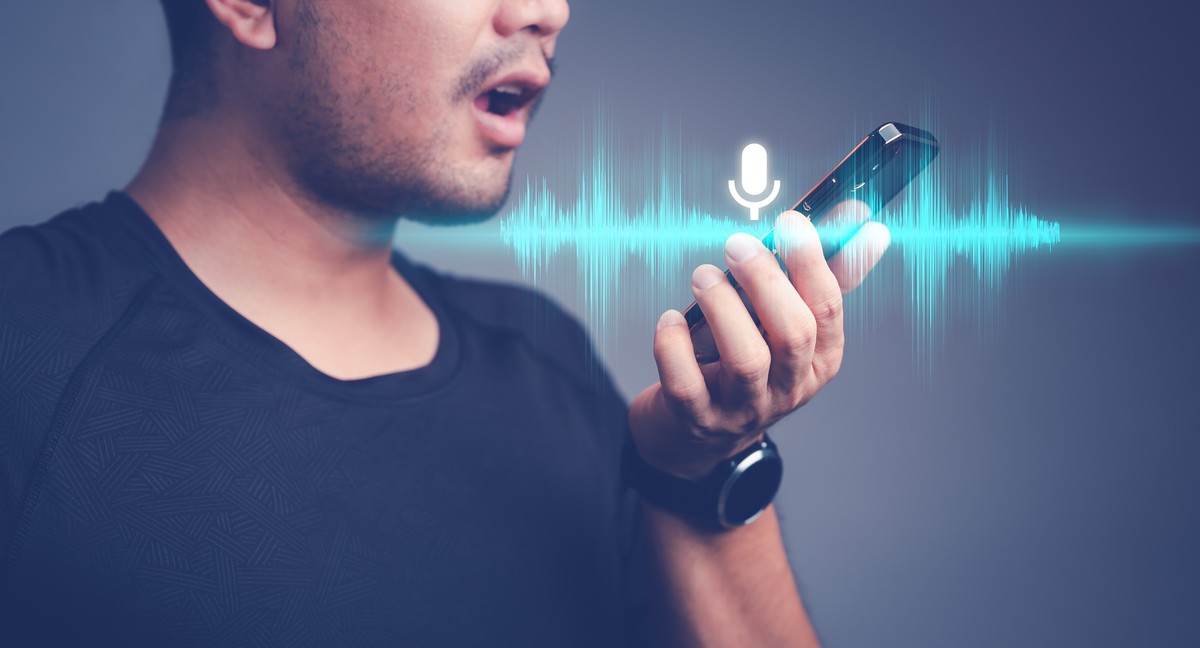
Only the equipment is just a starting point. A real obstacle to putting the keyboard is the habit of users. The latest study of PYMTS shows that on desktops, voice commands are used by 6-21 percent. respondents depending on the age group and globally Only one fifth of Internet users claims that they perform any part of everyday tasks in the voice. When someone tries to work using voice commands, it often turns out that many tasks are carried out in this way, but for people who grew up in the time of mice and keyboard, supporting equipment with voice commands seems uninteulted.
At the same time, the market of devices operated in the voice is growing. According to Global Market Insights, its value will exceed $ 30 billion in 2025 – but this is still a niche against the background of classic UI.
It looks much better in laboratories. An international study from May 2025 showed that Doctors dictate notes on average four times faster than they enter them on the keyboardand Whisper V3 models go down with transcription errors below 7 percent. on pure English material.
In real conditions, however, the result is rapidly deteriorating with noise, office dialect, multilingual dialect or unusual pronunciation. Then it is better to write than to say, because you do not have to spend time correcting errors.
Read also: Militarization of the Silicon Valley. Like Big Tech and billionaires enter the defense industry
Could a computer overheard us? You can see reluctance
The interface that hears everything also becomes a warning header in the security departments. Recall – the Copilot+ function making screenshots every few seconds – can still capture passwords and card numbers, despite three waves of corrections, and therefore Microsoft had to temporarily turn it off.
Further part under video material:
Amazon is also heading towards the voice. He removed the echo option “Do not send voice recordings” from his devices, because the new Alexa+ requires a cloud, which immediately caused worries among users. They are afraid that equipment and AI Amazon provides convenience, but at the expense of sending data to the cloud, where AI models can then be trained. Often Trained to exchange sentences that should not leave the houses or flats of user.
AI ACT reality is also reality for companies in Europe. Systems that are deeply interacted with people or generate a synthetic voice, are subject to the obligation to mark and extensive risk documentation.
The history of Microsoft can deepen. From Cortana to Copilot based on Chatgpt, Windows has repeatedly advertised solutions, which he later withdrew or limited when the community reported mistakes or concerns about privacy issues. Deleting or limiting the Recall function is the latest example.
AI agents technology is just crawling. In the Windows Agent Arena benchmark developed by Microsoft engineers, the latest Navi agent successfully solved less than 20 percent. Typical tasks, while man performs three times more. In five years, progress will be huge, but Is it enough to Excel aloud the complex macros as efficiently as a specialist working with a keyboard and a mouse does today?
There is also a competition on the horizon. Apple announces that in 2026 “Personal Siri” will get context and multiple resources, and Google is testing Project Astra as a ubiquitous adviser who will read what we are looking at before our question.
Younger generations may not have resistance
So is 2030 a border date? The hybrid scenario seems more likely. The keyboard and mouse will remain where precision and ergonomics matter – from sheets to CAD – and the natural language will take on quick commands, searching, automation of simple tasks and supporting side devices. But also mainly in the case of younger generations, people who often communicated with devices using voice commands. It's just more natural for them.
In practice, this may look like the transition from the admin console to the windows in the 1990s. Dos never disappeared completely, but found his niche. Similarly, traditional peripherals will not evaporate – they will be a “advanced mode” at a time when the computer really hears us, sees and (sometimes) understands.
Author: Grzegorz Kubera, Business Insider Polska journalist