Romania, twice winner at CTO Global Hackathon 2026: an ING Bank Romania team won in the “AI for Productivity” category

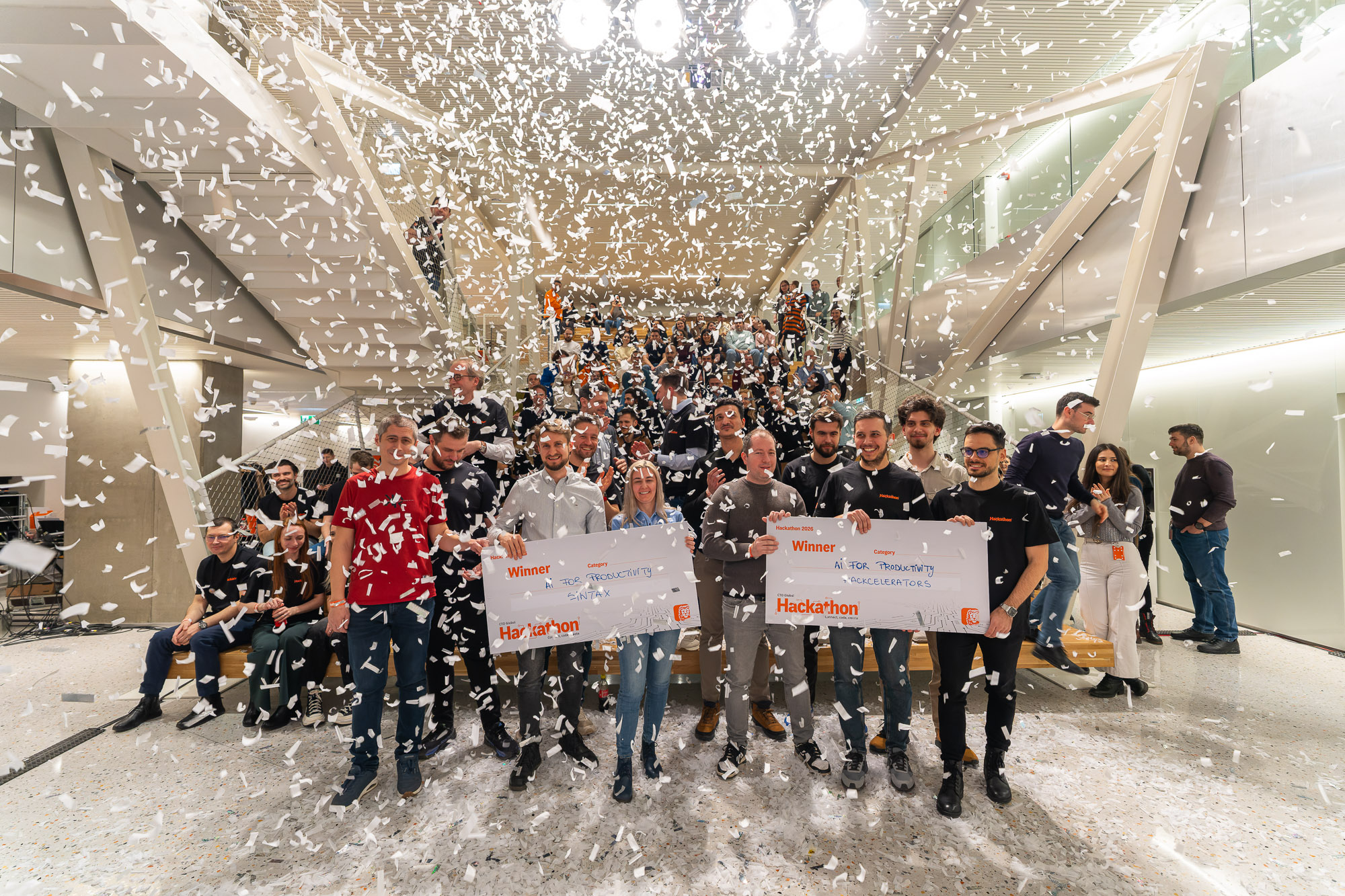
In February, the ING Group's global Tech community came together in the CTO Global Hackathon 2026, one of the largest hackathon events this year. An innovation marathon in a hybrid format, the event brought together 360 teams from 12 countries in an intense exercise in collaboration, prototyping and testing of AI-based solutions.
The CTO Global Hackathon 2026 was built around a simple but important idea for any large organization: AI becomes truly relevant when it helps people work more efficiently. In other words, it was not the show that mattered, but the solutions that can be useful in everyday work, that simplify processes and can be further developed in the organization.
In this context, Romania had a solid participation, with 500 hackers forming 81 teams, and a remarkable performance. Four local teams reached the finals of the competition, and two of them were named winners in the “AI for Productivity” category: SINtax, from ING Bank Romania, and Hackcelerators, from ING Hubs Romania.
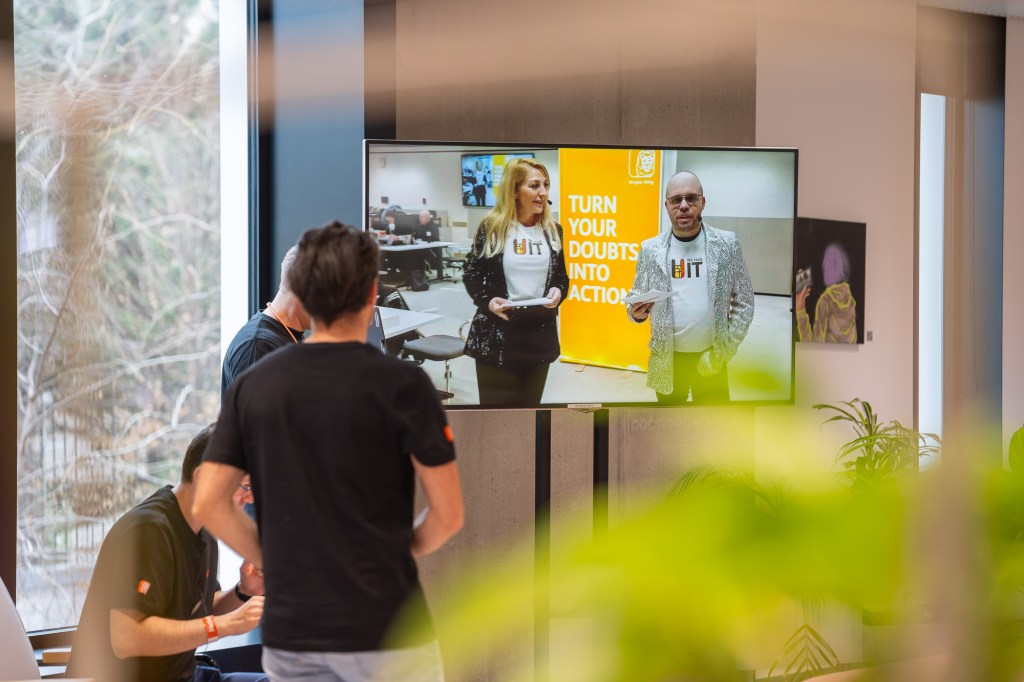
SINtax, the team from ING Bank Romania that won with a project born from a real problem
The story of the SINtax team illustrates exactly what a practical hackathon project is all about. The composition of the team mattered decisively in the pace of work and in the ability to quickly deliver solutions.
“After a long and very lively debate about what to call ourselves, we arrived at SINTax, a name that turned out to be surprisingly lucky. SINTax is a cross-functional team that brings together programming minds, very good testers and DevOps wizards,” says Marius Melinte, SINtax team captain.
Beyond the name and the typical energy of a hackathon, the team's project started from a concrete point. Instead of building a generic demo, SINtax members chose to work on a bottleneck that consumes time and attention in technical work: managing a complex database.
“Our project was born exactly where the best innovations usually start: from a pain points real in our everyday work. Faced with an enormous database full of dynamic relationships between entities, and an API designed to unlock all that complexity, we asked ourselves a simple but powerful question: What if we could build something that not only solves this challenge today, but could become a reusable tool for the future? From this spark we came to this Hackathon with our idea: a starting point that could evolve into a useful solution not only for our team, but potentially in the entire ING organization”, explains Marius Melinte.
This idea actually says a lot about the maturity of the project. In a Hackathon, time is limited and the stake is not technical perfection, but the ability to build a solid foundation, demonstrate value and create the premises for further development of the solution.
What made the difference: fine-tuning, testing and execution discipline
SINtax team members talk openly about the difficulties, not just the result. In projects developed around Artificial Intelligence, the difference between a promising idea and a solution that works in practice almost always appears in the calibration and testing stage. In a hackathon, this stage is even more intense, because everything has to be compressed into a few hours.
“One of our biggest challenges was fine-tuning. We had to run a lot of tests because the first results were quite far from what we expected. The breakthrough came when we started adding additional context to the model and divided the work between several test teams, and then the accuracy and results really started to improve,” says Marius Melinte.
A project designed to be useful even after the hackathon
In the case of a hackathon, the real question comes after the presentation: is the project still just a good idea or can it become a solution used further? In the case of SINtax, the team's response goes in the direction of concrete utility and rapid integration.
“I think the solution can be easily integrated to analyze almost any database with minimal effort,” says Marius Melinte.
A recurring global format built around collaboration
The hackathon is a recurring innovation format that has been part of ING's culture for at least a decade. In 2015, the first edition was organized in Romania, which was also the third in the history of the ING hackathon. Recent competitions have strengthened a collaborative working model, where ideas are quickly tested and projects with potential can be developed further in the organization.
In this context, the performance of the Romanian teams shows the maturity of a local technology community capable of delivering in a global framework and transforming complex topics, such as AI, into solutions with practical relevance.
Article supported by ING Bank