Robert Muller, the troubled former FBI director, has died. From counterintelligence reform to the Trump investigation

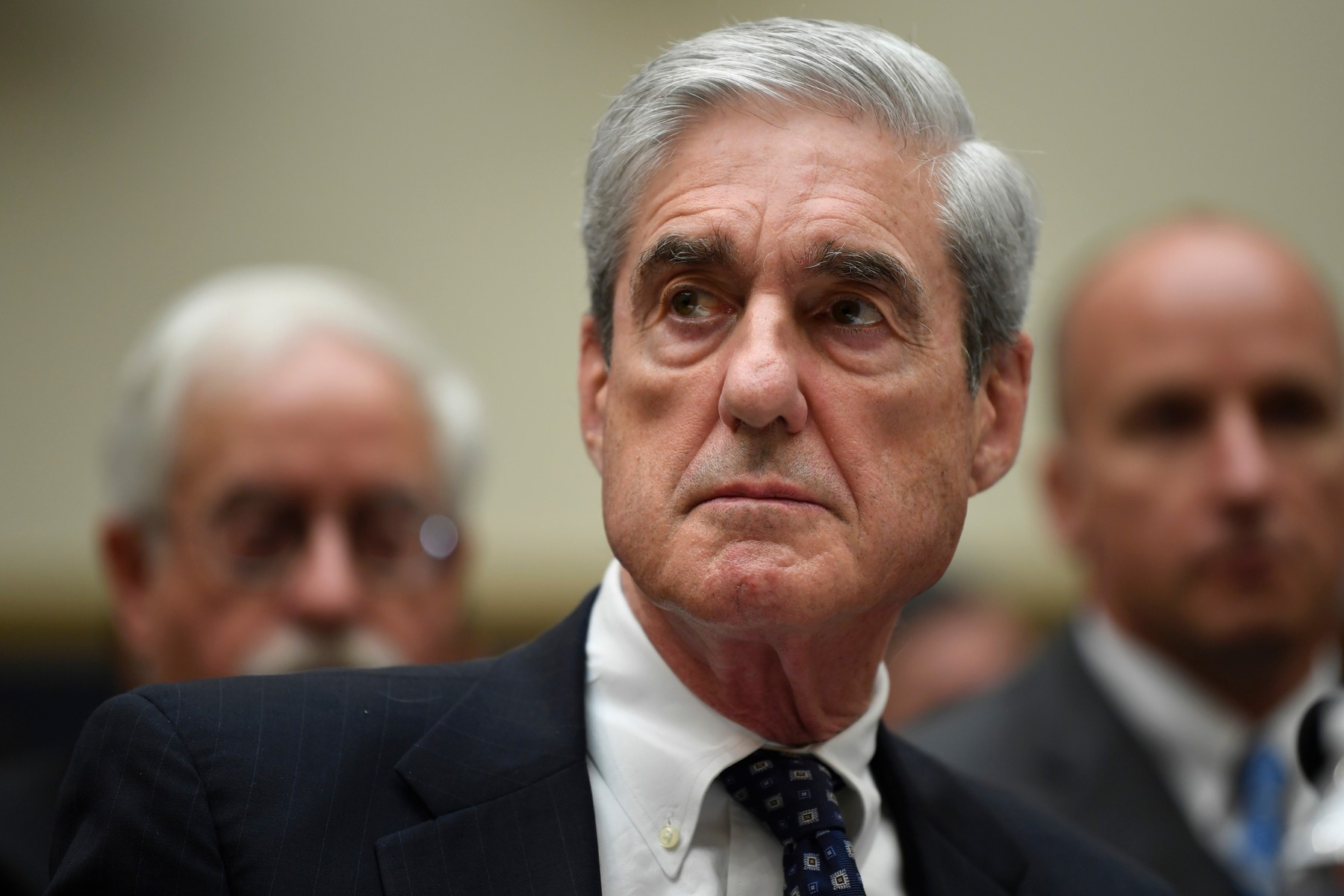
Robert Mueller, the sixth director in the history of the US Federal Bureau of Investigation (FBI) from 2001 to 2013, died on Friday at the age of 81, The New York Times reported on Saturday. Mueller's family confirmed the death in a statement, but did not disclose the location or cause.
Robert Mueller, a liberal Republican, came to head the FBI on September 4, 2001, just a week before the terrorist attacks in the United States.
In 12 tumultuous years, he would impose the most significant structural and cultural changes in the institution's history, trying to transform it into a 21st-century intelligence service that could protect both national security and civil liberties, the NYT wrote.
Abuses in CIA prisons
His counterterrorism agents were the first to expose abuses at the secret prisons the Central Intelligence Agency (CIA) had set up after 9/11 to detain, interrogate and, in some cases, torture suspected terrorists.
Additionally, in 2004, he and his immediate superior, former Deputy Attorney General James Comey, learned that then-President George Bush had authorized the National Security Agency (NSA) to spy on Americans in a surveillance program that failed to save a single life, stop an imminent attack, or detect a single Al Qaeda member in the United States.
The two convinced Attorney General John Ashcroft not to reauthorize the program, dubbed “Stellarwind.” Bush did it unilaterally, and Mueller threatened to withdraw the FBI from the program and that if the president did not abandon the initiative, he would resign. Ultimately, the Republican leader accepted the reduction and entry into law of the secret programs, even if this process took several years.
Mueller has never spoken publicly about his confrontation with President Bush on the issue. The moment was revealed by Comey.
He was the special counsel who investigated Trump
One of the most famous episodes in Robert Mueller's public service career occurred after his departure from the FBI. On May 17, 2017, the US Department of Justice appointed a special prosecutor to investigate President Donald Trump.
The special counsel was given the task after Trump's decision to fire then-FBI chief James Comey, who was investigating interactions between the Republican's campaign and a covert Russian operation to help him win the presidential election.
“This is the end of my presidency,” Donald Trump said after hearing of Robert Mueller's appointment.
Mueller assembled a team of federal prosecutors who filed indictments against a group of Russian spies and the command structure of a troll farm in the Russian city of St. Petersburg, the Internet Research Agency, which had conducted a disinformation campaign in the 2016 election at the behest of the Kremlin.
“The report does not conclude that the president committed a crime, nor does it exonerate him”
Mueller's team sent Paul Manafort, Trump's first campaign manager, to prison for fraud. It also secured a guilty plea from retired Lt. Gen. Michael Flynn, Trump's first national security adviser, and the conviction of Roger Stone, one of Trump's longest-serving political advisers, for lying to investigators.
When approached about the possibility of impeaching the president for possible obstruction of justice, Mueller hesitated.
The report concluded that Russia systematically sought to help Trump win the election and that both the candidate and the campaign team encouraged clandestine Russian assistance. The document outlined 10 cases in which the president and his advisers tried to obstruct the FBI's investigation: “While this report does not conclude that the president committed a crime, it does not exonerate him,” the document said.
The attorney general at the time, William Barr, said that “the special counsel's investigation is not sufficient to establish that the president committed a crime of obstruction of justice.”