“European Patriot”: A German company, successful in Ukraine, launched a new anti-aircraft system, capable of hitting targets at 100 km

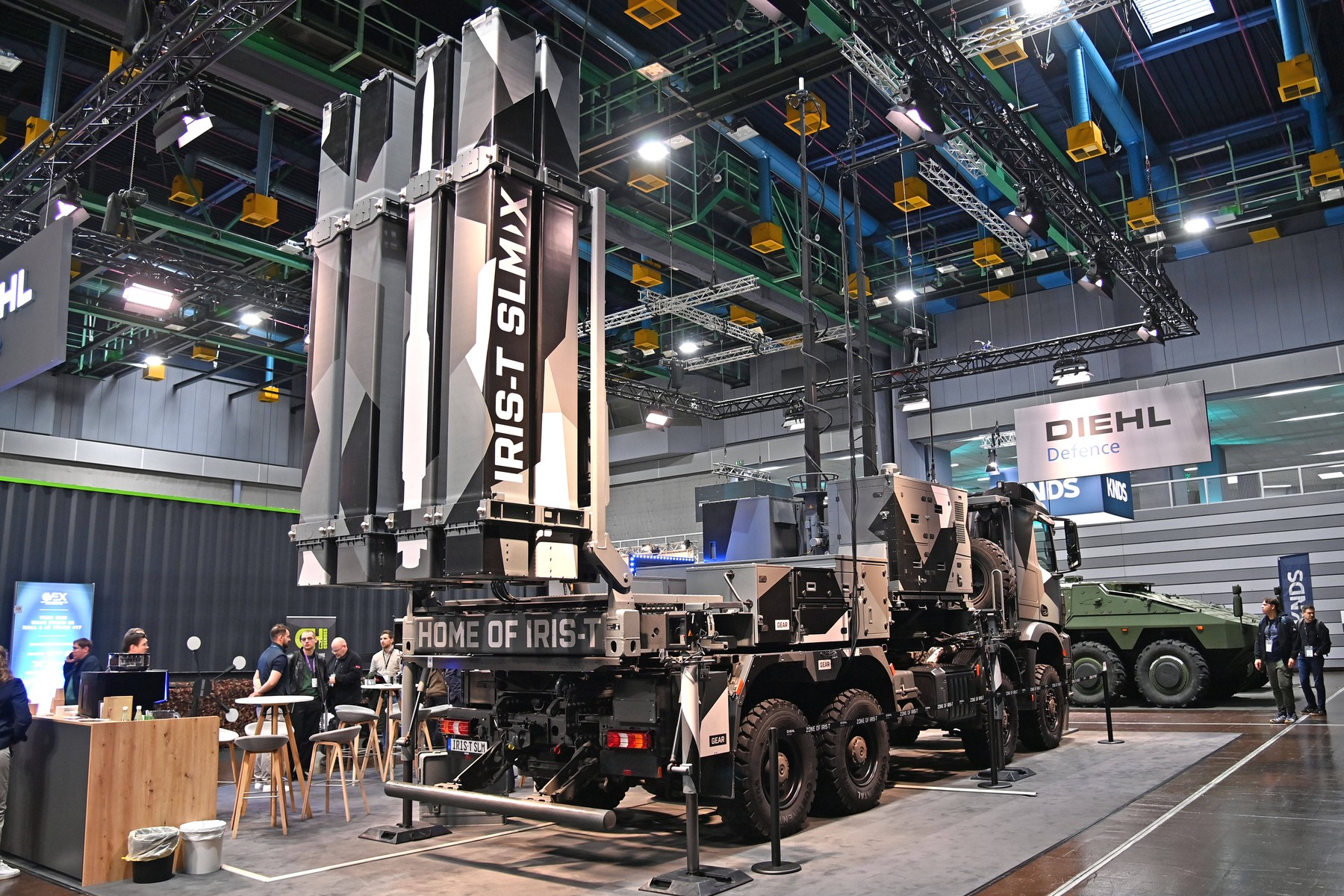
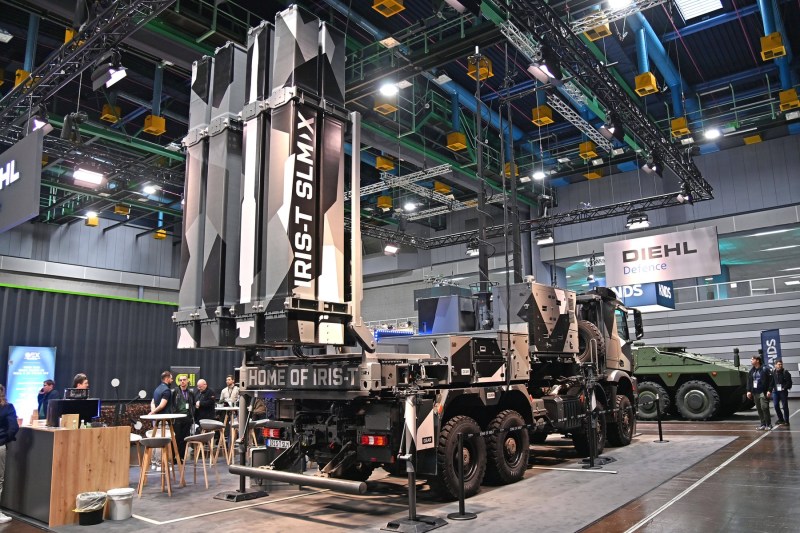
IRIS-T SLM/X anti-aircraft system / Source: Frank Hoermann / SVEN SIMON / imago stock&people / Profimedia
The German company Diehl Defense has officially presented the newest variant of the IRIS-T family of anti-aircraft systems. Called IRIS-T SLM/X, the new system significantly extends the range and introduces a universal launcher, giving Europe its own and highly capable alternative to the American Patriot systems, writes the publication Army Recognition.
“A system aimed at Patriot supremacy”
Diehl Defense has supplied Ukraine with IRIS-T short-range defense systems that have proven to be among the most effective in countering Russian air threats, from drones to missiles.
Now, the company presented, as part of the Enforce Tac 2026 exhibition, the variant of the IRIS-T SLM/X combined launcher, which proposes to extend the protective envelope with an interception radius of up to 100 km, “a system aimed at Patriot supremacy”, writes the profile publication Army Recognition.
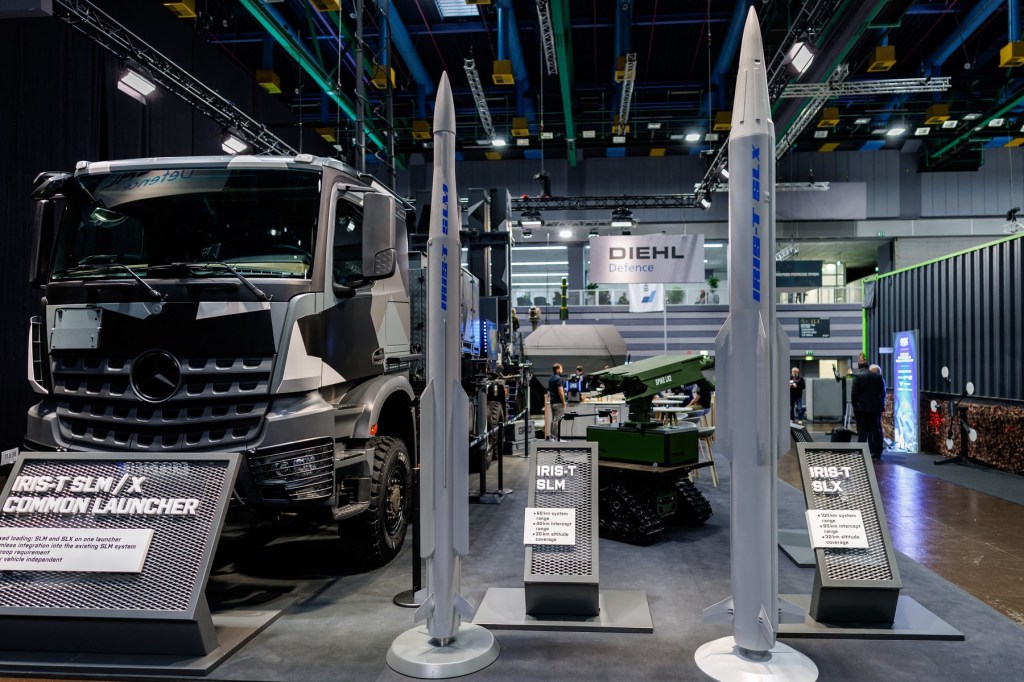
The main innovation presented by Diehl Defense is the ability to integrate on the same launch vehicle up to eight missile launch tubes with different ranges: SLM missiles with a range of up to 40 km or SLX missiles with a range of 100 km and a ceiling of 30 km altitude.
Technical characteristics for IRIS-T SLM/X
The new IRIS-T SLM/X system stands out through a series of technical specifications that place it at the top of world technology, writes the quoted publication. Here are the main facts and figures of the new German “shield”:
- Employment radius: Up to 100 km (a significant increase over the 40 km of the standard SLM version).
- Maximum interception altitude: 30 km.
- Universal Launcher: It has 8 containers that can be mixed loaded (eg 4 SLM missiles for medium range and 4 SLX missiles for long range).
- SLX rockets: incorporates a dual-mode seeker system that combines infrared and radio frequency guidance and uses a dual-pulse motor to increase range and ultimate performance.
- Advanced Radar (G-band): * Hensoldt TRML-4D 3D – 360 degree coverage, detection range: 250 km.
- Tracking Capacity: Can monitor up to 1,500 targets simultaneously.
- It can detect targets with a radar footprint of only 0.01 m², identify targets the size of fighter jets at 120 km and detect supersonic missiles at around 60 km.
- Reaction time: Rapid interception of multiple threats, including terminal-phase ballistic missiles and small drones.
- Mobility: System mounted on mobile platforms that allow rapid deployment and withdrawal (“shoot-and-scoot”).
“European Patriot” and other solutions from the US, Israel and France
The launch of IRIS-T SLM/X can change the dynamics of military procurement in Europe, especially in the context of new financing mechanisms such as SAFE, designed to be used only for components produced in the EU.
Until now, states that wanted protection over 80-100 km were almost exclusively relying on the American MIM-104 Patriot system. Although Patriot remains a system seen as the standard for anti-ballistic defense (proven against Kinzhal hypersonic missiles in Ukraine), the German system comes with a lower operating and acquisition cost, being even easier to integrate into European logistics, the profile publication writes.
Germany, which operates the Patriot system, has also recently acquired and operationalized the Israeli Arrow 3 anti-aircraft system, which is specifically intended for exo-atmospheric interception.
Another European variant for the Patriot is the SAMP-T system with Aster 15 and Aster 30 missiles, developed by the Franco-Italian consortium MBDA.
Also called Mamba by the French forces, such a system is also deployed in Romania, at the Capu Midia range, as part of the French forces within the NATO Battle Group that France coordinates in Romania, at Cincu.
Geostrategic impact: Reducing dependence on Washington
Beyond the numbers, the launch of IRIS-T SLM/X is a political signal, writes the cited publication. Berlin wants to demonstrate that the continent's defense industry can produce “high-end” solutions that no longer force NATO member states to wait years for overseas deliveries.
In this context, the Bundeswehr plans to increase the number of IRIS-T units to 75 systems, and the SLM/X version could become the central piece of this defensive puzzle, providing a range that bridges the gap between short- and very short-range defense and high-altitude strategic systems such as the Arrow 3.
 Green light in the German parliament for a major package of military purchases. How the 50 billion euros will be allocated