The former Secretary General of the Council of Europe, who lobbied for Russia despite the war, tried to commit suicide


One of the most influential European politicians of recent decades is at the center of a scandal that has quickly reached dramatic proportions.
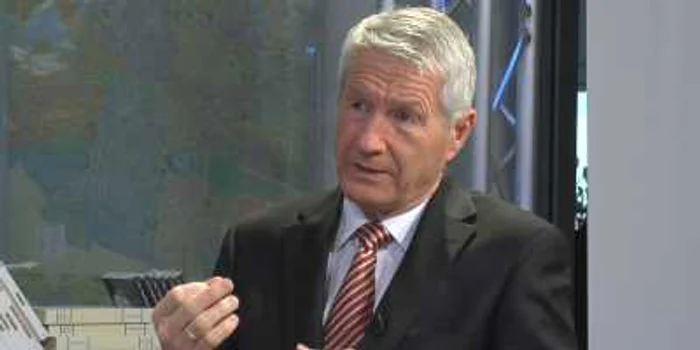
Thorbjørn Jagland, former Secretary General of the Council of Europe/PHOTO:X
The former secretary general of the Council of Europe and ex-prime minister of Norway, Thorbjørn Jagland, allegedly tried to take his own life. The incident happened about a week ago, and the politician is hospitalized in extremely serious condition. According to the Norwegian publication iNyheter, the gesture would have occurred shortly after his name appeared in the so-called “Epstein files”.
Jagland led the government of Norway from 1996–1997 and was, for two terms (2009–2019), Secretary General of the Council of Europe — one of the most important pan-European institutions in the field of human rights and democracy. His voice carried weight in the great political decisions of the continent.
The shadow of the “Epstein files”
Jagland's name appears in declassified court documents in the US in the case of American financier Jeffrey Epstein, accused of organizing a network of sexual exploitation of minors.
Epstein, a billionaire with high political and business connections, was indicted for child trafficking and other sex crimes. In 2019, he was found dead in his cell in a New York prison. Officially, the death was ruled a suicide, but the circumstances continue to fuel controversy and alternative theories.
For now, the exact nature of the ties between Jagland and Epstein has not been made public. However, the mere mention of his name in the documents caused a wave of reactions and seriously damaged the reputation of the Norwegian politician.
The Russia file
It is not the first time that Jagland is in the middle of controversies.
During his time leading the Council of Europe, he consistently advocated for the maintenance and restoration of Russia's full rights in the organization, even after the annexation of Crimea in 2014 and the outbreak of armed conflict in eastern Ukraine. When Moscow was sanctioned by withdrawing voting rights in the Parliamentary Assembly of the Council of Europe (PACE) and suspending the payment of contributions, Jagland argued that the exclusion would create “a new dividing line in Europe”.
His statements were harshly criticized in Kyiv. Then Ukrainian Foreign Minister Pavlo Klimkin reacted ironically, saying that, following the same logic, criminals should also be released from prisons, because they too create “divisive lines” in society.
In June 2019, despite opposition from Ukraine and other states, PACE voted to fully restore the rights of the Russian delegation. It was only after the large-scale invasion of 2022 that the Council of Europe suspended, and later completely terminated, Russia's membership.
The fall of a European figure
The Council of Europe recently revoked Jagland's diplomatic immunity, allowing authorities to investigate his possible ties to Epstein. The scandal thus acquired not only a political dimension, but also a deeply personal one.
Thorbjørn Jagland's story reflects the fragility of reputation in the era of total transparency. In today's Europe, every document, every meeting and every name can become public. And the consequences are no longer just political — but sometimes dramatic.