February 25: The day the last marshal of the Soviet Union, one of the anti-Gorbachev putschists, died

The date of February 25 marks, over time, the birth and disappearance of cultural and political personalities with a more or less positive historical impact. Among them, the controversial Dmitri Yazov, the last marshal of the Soviet Union, one of the anti-Gorbachev putschists.
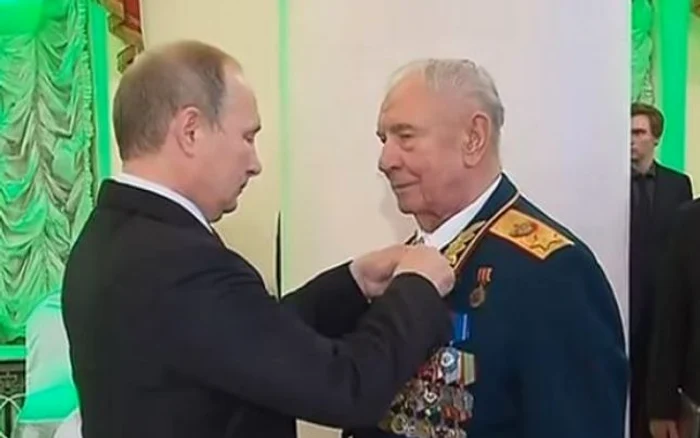
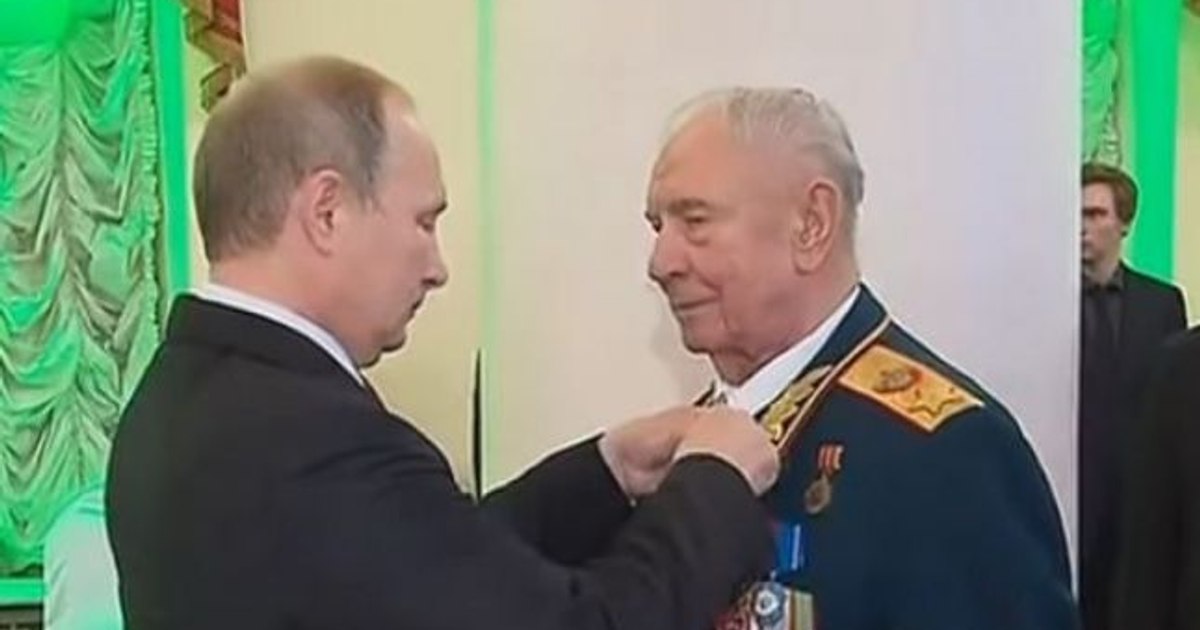
Dmitri Yazov was decorated twice by Vladimir Putin. PHOTO: youtube capture
1707: Italian playwright Carlo Goldoni was born
Carlo Goldoni (February 25, 1707 – February 6, 1793), Venetian playwright and librettist, is considered one of the great reformers of Italian theater, his work often being compared, in scope and influence, to that of Luigi Pirandello.
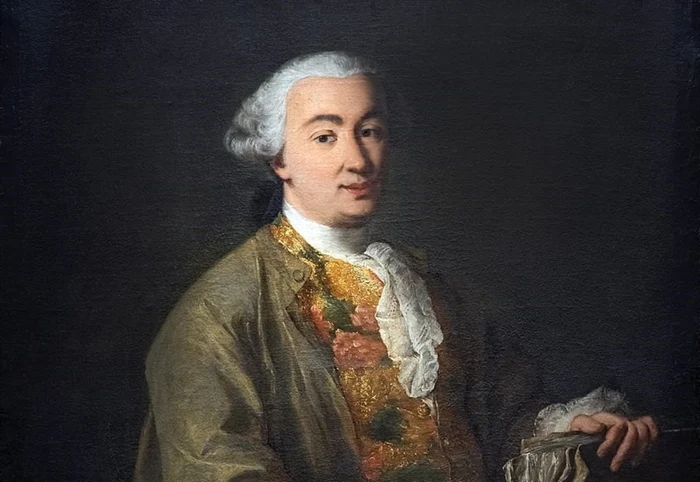
Carlo Goldoni revolutionized the Italian theater. PHOTO: Wikipedia
In the first part of the 18th century, Italian theater was in a period of stagnation, dominated by the repetition of the same schemes and texts. Goldoni radically changed this direction, abandoning the miraculous, rigid declamation and traditional masks, and turning the comedy towards believable, well-defined characters with psychological depth. His plays are distinguished by dynamism, force of observation, satirical verve, humor and constant optimism.
Discarding the rigid conventions of commedia dell'arte, he introduced figures inspired by real life and recognizable situations, leaving to posterity detailed descriptions of the life and morals of the Venetian middle class.
1817: Opening of the Brukenthal National Museum
The Brukenthal National Museum in Sibiu, considered the oldest museum in Romania, opened its doors to the public on February 25, 1817.
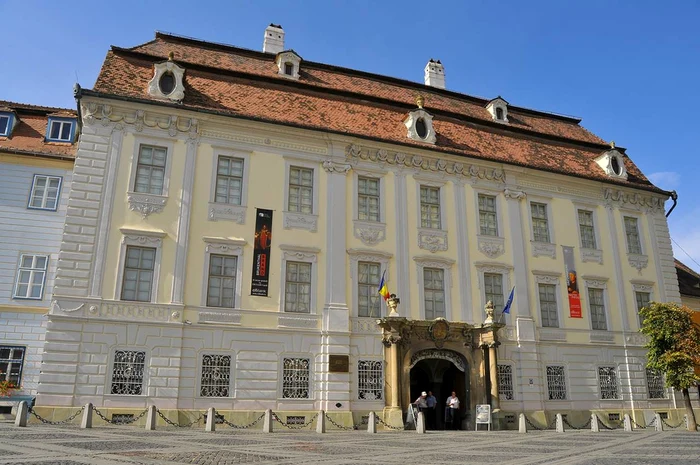
The Brukenthal Museum in Sibiu. PHOTO: Wikimedia Commons
The foundation of the institution was the collection of Baron Samuel von Brukenthal, former governor of Transylvania, who bequeathed an important fund of paintings, manuscripts, rare books and art objects.
The museum operates in the Brukenthal Palace, a baroque-style building built at the end of the 18th century, and currently includes several galleries and thematic sections, being one of the most important cultural landmarks in Romania.
1836: Samuel Colt patented the first repeating revolver
On February 25, 1836, American inventor and industrialist Samuel Colt (1814–1862) patented the repeating revolver, an invention that would significantly change the firearms industry.
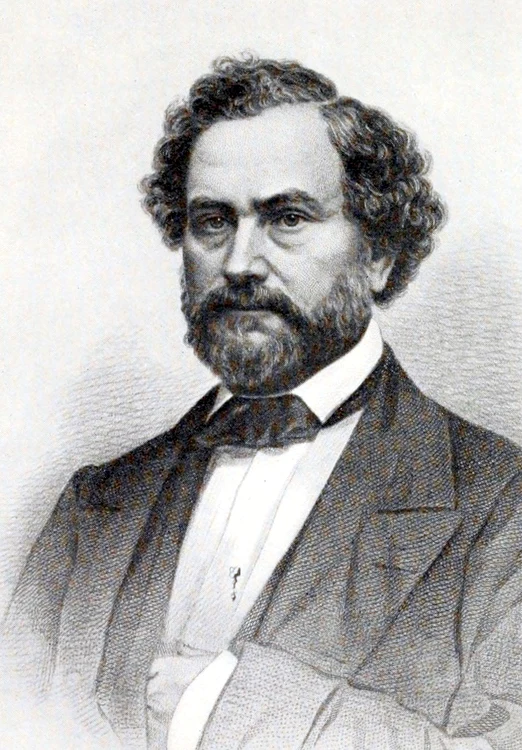
Samuel Colt, father of the gun of the same name. PHOTO: Wikipedia
He later founded Colt's Patent Fire-Arms Manufacturing Company, through which he contributed decisively to the spread of this type of weaponry.
Historian James E. Serven has described Colt's innovations as defining moments in the destiny of American firearms.
1841: French painter Auguste Renoir was born
Auguste Renoir, born on February 25, 1841, became one of the most acclaimed French painters and one of the creators of the Impressionist movement, along with Claude Monet, Alfred Sisley and Paul Cézanne. His attachment to rigorous drawing, figurative art and portraiture led to a partial departure from pure impressionism over time.
Dubbed “the painter of the joys of life”, Renoir worked passionately until near the end of his life, even though he suffered from partial paralysis.
In 1919 he was awarded the Legion of Honor.
His last years were marked by family loss, war and illness, but he never stopped painting, often working sitting with the brush held in his right hand. He only regretted that he could no longer create large canvases and confessed that there was never a day in his life without painting.
He died on December 3, 1919, at the age of 78.
1866: Mihai Eminescu's literary debut
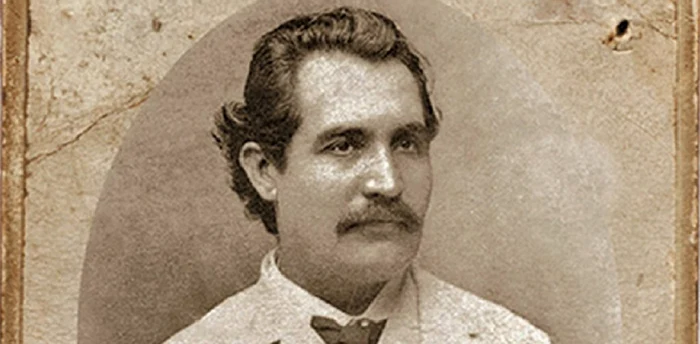
Mihai Eminescu. PHOTO: archive
On February 25, 1866, Mihai Eminescu debuted in the magazine “Familia” from Oradea, edited by Iosif Vulcan, with the poem “De-aș avea…”. The text was published under the name “Eminescu”, a form adapted by the publisher from the original name “Eminovici”.
The publication marked the beginning of an exceptional career, Eminescu later becoming the central figure of Romanian poetry, author of some fundamental works.
1900: Romanian actor Costache Antoniu was born
Costache Antoniu (1900–1979) was an important theater and film actor, associated especially with the stage of the National Theater in Bucharest. He performed notable roles in plays by William Shakespeare, Ion Luca Caragiale and Camil Petrescu.
In cinematography he appeared in productions such as “Răscoala” (1966) and “Dacii” (1967), and his teaching activity at the Institute of Theater and Cinematographic Art influenced many generations of actors.
1932: Adolf Hitler obtains German citizenship
On February 25, 1932, Adolf Hitler, the leader of the NSDAP, received German citizenship through a decree issued by the authorities of the Land of Braunschweig.
This naturalization allowed him to participate in the presidential elections of the same year, in competition with Paul von Hindenburg. Although he lost the election, in January 1933 he was appointed chancellor of Germany, a moment that paved the way for the establishment of the Nazi regime.
1943: George Harrison, member of The Beatles, was born
George Harrison (1943–2001) was a guitarist, songwriter and member of The Beatles, contributing to famous songs such as “Here Comes the Sun” and “Something”.
After the breakup of the group, he had a successful solo career, releasing albums such as “All Things Must Pass”. He co-founded the supergroup The Traveling Wilburys and was actively involved in humanitarian causes, organizing the Concert for Bangladesh in 1971.
1973: Singer Julio Iglesias Jr. was born.
Julio Iglesias Jr., born February 25, 1973, is the son of singer Julio Iglesias and Isabel Preysler and the brother of Chabeli Iglesias and Enrique Iglesias.
After his parents' divorce in 1979, he moved to Miami with his family and studied at Menlo College in Atherton, California.
In 2008 he won the CMT Gone Country competition and created a Latin American travel show for the Travel Channel.
1983: The famous American playwright Tennessee Williams died
Tennessee Williams (1911–1983) was an American playwright, poet and novelist, awarded two Pulitzer Prizes for drama, for the plays “On a Streetcar Named Desire” (1948) and “Cat on a Hot Roof” (1955), both of which were screened shortly after their release
In the autobiographical book “Memoirs of an Old Crocodile”, published five years before his accidental death, the author spoke openly about his addictions, health problems, episodes of mental instability, his deep connection with his lobotomized sister and his lasting relationship with Frankie Merlo, whose death caused him severe depression.
1990: Launch of Radio Contact in Romania
Radio Contact started broadcasting in Bucharest on February 25, 1990, being among the first private stations to appear after the Revolution. The station broadcast mainly pop music and interactive programs. In 2004, the brand was replaced by Kiss FM, which later became one of the most popular commercial radio stations in the country.
2020: Dmitri Yazov, the last marshal of the Soviet Union, died
Dmitri Yazov was Minister of Defense of the Soviet Union from 1987–1991 and the last officer to hold the supreme rank of Marshal of the USSR.
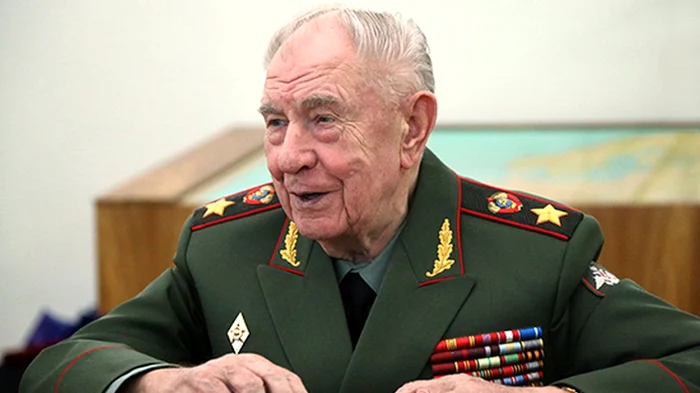
Dmitry Yazov. PHOTO: archive
His name remains linked to the August 1991 coup attempt against Soviet leader Mikhail Gorbachev, when a group of conservative communist leaders tried to stop his political and economic reforms.
The conspirators sent military units and tanks to Moscow, declared a state of emergency, and attempted to seize control of state institutions, arguing that Gorbachev was no longer fit to rule. The coup failed after three days, and the participants, including Yazov, were arrested.
The failed coup accelerated the processes that led to the dissolution of the Soviet Union in December 1991.
Dmitri Yazov was imprisoned, then released in 1993 and amnestied in 1994.
His responsibility has also been scrutinized in relation to other violent military interventions in the last months of the USSR. Thus, in 2019, Lithuanian justice sentenced him in absentia to ten years in prison for his role in the repression of the Lithuanian independence movement in January 1991, when the intervention of Soviet troops led to the death of at least 14 civilians and the injury of over 700.
Also, as Minister of Defense, he was involved in the January 1990 Soviet military operation in Baku, Azerbaijan, known as “Black January”, carried out under the code name “Udar” (“Strike”), which resulted in 137 deaths and over 700 injuries.
Despite these controversies and foreign condemnations, he continued to be treated as a high-ranking military figure in Russia.
At the beginning of February 2020, he was decorated for his services to the state and for his work in support of veterans, receiving the distinction from the Minister of Defense Serghei Șoigu.
Over the years, he has also been decorated by Russian President Vladimir Putin, including the Order of Honor (2004) and the Order of Aleksandr Nevsky (2014).
He died at the age of 95 on February 25, 2020.