While Putin's war economy is starting to run out of breath, Europe is just getting started. The arms industry, which had been dormant for decades, had to be jolted out of its lethargy with billions of orders. The Norwegian concern Kongsberg opened a missile factory, Nammo significantly expanded its operations in Finland, and BAE Systems in England increased its production of grenades sixteen times. By 2027, the EU is to spend EUR 100 billion (approx. PLN 426 640 million at the current exchange rate) on armaments.
The continent of peace begins to turn into a weapons producer. After years of hesitation, Europeans are showing determination and making it clear that they no longer want to rely on the United States. Whether someone likes it or not, some of the largest arms plants in the world are being built in Europe.
Europe is arming itself like never before, and the European arms industry is coming to life – new weapons factories are being built, billions are being invested in ammunition and missiles.
A good example is the plant located in the middle of the Lueneburger Heide moors. In Unterluess, in German Lower Saxony, the arms company Rheinmetall has just opened “the largest ammunition factory in Europe, if not in the world.”
The plant is located on 60 square kilometers. Behind the fenced area, guns were tested as early as 1899. Now pomegranates are coming off the production line again – and in huge quantities.
The timing couldn't be more symbolic. While Donald Trump and Vladimir Putin did not formulate any security guarantees for Ukraine during their summit two weeks ago, Europe is showing that it has rolled up its sleeves.
The article continues below the video
However, Europeans were not so determined until recently. The reason for starting an arms race with Russia was, of course, the invasion of Ukraine in 2022, which brutally made Europe realize that peace is not something obvious. Despite this, the Europeans blocked deliveries of tanks, missiles and ammunition for many months. However, the U.S. reluctance to provide clear security guarantees to Ukraine only further accelerated Europe's military push.
Already in June, NATO abandoned its old defense spending target of two percent. Gross Domestic Product (GDP). In the future, member states are to invest five percent of their GDP in defense – this is a paradigm shift. Just a few years ago, armaments were considered a political shot in the arm, today they are seen as a necessary measure to ensure the security of the continent.
As part of the EU ASAP program (“Act in Support of Ammunition Production”), half a billion euros (over PLN 2 billion 100 million) will be allocated to the expansion of ammunition production. According to EU data in 2021–2024. member states' defense spending increased by over 30%.
No more waiting for America
The most visible symbol of the change of era is now the factory in Unterluess. 25,000 are to be produced there this year. artillery shells with the NATO standard caliber of 155 mm, and from 2027 even 350,000. annually.
For comparison: this corresponds to approximately half the number that Rheinmetall currently produces annually across Europe. The head of Rheinmetall, Armin Papperger, clearly defined the direction of development during the opening of the plant: “the new factory is a symbol of the fact that we are working.” And he is already thinking further – about Lithuania, Great Britain and even Ukraine itself, where production will take place in the future. Unterluess is just the tip of the iceberg.
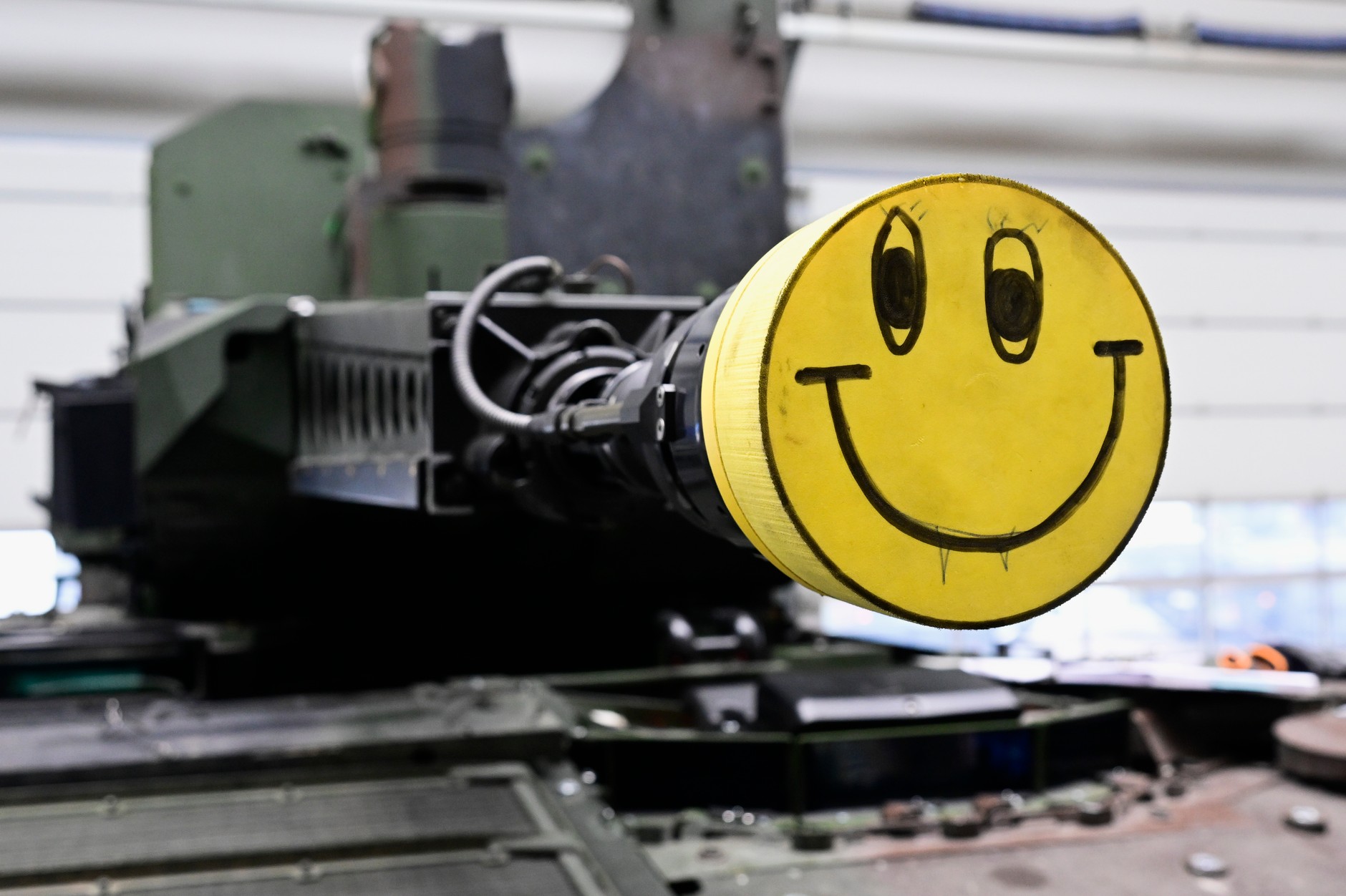
Puma infantry fighting vehicle in the weapons factory of the Rheinmetall arms company (illustrative photo)Fabian Bimmer – Pool/Getty Images/Getty Images
Moreover, another EU program worth billions is planned – this time concerning missiles, drones and air defense systems. Just a few years ago, such actions were unthinkable. Today they are a reality because of Putin's offensive in Ukraine shows that only those who have artillery and rockets can survive.
I’m Ashley Davis as an editor, I’m committed to upholding the highest standards of integrity and accuracy in every piece we publish. My work is driven by curiosity, a passion for truth, and a belief that journalism plays a crucial role in shaping public discourse. I strive to tell stories that not only inform but also inspire action and conversation.