Spain under fire. Germany and the Netherlands raise the alarm about EU funds

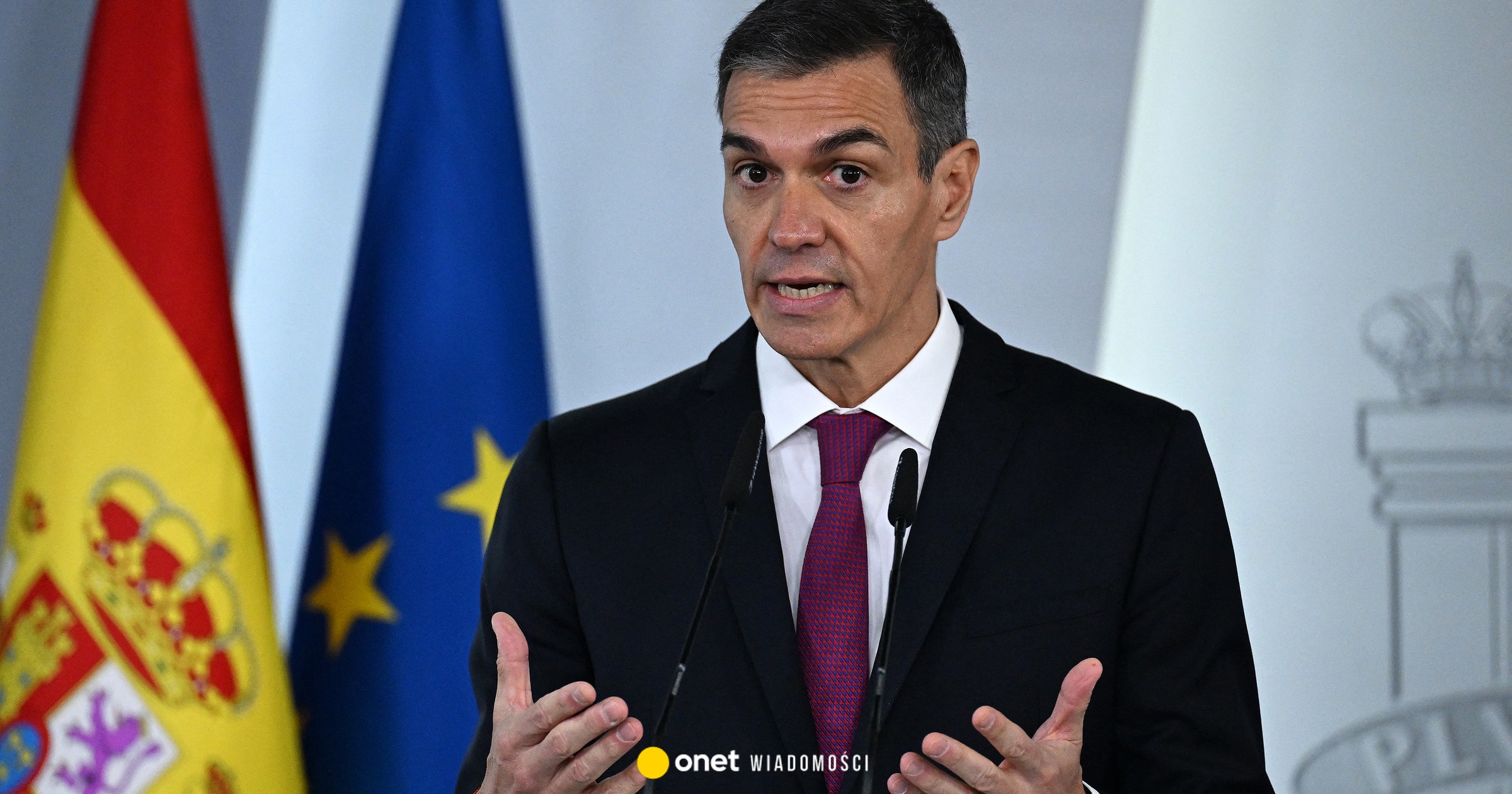
The European Commission has sided with Spain in an escalating dispute over whether Madrid misused up to €10 billion (PLN 42 billion, 401 million) of EU recovery funds – intended to finance green and digital projects aimed at accelerating economic recovery – to fill the hole in the pension system and finance social spending.
The potential misuse of funds, which Spain's financial watchdog found in a May report, has reignited long-standing arguments in Germany and the Netherlands that poorer EU countries are squandering funds from Brussels raised through shared debt that will ultimately have to be repaid through EU-wide taxes.
Both the European Commission and the Spanish government they denied all allegationsarguing that using post-pandemic funds to cover regular budget needs does not violate the rules.
Nevertheless, critics of the COVID-19 pandemic recovery fund — which was introduced in 2021 and amounts to EUR 577 billion (PLN 2 trillion, 447 billion) — immediately jumped on the latest news.
“This confirms that the RRF (Recovery and Resilience Facility) constitutes budget support,” Dirk Gotink, a Dutch conservative MEP, told POLITICO. — What we did with developing countries, we now do with EU countries, he added.
The leader of the far-right Alternative for Germany (AfD) party, Alice Weidel, wrote on
A wave of outrage in Europe
The Spanish government – which does not have the parliamentary majority necessary to pass a budget – has used post-pandemic EU funds to finance investments in line with the program's objectives, such as green and digital projects. The Commission reported that by the end of 2025, Spain had spent more than 50%. of the EUR 79 billion (PLN 335 billion) of subsidies for the post-pandemic period to which it is entitled.
However, she denies the allegations, first reported by the Spanish daily El Mundo, that she used funds from the reconstruction plan for any other purposes.
— Not a single euro from the PRTR (Reconstruction, Transformation and Resilience Plan, the equivalent of the Polish KPO) was used for a purpose other than the Recovery Plan. It is categorically false, as some reports claim, that Recovery Plan funds have been diverted to fund pensions, a government official said.
A second official from the Ministry of Economy added that “when it comes to changing the allocation of funds under various budget items, these are routine activities, fully consistent with the law and with national and EU regulations.” — They in no way threaten the implementation of the obligations arising from the Resilience Plan undertaken by the Spanish government, he assured.
However, a report by Spain's audit watchdog that found the funds were used for ordinary social spending – something the Spanish government denies – sparked debate across Europe and prompted further calls for an end to the EU's shared debt.
Lingering suspicions that EU money is being misused could further escalate negotiations over the next seven-year EU budget, pitting frugal northern countries against spendthrift southern ones.
Spain has become an advocate of the EU's common debt – money issued by the Commission on behalf of the 27 member states – and one of the few countries to support increasing the pool of funds from the 1.8 trillion euros (PLN 7,632 billion) proposed by the Commission last summer.
Conservative German economist Lars Feld expressed hope that “broader public opinion will draw attention to these shortcomings so that common debt is not issued at EU level.”
German Chancellor Friedrich Merz talks with Spanish Prime Minister Pedro Sanchez, Brussels, Belgium, March 19, 2026.Nicolas Economou/NurPhoto via Getty Images / Getty Images
Commission Vice-President for Cohesion and Reform Raffaele Fitto, one of the officials overseeing recovery spending, defended Spain, saying that “while pension payments and other forms of current expenditure are not eligible for NextGenEU funds or the Recovery and Resilience Facility (RRF), member states could temporarily use some of the liquidity from RRF payments to cover other budgetary expenditure.”
— Such cash management operations by Member States are temporary and do not affect the protection of EU funds, he added. Commission officials said any expenditure not included in the recovery plan would eventually have to be reimbursed.
Allegations of lack of transparency and control
This is not the first time that the EU program for the period after the COVID-19 pandemic, covering a total of EUR 360 billion (PLN 1 trillion 526 billion) of non-repayable subsidies and EUR 217 billion (PLN 920 billion) of cheap loans, has faced criticism regarding poor transparency and control.
The European Court of Auditors (ECA) said on Tuesday that its Spanish counterpart's findings confirmed concerns previously raised about the fund.
“[ECA] consistently emphasizes the need for more systematic reporting of actual costs and final use of funds,” the body said in a statement.
EU countries apply for funding from the Commission after meeting certain targets and implementing reforms. Critics say the move away from previous EU programs, in which funds were only reimbursed after invoices were submitted, makes it difficult to track the flow of money.
These concerns were raised by Michael Jager, president of the Taxpayers Association of Europe (TAE), an organization opposing the waste of public funds.
— First, we demand that any abuses be consistently prosecuted where appropriate. Secondly, we need full transparency. Third, any funds not used as intended must be returned, he said.