Information leaks from the DNA files. The question asked by the Minister of Justice to a DIICOT prosecutor candidate for the headship of DNA, but not to Marius Voineag


The Minister of Justice, Radu Marinescu, wanted to know how the future heads of the DNA will address the issue of leaking information from criminal files in the public space, before they reach the court. Radu Marinescu questioned two of the candidates, but not the current head of DNA, Marius Voineag, who on Monday held the interview for the position of deputy prosecutor general. The sensitive question was not addressed to Cristina Chiriac, the head of DNA Iași, who is running for the position of general prosecutor, even though from one of the files she handled – the Buzatu case – information from the investigation, including the video of the flagrant, was made public before the file reached the judges.
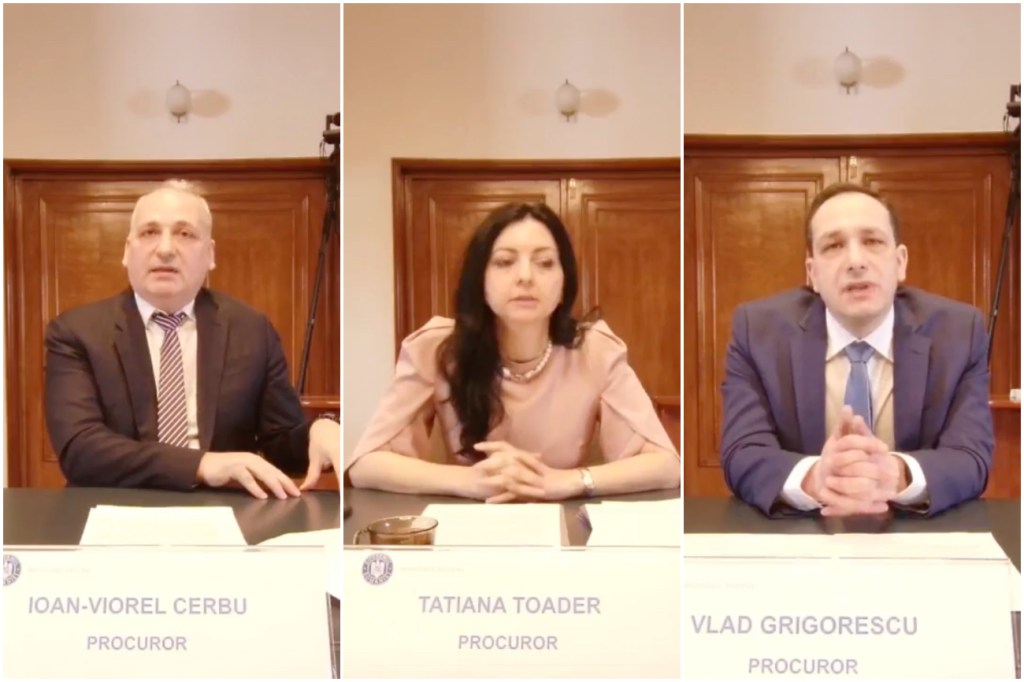 VIDEO The candidates for the headship of DNA take the interviews. Viorel Cerbu and Tatiana Toader, current deputies: “Young prosecutors are less motivated by work and more interested in rights” / “The fight against corruption does not depend only on the efficiency of the DNA” / Vlad Grigorescu: “The acquittal rate does not reflect reality. It is much higher”
The holding of interviews by the prosecutors who are candidates for the head of the grand prosecutor's offices touched on Tuesday a sensitive topic, which sparked wide discussions in the public space: the leakage of information from criminal files, the most targeted prosecutor's office, in this regard, being the DNA.
The current head of DNA, Marius Voineag, recently stated on a podcast that during his mandate he was not a follower of telejustice and that there was no show-off approach, as was the case with his predecessors.
The cases of Dumitru Buzatu, Nelu Tătaru, Fănel Bogos, Piedone are just a few of those in which the interceptions carried out by DNA prosecutors appeared in the public space before the files reached the judge of rights and freedoms. In the Buzatu case, orchestrated by the prosecutor Cristina Chiriac, the head of DNA Iași, who is currently running for the head of the General Prosecutor's Office, the video of the flagrant was also made public. Buzatu's lawyers criticized the leak.
“It's a DNA Image Problem”
On Tuesday, the PSD Minister of Justice asked the DIICOT prosecutor Vlad Grigorescu, who is running for the head of the DNA, about leaks of information from investigations in the public space. “What measures do you propose?” asked Marinescu.
“It is a problem of the image of the DNA, because it creates the perception of public justice, of politicization of the judicial act, which is not normal. Digitization is a mechanism by which information can be secured at the level of the DNA”, answered Grigorescu.
Later, the question was also addressed to Tatiana Toaderi, the deputy head of the DNA, a candidate for the head of the institution.
Toader had stated in the presentation before the commission that, during his mandate, he updated the procedures regarding the mechanism to prevent information leaks.
When Minister Marinescu asked her about the public perception of the leaks of information from the DNA files, Tatiana Toader admitted that such situations bring disservice to the directorate.
Toader announced as a “preventive measure” the more active involvement of the DNA Press Office. Concretely, those responsible for the public communication of the DNA to identify in the public space information that appears from the DNA files and find out their course. Toader specified that on this topic, at the DNA level, there were also discussions with the lawyers, letting it be understood that some information would have been leaked to the press by the lawyers.
On Monday, when the candidates for the head of the General Prosecutor's Office held their interviews, including the head of the DNA, Marius Voineag, Minister Marinescu did not ask him how it was possible to leak information from the DNA files during his mandate, nor how he relates to this problem. The question was not addressed to the head of DNA Iași, Cristina Chiriac, nor to prosecutor Viorel Cerbu, Voineag's deputy, who is running for DNA headship.
DNA prosecutors, defended by the CSM
Last year, the Superior Council of the Magistracy defended the DNA prosecutors, against the backdrop of criticism that appeared in the public space following the leaks of information from the Piedone file.
“Current legislative provisions have undesirably facilitated extended access to the content of procedural documents at times when the investigation is non-public. Moreover, the communication of procedural documents “in extenso” to entities that, in principle, are not directly related to the criminal case, often facilitated the leakage of non-public information in the press or on social networks. In such cases, the judiciary benefits from internal regulatory tools, at this moment the Judicial Inspection checking the way in which fragments of the procedural document issued by the case prosecutor reached the public space. Until the verifications are completed, any other conclusions circulated in the public space appear to be without foundation”, stated the CSM in a statement.
Criticism in the public space, in the case of Piedone, was amplified by the fact that the interceptions made public contained aspects of the former mayor's private life.
“There must be a clear difference between the way documents from criminal files reach the public space and the way these documents are drawn up. The case prosecutor's approach regarding the evidentiary material, including from the perspective of opportunity, could not be the subject of a real public debate at this stage of the criminal investigation, the relevance of some aspects retained in the procedural documents, including those that, apparently, concern private life, can only be evaluated at the end of the investigation. that the law provides for sufficient verification tools, including during the criminal investigation, any other analysis, which does not take into account the whole evidence, could seem lacking in objectivity”, said the CSM.