Anna Korólczyk-Lewandowska, Business Insider Polska: Studio A is one of the few office buildings put into use in the last quarter of 2025. Is this a signal of a slowdown in the office market, or rather proof that only the best projects are being implemented today?
Katarzyna Zawodna-Bijoch, President & CEO, Skanska Commercial Development Europe:In recent years the market has become more selective and focused on customers who are looking not only for a great location, but also for innovations and projects consistent with ESG principles. Studio B – the first phase of the Studio complex – was already fully rented before obtaining the occupancy permit, and in May 2024 it was sold. This proves that despite generally less activity on the market, both on the part of tenants and investors, projects of the highest quality, sustainable and located in top locations maintain the interest of both groups of recipients.
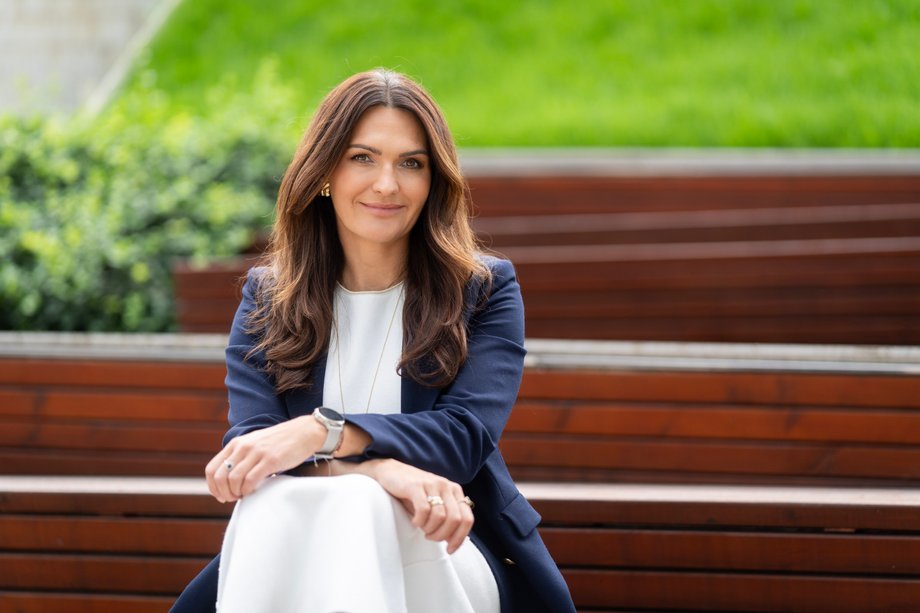
Katarzyna Zawodna-Bijoch
|
Skanska Commercial Development Europe
Read also: Lease or ownership? In 2026, Poles are changing their approach to housing
On the other hand put into operation in December 2025. Studio A is our most advanced and energy-efficient investment in the region so far. This is another step towards sustainable construction: the building is located in a strategic location, in the very center, and the technologies used actually reduce its environmental footprint and operating costs. We have implemented many interesting solutions, including the most groundbreaking for us, pioneering for the market – digital twin with AI algorithms, which in cycles of up to 30 minutes. learns the building and optimizes energy consumption. The building also meets the following certificate standards: LEED, WELL Core & Shell, Wired / Smart Score and Facility without Barriers.
Warsaw's office market: quality over quantity
What is the condition of the Warsaw office market today – and how different is it from the pre-pandemic period?
The market remains stable, although its structure has changed significantly. Low new supply, withdrawal of older facilities and the lowest vacancy rate since 2020 indicate that the availability of office space in Warsaw is very limited today. This is due to both more difficult access to financing, as well as higher capital costs and limited availability of land in the best locations. Additionally implementation costs are increasingresulting from the inflation of recent years, the implementation of modern energy-saving solutions and high expectations regarding the quality of fit-out. All this translates into rent pressure in new, high-class investments . Simultaneously recipients are becoming more and more aware and selective— they think long-term and take into account in the decision-making processes the total costs of using real estate, energy costs, as well as the resilience of projects and the direction of legislative changes, especially regulations resulting from the EU taxonomy. The fastest rentals are office buildings located in the most attractive locations, perfectly connected, with great access to services, certified. Mediocrity is losing, which means that older facilities located in poorer parts of the city are often withdrawn or modernized. An example would be Służewiec undergoing a qualitative transformation. It is changing from a monocultural office district into a more sustainable, multifunctional urban space. At the same time tenants increasingly understand the important role that an attractive and flexible office plays in building organizational culture, motivating employees to work on-site, and recruiting and retaining the best talents. As a result they are ready to pay for quality and conclude longer contractswhich is a clear signal of market maturation.
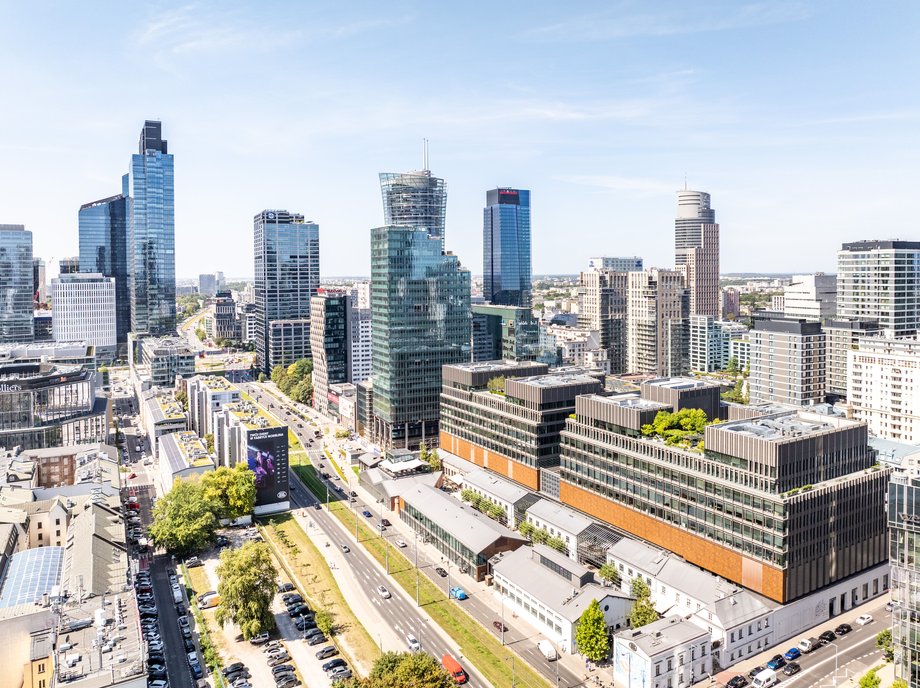
Studio A
|
Skanska Commercial Development Europe
See also: Tech giant leader: The world has become more nationalistic. How to benefit from this?
ESG and innovation: tenants choose sustainable office buildings
Do tenants actually “vote with their wallets” for high-quality buildings that meet ambitious ESG standards, or is price still the key?
Price is still important, but in the premium segment ESG standards, user comfort and location providing access to public transport and services are becoming more and more important.. The implementation of energy-saving technologies, combined with wise management in the long term, translates into real operational savings. Investors and tenants understand this competitive advantage. In this context the importance of optimizing operating costs is growingwhich in modern facilities is supported by intelligent property management systems – today also AI that adapts building consumption to the actual use of the facility, including working hours, number of people in the building. Such tools allow for savings of up to approx. 60-70 percent. on energy costs and predicting future costswhich is important in the context of expected increases in energy prices. The ratio between price and quality has clearly changed – today quality, innovation and added value determine the choice.
What trends do you expect in the coming months – more caution or a gradual recovery?
We are in a phase cautious optimism. Poland joined the G20, and the CEE region is perceived as a stable and reliable direction for long-term real estate investments. The impact of limited market liquidity and greater caution of investors and banks on the real estate market is still felt, but we can see that activity is coming back, especially among local and regional investors, we have had a really good year in this respect. The inflow of regional capital will continue to intensify, however Warsaw remains the first choice market in Central and Eastern Europe. We are currently entering a time of selective growth and qualitative transformation. Sustainable projects, rich in amenities and professionally managed, win. This is not the time for quantity – this is the time for projects that meet new expectations.
Zero-emission construction: the future of offices in Poland
The commencement of the construction of New Market C in Poznań is considered groundbreaking. Is the market ready for office buildings with net zero CO₂ emissions at the operational level?
The implementation of New Market C sets a clear direction for us – it is another step towards zero-emission constructionwhich we at Skanska have been developing for years. Today, we are additionally driven by growing market awareness. Nowy Rynek C will be the first office building in Poland with net zero CO₂ emissions at the operational level. It will happen fully independent from the municipal heating network and will be 100% powered. renewable energy (with guarantees of origin). We used heat pumps – ground and air – for which we will ultimately drill approximately 10 km of geothermal wells, and the largest photovoltaic installation in the office segment in the country will be built on the roof.
To what extent can the building's independence from the municipal heating network change the way of thinking about future office investments in Poland?
Today – in a fundamental way. Abandoning the municipal heating network, which is still largely based on the production of energy with a high carbon footprint, opens up a path to more self-sufficient buildings, energy-stable and significantly reducing CO₂ emissions. This is not only a response to the challenges of energy transformation, but also a direction that will increasingly shape the commercial real estate market in the coming years.
Skanska announces diversification with apartments for rent and student dorms. Is this a response to the cyclical nature of offices or a long-term change in strategy?
Entering the living sector is a conscious, long-term strategic decision. We see solid foundations for growth: ongoing urbanization, the housing gap and the growing popularity of renting as a real alternative to ownership. The PRS market in Poland is still young – it numbers less than 30,000. apartments in the hands of institutional owners, professionally managed. This shows the scale of his potential. Similarly in the student accommodation segment – only every 10th student today has a chance to find a place. Many existing facilities were built before 1990, and the number of foreign students exceeds 100,000. — these are clear supply gaps that we want to fill as a long-term player. This is why We treat rental living as a natural extension of the offer, complementary to office activitieswhich is still very popular in the premium segment.
The coming months: what will be the key test for the commercial real estate market in Poland?
The biggest test will be maintaining the pace of recovery with a limited supply of new assets. If the geopolitical environment remains relatively stable, I expect further growth of activity and its gradual acceleration, while the market will remain selective. On the one hand, capital will flow to projects that guarantee maintaining high attractiveness and quality in the long term, and on the other hand, opportunistic capital, more open to risk, will look for above-average attractive opportunities, focusing on building value by changing functions, renovations and repositioning assets. In practice this means a bonus for well-thought-out, city-forming mixed-use projects. The market is maturing, and investors increasingly expect cost predictability throughout the asset's life cycle, high energy efficiency and reliable revenue streams. If nothing disturbs the emerging macroeconomic and geopolitical balance,the recovery in the real estate market will continue. Its dynamics will be greater the better the new projects respond to the real needs of future users.