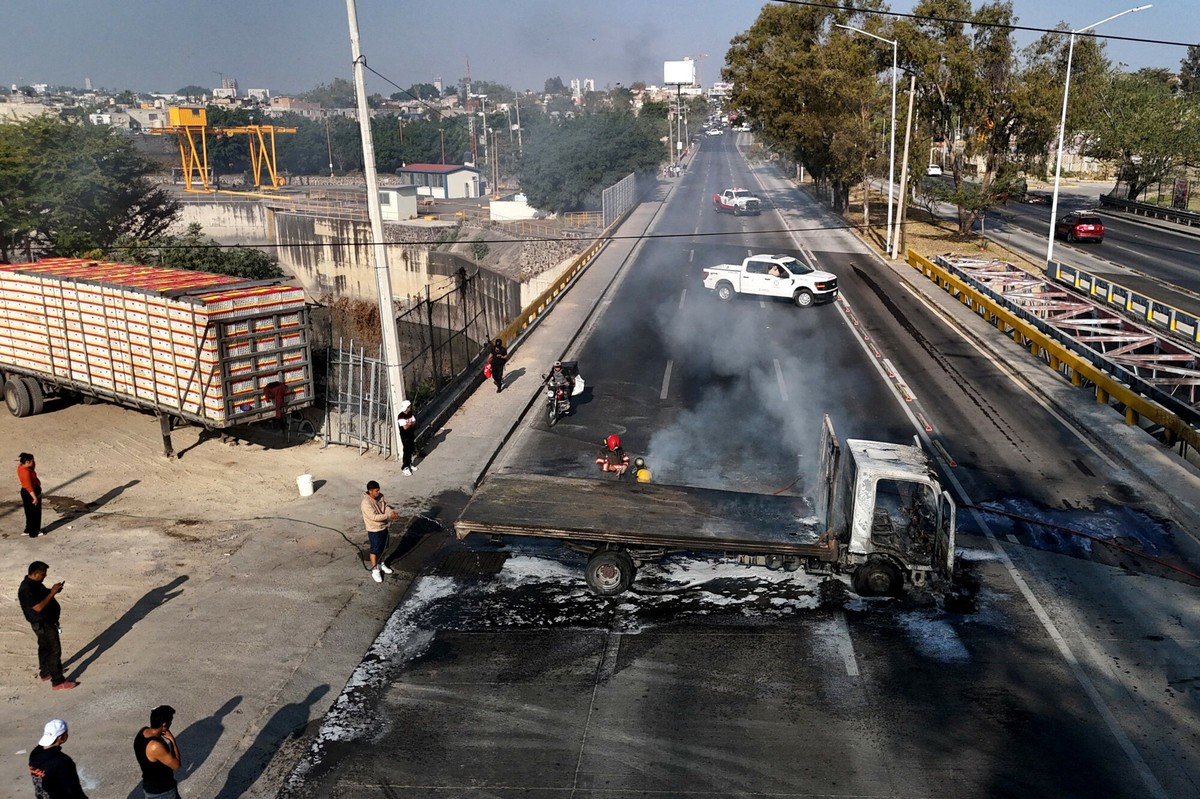
Puerto Vallarta, for years considered a safe haven for foreign tourists, suddenly found itself at the center of activities aimed at drug cartel structures. As the army and police launched the operation, armed criminal groups responded by blocking main routes, setting vehicles on fire and shooting in various parts of the city. Taxis stopped running for a while, and hotels – in consultation with the authorities – sent alerts to guests telling them to stay indoors. “Stay in shelter” was the message they received.
Just a moment earlier, tourists were relaxing on the beach and by the swimming pools. They learned about the threat from text messages, hotel applications, social media or directly from the staff.
The death of “El Mencho” and the immediate reaction of the cartels
The immediate cause of the escalation was the death of Nemesio Osegura Cervantes, known as “El Mencho”, the leader of the Jalisco Nueva Generación cartel. He died during Sunday's military operation in the state of Jalisco. He was one of Mexico's most wanted criminals and a key figure in the smuggling of fentanyl into the United States – a $15 million reward was previously offered for information leading to his capture.
In response, cartel members began coordinated operations in many parts of the country. Armed groups stopped buses and trucks on the roads, forced passengers to leave the vehicles and then set them on fire. Shops, pharmacies and bank branches were also attacked, including Banco del Bienestar branches, and a Costco hypermarket was set on fire in Puerto Vallarta.
White House: The US helped in the operation
Washington officially confirmed its role in actions against the cartel. White House spokeswoman Karoline Leavitt said the United States provided Mexico with intelligence that helped track down and “eliminate” the CJNG boss. She emphasized that El Mencho was one of the main smugglers of fentanyl into the US and a key target of both countries.
According to the American side, three other cartel members were also killed during the operation, another three were injured and two were detained. The administration of President Donald Trump thanked the Mexican army for its cooperation, emphasizing that the fight against drug organizations responsible for smuggling deadly substances into the United States remains a priority.
Violence in many Mexican states
Acts of violence occurred in at least thirteen states, mainly in the western and central parts of the country. The most tense situation was in Jalisco and the Guadalajara metropolitan area, but incidents were also reported in Nayarit, Colima, Michoacán, Guanajuato, Zacatecas, Guerrero, Oaxaca and Tamaulipas. In the tourist state of Quintana Roo, cars were set on fire on the route between Cancún and Mérida, leading to a temporary closure of the city's entrance, although hotel zones there remained largely operational.
In several regions, it was decided to suspend school classes, and the authorities asked residents to stay at home.
Canceled flights and alerts for tourists
Roadblocks quickly impacted air transport. American and Canadian airlines canceled some connections to Puerto Vallarta, Guadalajara and Manzanillo, and some planes were turned back mid-flight. The US Department of State urged its citizens to stay in safe places, and similar messages were issued by the embassies of many countries, including Poland.
At the same time, it was emphasized that foreigners were not the direct target of the attacks.
Disinformation and a return to normality
With the influx of information, false reports emerged – including an alleged takeover of the Guadalajara airport and a burned plane. Mexican media warned that some of the materials were generated using artificial intelligence.
In the evening, airports resumed work and hotels returned to normal operation.