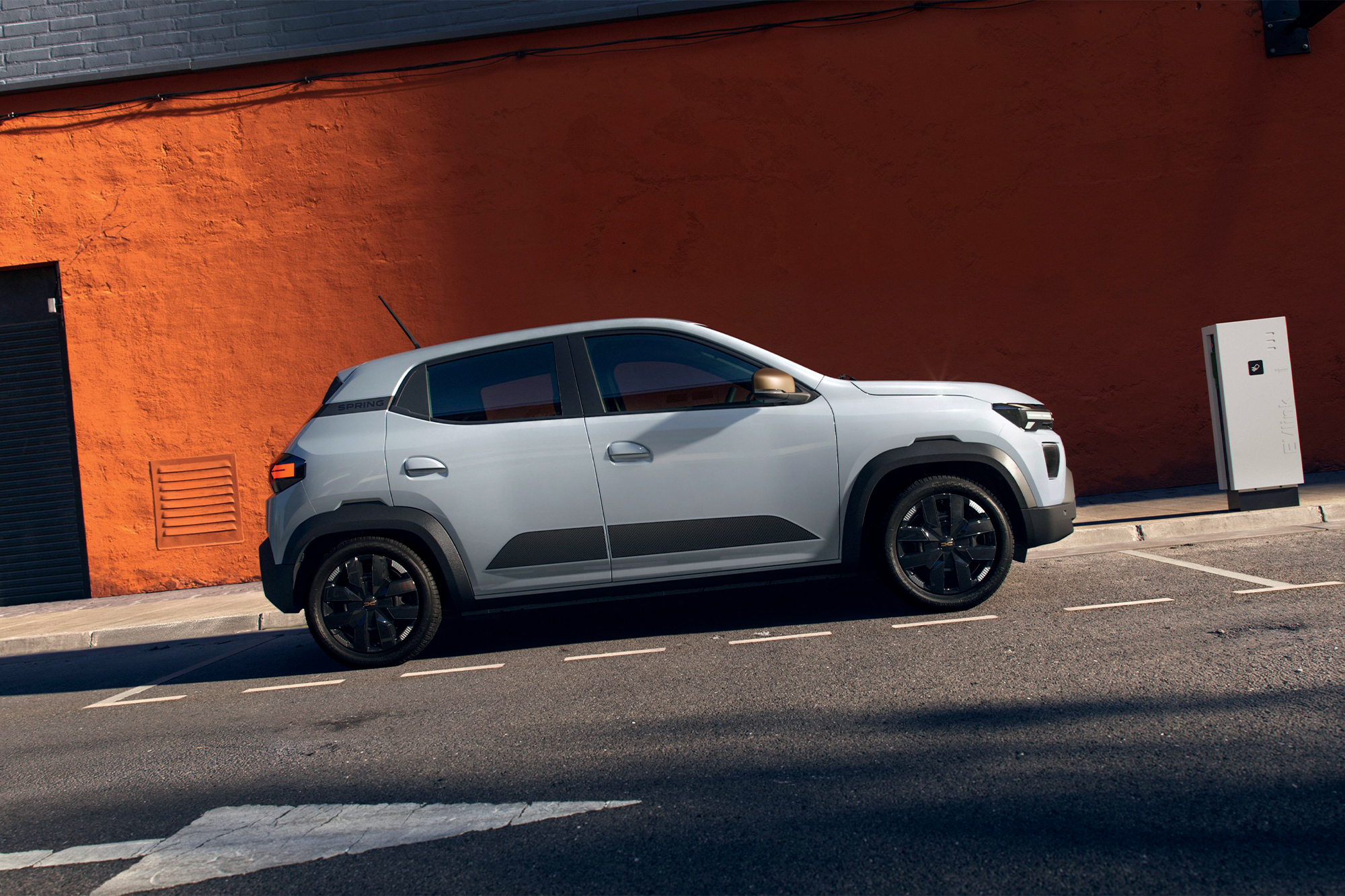
Rabla 2026 – The most important association of the critical automotive industry: What does “Made in Europe” mean when the electric Dacia Spring is produced in China?

The version proposed for this year's Rabla program does not comply with European legislation and comes with a high risk of blocking, claim the representatives of the Automobile Manufacturers and Importers Association.
- In addition to the 10% tax, the three most popular models in China are already taxed in Europe at 7.8% (Tesla Model 3), 17% (BYD Dolphin Surf) and 20.8% Dacia Spring. Dacia Spring and Tesla are also made in China, given the advantage of production prices.
The Minister of the Environment Diana Buzoianu had announced on Saturday that 300 million lei could be allocated for Rabla 2026 and the big change is that there will be an “emphasis” on cars produced in Europe.
There is no clear definition of “made in Europe”
The automotive industry association criticizes, through the voice of president Dan Vardie, the first proposals for the Rabla 2026 program, the phase for individuals. “The program has nothing to do with what it was last year, it has definitions that are incongruous with European Commission legislation, it makes serious errors and it is a totally incoherent matter,” the official said in a press conference.
APIA catalogs as worrying the statements regarding the exclusive support of vehicles “produced or assembled in the European Union”. The Ministry of the Environment cannot unilaterally redefine economic and commercial notions related to the legislation and the European market, the Association claims.
“Currently, there is no official European definition applicable to the Rabla Program that establishes exactly what 'produced' or 'assembled' means in the European Union in the context of eligibility for a national incentive program,” says APIA head Dan Vardie.
Dan Cuțui, vice-president of APIA, says that even if the program were to start, the ambiguities related to the term “made in Europe” would cause discussions and it could lead to the temporary stoppage of the program for purely legal reasons, such as attacks in court by some producers who will consider themselves disadvantaged,
APIA explains that it is a matter of percentages in defining what product is “made in Europe”, adding that those percentage values are set at the EU level and no agreement has been reached there either.
“The problem comes from the battery,” explains Vardie, because Europe does not have large industrial production of batteries for electric cars, and battery cells are manufactured in only three Asian countries: China, South Korea and Japan. The battery is the most expensive component of the electric car, in some cases exceeding a third of the total costs of the components.
APIA officials say that if only models produced in Europe were to enter the Rabla program, most new car models would be excluded from the market and this would mean that a number of brands would be discriminated against.
The first information about Rabla 2026
The Minister of the Environment, Diana Buzoianu, had announced a few days ago that the project regarding the budget of the Environmental Fund Administration (AFM) for this year was published for consultation, a project that provides, among other things, an allocation for the Rabla program.
“The Rabla 2026 program (intended for individuals) has an allocation of 300 million lei, with emphasis on cars produced and assembled in Europe,” wrote Diana Buzoianu on her Facebook page.
The minister said that it has not been decided what value the vouchers will have, but she specified, quoted by Digi24, that “if there was an increase, it would be a sensitive increase, it would not be a substantial increase”.
In 2025, the Rabla Program was canceled in June – the day before it started – and was resumed only in the autumn, with a budget of 200 million lei, six times smaller than originally planned. The demand for full-electric cars was not high, given that the eco-ticket was under 4,000 euros, in a market where very few models cost under 30,000 euros.
Chinese cars are already charged extra
Those from APIA say that the car market operates within the European common market, and products approved and legally marketed in the European Union must be treated non-discriminatory in all member states. “We can't have rules reinterpreted politically from one state to another, nor criteria built according to conjunctural preferences,” says Dan Vardie.
He also explains that vehicles produced in China are already subject to trade measures officially adopted at the level of the European Union, including additional taxes resulting from European investigations.
In addition to the 10% tax, the three most popular models in China are taxed in Europe at 7.8% (Tesla Model 3), 17% (BYD Dolphin Surf) and 20.8% Dacia Spring.
Dacia Spring and Tesla are also made in China, given the advantage of production prices.
“The European legislation says that no member state can administer any kind of restrictions, regardless of the form these restrictions take. Neither Romania, nor Hungary, nor any other EU state can say, from tomorrow I am doing this program only for producer A, B and C”, says the head of APIA.
He also says that the association was not consulted, although it made four requests for meetings with the Minister of the Environment. Regarding the proposed budget of 300 million lei, APIA believes that it is insufficient if the need in the market is taken into account.