Jeffrey Epstein, the controversial American financier convicted of sex crimes against minors, used secret storage facilities across the United States to hide files and electronic equipment. The pedophile rented at least six storage spaces and used them to store items from his properties, including computers and CDs from his private Caribbean island.

Jeffrey Epstein PHOTO: Shutterstock
According to the documents, Epstein began renting these warehouses as early as 2003, when he was part of an influential social circle in Florida, which included Donald Trump. Receipts show that some premises were paid consistently until 2019, the year of his death, documents obtained by The Telegraph show.
Photos taken in warehouses in Palm Beach show rooms cluttered with boxes, computers, CDs, fans and old furniture. Richard Kahn, his accountant, confirmed in emails that the deposits contained “a lot of excess equipment, including computers.” Another space he owned “three computers” and a box of CDs sourced from the private island of Little Saint James.
Private detectives paid to move materials
The documents reveal that Epstein hired several people to move computers from his private island of Little Saint James to hidden warehouses and delete the materials stored on them.
Bill Riley, one of the founders of the Riley Kiraly agency, wrote to Epstein: “I have them locked up in storage and would like to know what to do with them. I assume they are no longer needed in the criminal case. Is it possible to turn them over to you for analysis and safekeeping or give them to Darren Indyke (Epstein's attorney) or back to Jeff etc.?”
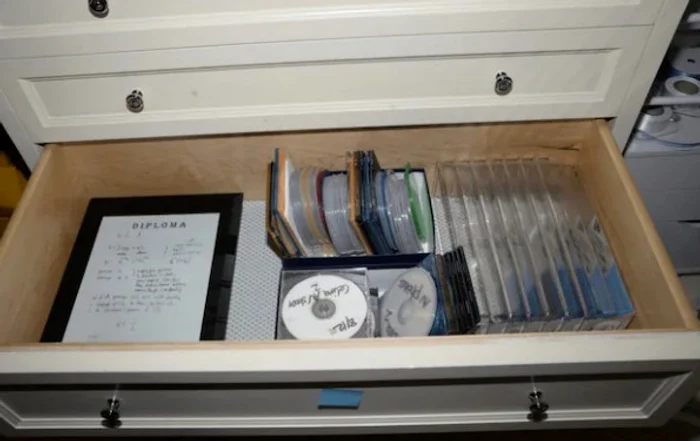
In Epstein's closet in Palm Beach were CDs. Source: Department of Justice
“Apparently the material had been removed before the authorities arrived. Everything had been cleaned up.”former Palm Beach Police Chief Michael Reiter confirmed the suspicions.
This suggests that Epstein was forewarned of possible raids by authorities and was acting to prevent the seizure of evidence.
Deposits and transactions in Manhattan and Florida
In addition to the Florida units, Epstein also rented a warehouse in Manhattan, for which he paid about $500 a month. Documents show it was used for furniture and electronic equipment.
Other facilities in Florida, including in Delray Beach and Royal Palm Beach, were large in size, some capable of storing vehicles, and accessible 24 hours a day without staff interaction.
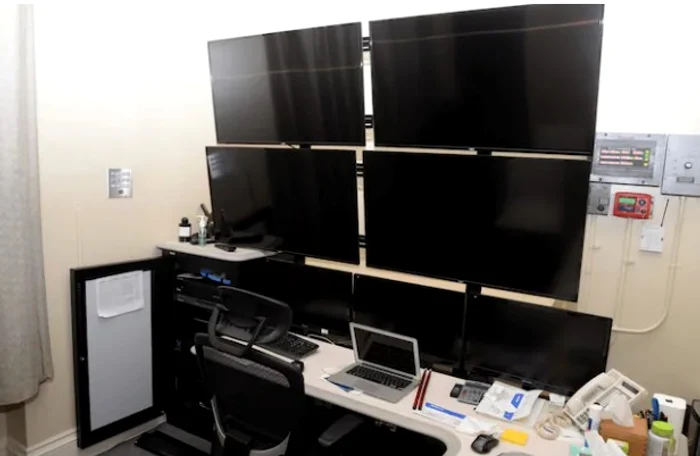
Media room in Epstein's New York home with superimposed screens. Source: Department of Justice
Employees at these warehouses declined to provide details, citing customer confidentiality. In Florida, if rent hasn't been paid for 60 days, companies can auction off the contents of the units.
It remains unclear whether Epstein's materials were destroyed, moved or kept by his heirs.
The documents include emails showing that Epstein ordered hidden cameras installed in Kleenex tissue boxes at his Florida home. An employee reported that they were “tiny, the size of a USB stick, with 64 hours of recording and a motion sensor”.
In May 2009, while Epstein was serving his sentence at the Palm Beach County Jail, he emailed Detective Bill Riley: “You should have sent me a copy of his photo.”
“I thought I had a copy on my computer, but it's in storage with the rest of the stuff, in storage. I'll take it out next time I go to the storage facility,” Riley replied.
Although many victims said they feared Epstein was using the cameras for blackmail or sexual gratification, the FBI said it found no clear evidence of such compromising material.
“We are aware of theories circulating in the media and online that Epstein videotaped abuse of his victims, including by other men, but we have found no evidence to support this theory. Indeed, if we had found such videos, we would have used them as evidence in criminal cases. However, we have not located such videos.” claims an internal agency memorandum.
The documents suggest Epstein may have also collected compromising material about public figures including Andrew Mountbatten-Windsor and Lord Mandelson.
The revelations in the Department of Justice files led to the resignation of Lord Mandelson from the Labor Party and the arrest of the former British prince on suspicion of misconduct in public office.