What are the chances that Vladimir Putin will be removed from power? The Russian leader's strategy in the face of domestic pressures and failures in Ukraine


As the war against Ukraine enters its fifth year, it is becoming increasingly clear that Vladimir Putin will not achieve his goals. However, the scenario in which the Kremlin regime would collapse is difficult to materialize, at least for now. This is the conclusion of an analysis published by the Atlantic Council, signed by William Dixon, an expert in international security at the Royal United Service Institute, and Maksym Beznosiuk, a strategic analyst specializing in Russia and Ukraine.
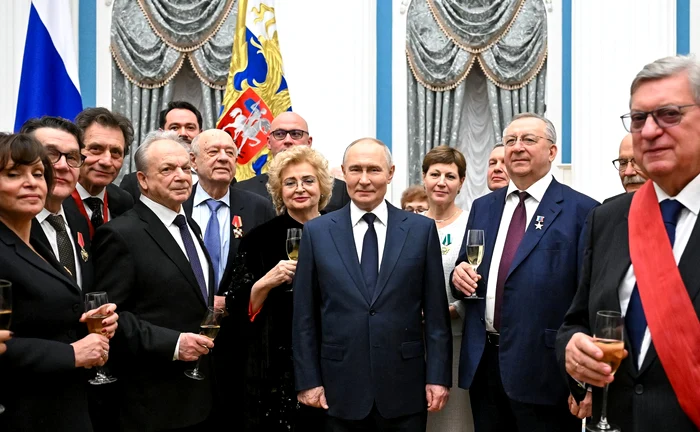
Vladimir Putin. PHOTO: Kremlin
According to the authors, developments on the front are far from Moscow's initial objectives. “Russia continues to suffer catastrophic losses without achieving significant progress,” the two experts note. Although it had the initiative on the front during the past year, the Russian Army “succeeded” in an additional advance of less than 1% of Ukrainian territory.
Internally, pressures are constantly increasing. The Russian economy is showing obvious signs of exhaustion, affected by Western sanctions, falling oil prices and dwindling revenues from energy exports. In parallel, Moscow's ability to project its influence internationally is eroding. Dixon and Beznosiuk cite the US raid in Venezuela and the seizure of a Russian-flagged oil tanker in the Atlantic Ocean, events that “they highlighted how the war in Ukraine is diminishing Moscow's ability to project its power internationally.”
The elite remains loyal to Putin
The analysis rejects the scenario of an imminent revolt within the system. “Most studies of autocracies have concluded that the greatest threat to regime stability comes from within the existing elites. Putin seems fully aware of this and has worked intensively to minimize the risk of a possible palace coup,” the authors explain.
The ruling class is currently too closely tied to the leader in the Kremlin to mount a real challenge. When Dmitri Kozak, a longtime Putin ally, reportedly opposed the invasion and advocated de-escalation, he was quietly removed without causing a public rift. Nor did the debates regarding the administration of the war economy produce open crises within the power.
A major test for Putin was the Wagner Rebellion in the summer of 2023. Although the episode exposed obvious vulnerabilities, the uprising was short-lived, lacking military defections or political support. “No major security institutions and no regional authorities have joined the Wagner rebels,” stress the analysis. After suppressing the uprising, Putin consolidated his authority, which the authors consider right “a confirmation of the highly personalized style of government established during his reign”.
Recruitment strategy
The chances of triggering large-scale protests remain low, in the context of the tightening of legislation that sanctions any form of opposition to the war. To avoid a repeat of the legitimacy crisis of the Soviet era, associated with human losses in Afghanistan, the Kremlin adapted its recruitment policy.
“Instead of relying on term recruits, it concentrated on enlisting men drawn mainly from ethnic minorities and from the prison population,” analysis shows. The Russian army relies heavily on volunteers drawn from its strong balances.
However, this strategy involves considerable risks. Disproportionate use of ethnic minorities “could lead to an increase in anti-regime sentiments and separatist tendencies in regions such as Ingushetia and Dagestan,” warn the authors. In addition, if the economic problems deepen, the Russian state may find it difficult to financially support these recruitments. “So far, the huge human cost of the invasion has not sparked a major domestic reaction, but with monthly casualty figures reportedly reaching record levels, public discontent could become a destabilizing factor.” the report shows.
A possible but unpredictable ending
The conclusion of the analysis is a warning for Western policy makers. Although the Putin regime does not appear to be facing an imminent collapse, developments may take an unexpected turn. “Few anticipated the demise of the Tsarist Empire in 1916 or the collapse of the Soviet Union in the late 1980s,” remember the authors.
During his 26 years in power, Putin has built a solid system of self-protection. “However, the costs of maintaining this system could spiral out of control in a fifth year of war and thus cause dangerous consequences that they may no longer be able to manage.”
William Dixon and Maksym Beznosiuk conclude. The vulnerabilities identified, they argue, should guide Western strategy, despite fears that an eventual post-Putin Russia could become even more unpredictable.
Russia lost 1.2 million soldiers in Ukraine
Since the start of Russia's invasion of Ukraine in February 2022, the Russian military has suffered approximately 1.2 million casualties, including up to 325,000 soldiers killed, according to a report by the Center for Strategic and International Studies (CSIS). These figures exceed the losses of any other major power in any war since World War II. Despite the official rhetoric, progress on the battlefield is slow: in the Pokrovsk offensive, for example, Russian troops advanced on average only 70 meters per day, and territorial gains since the beginning of 2024 do not exceed 1.5% of Ukraine's territory.
The Russian economy is feeling the pressure of the war. Industrial production is falling, domestic demand is weakening, inflation remains high, and economic growth has slowed to 0.6% in 2025. Russia also has no companies in the world's top 100 technology firms, limiting the country's ability to maintain long-term competitiveness.