
I have been covering Iran for decades. I can guess why the US is hesitant to attack


We must not forget that the current administration places emphasis on “US national interests”, or more precisely: how Trump and his supporters understand these interests. The frame of reference in which the concepts of the fight between democracy and tyranny or even simply good and evil appear is completely alien to this administration.
Oil prices will go up, but Trump doesn't have to lose out
As the experience of the wars in Kuwait, Iraq and Libya shows, the oil sector in Arab countries can recover quite quickly. Facilities in Saudi Arabia and the Emirates destroyed by Iran could be restored to their previous levels of production and exports within a few months, and even in the case of more severe damage, within a year. Sheikhs, emirs and sultans, who are unlikely to lack resources, can afford such a forced cessation in the flow of income – and the new, high prices will only serve their budgets.
The period of high prices will be a blessing for American oil companies, which note with concern that since 2025, domestic oil production has shown a clear downward trend, and banks are not willing to finance new projects due to the global drop in raw material prices. Even half a year or a year of a “new order” on the oil market would allow the Americans to actively stimulate the sector and maintain a key role in the global energy sector.
Punishing Putin for war crimes is not in Washington's current national interest, that's why The Kremlin's profits from the Gulf War should not worry this administration. However, China's obvious losses resulting from high prices of imported oil are a serious argument for the Americans to decide to attack Iran.
No matter how you look at it, the prospect of temporary exclusion from the great oil game from the Persian Gulf region – in the medium and long term – will be perceived by the American administration as a beneficial effect of the war against Islamic radicals in Iran.
Multinational Iran will not collapse at all
Americans are currently also afraid that attacking the political and military elite of Islamists without a clear vision of who can replace Khomeini's supporters could lead to the disintegration of the country. Political chaos and the “interregnum” would allegedly provoke peripheral regions to secede and create a whole host of new quasi-states in the Middle Eastmaking the situation even more complicated than it is now. Such scenarios are dreamed up by those who do not fully know the realities of multinational Iran, as well as by propagators of ideas such as pan-Turkism.
The myth of… has been repeated for years alleged separatist sentiments among Iranian Azerbaijanis. The size of this ethnic group – in the absence of official population censuses – is estimated at up to 40 percent for propaganda purposes. inhabitants of the country, while independent analysts say about 16-18 percent.
Propagators of this myth are not discouraged by the obvious illogicality of their narrative. On the one hand, they claim that all significant positions in Iran have been held by Azerbaijanis since ancient times (from shahs to ayatollahs and presidents) – and at the same time they shout about great discrimination against this national group by the Iranian authorities, which is supposed to encourage them to dream of breaking away from the regime in Tehran and joining their compatriots in Baku.
I have been professionally dealing with Iran's problems for decades. Having spent years living and working in this country both under the Shah and the Khomeyanists, I can say with certainty that there are no separatist tendencies there. In the Iranian provinces of Western and Eastern Azerbaijan, the memory of how during World War II Stalin sent there a special Azerbaijani division of the Red Army and tried to create separate republics with brutal Soviet orders in these regions and neighboring Kurdistan is still alive.
Iranians – both Azerbaijanis and Kurds – definitely do not want a repeat of those times. The Baloch do not want to secede or join Pakistan. Afghans are fleeing to Iran, not the Taliban. There are no separatist tendencies among the Arabs in the southwest or among other numerous nationalities of this country.
Therefore, stories about the inevitable collapse of Iran, a country with a great history of unity of diverse nations, make no sense and are dictated either lack of competence or political involvement.
The crisis is inevitable
The uncertainty about Iran's future regime after a possible attack on the political leadership and military potential of the Islamic Republic – and not because Trump is concerned about such “little things” as the ethical profile of the new regime – continues to worry strategists in Washington.
The current US president is striving to secure real or apparent victories, but above all, quick victories. But there is a risk that the military operation in Iran may drag onbecause changing the political system of a foreign country by air raids alone, without real occupation, is impossible.
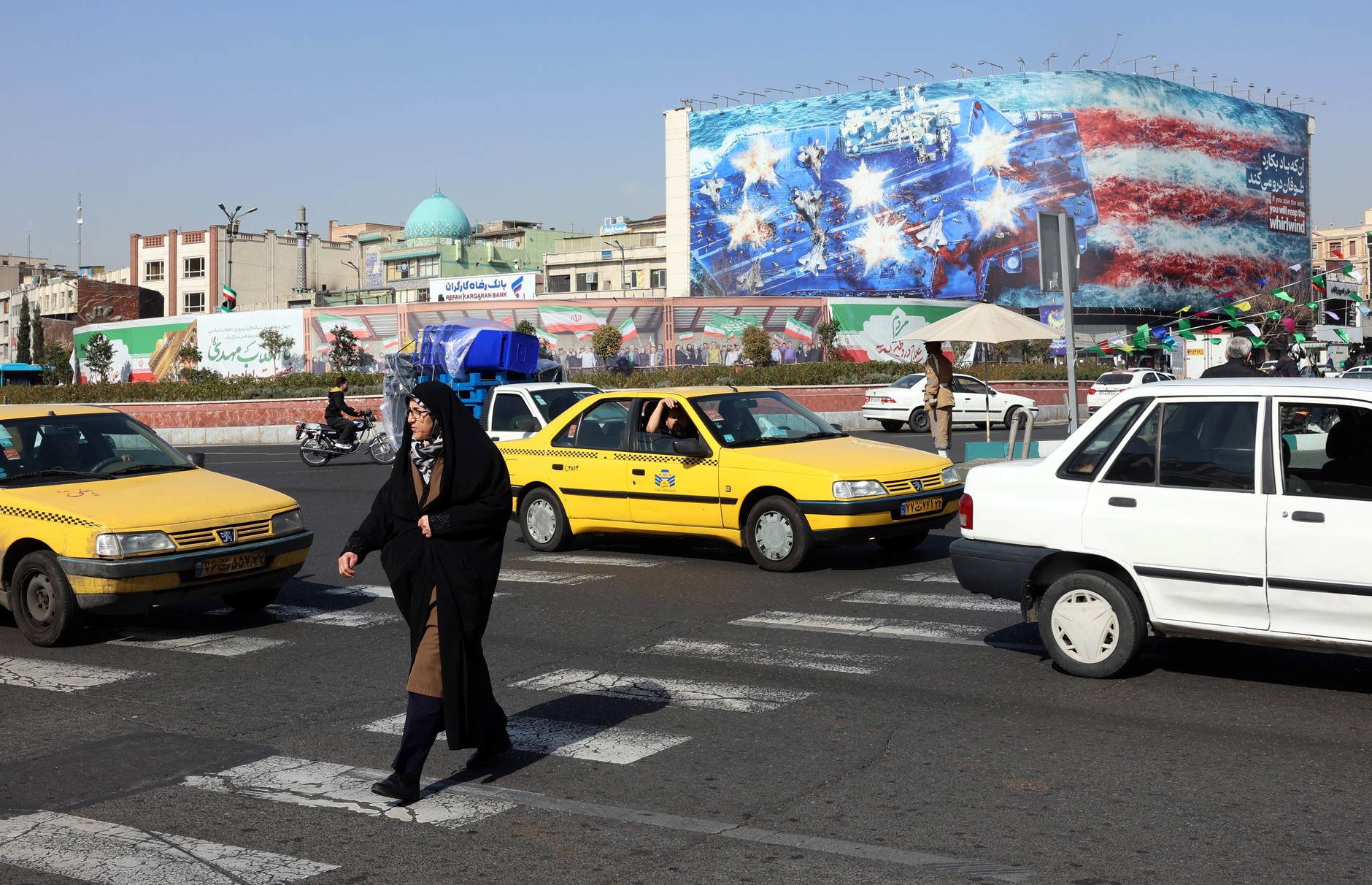
Street in Tehran. An anti-American billboard in the backgroundPAP/EPA/ABEDIN TAHERKENAREH
There is no adequate internal support – Iran has no opposition political parties or charismatic leaders with potential. What victory could Trump celebrate at the end of this war? Will it drag on, as it did in Afghanistan or Iraq? Or maybe a formidable government like the Taliban or Iraqi Shiites will come to power?
In the United States, it seems, they are ready to try to create something like an Iranian government in exile, but so far, efforts to unite such disparate factions as Marxist-Islamic terrorists or monarchists supporting the son of the deposed shah have not brought results.
Maybe Trump will have to cooperate with the current Iranian “elite”which benefits from the theocratic regime but would like to reform it with a view to turning towards the West. The unclear prospects of what Iran will be like after the new war are the main obstacle to making a final decision to launch missile and bomb attacks.


