What those who say that President Nicușor Dan had nothing to look for at the Peace Council miss


Even if many will raise an eyebrow of disbelief at what I will say now, Romania is among the countries in the world that can really put something substantial on the table when it comes to the reconstruction of the Gaza Strip, the subject of the Peace Council that took place in Washington on Thursday. It is about access to a precious human resource: the official data of the MFA shows that, before the war, in the West Bank, but especially in the Gaza Strip, there lived a mixed Romanian-Palestinian community of about 2000 doctors, construction engineers, businessmen, Palestinians who studied in Romania, plus their families.
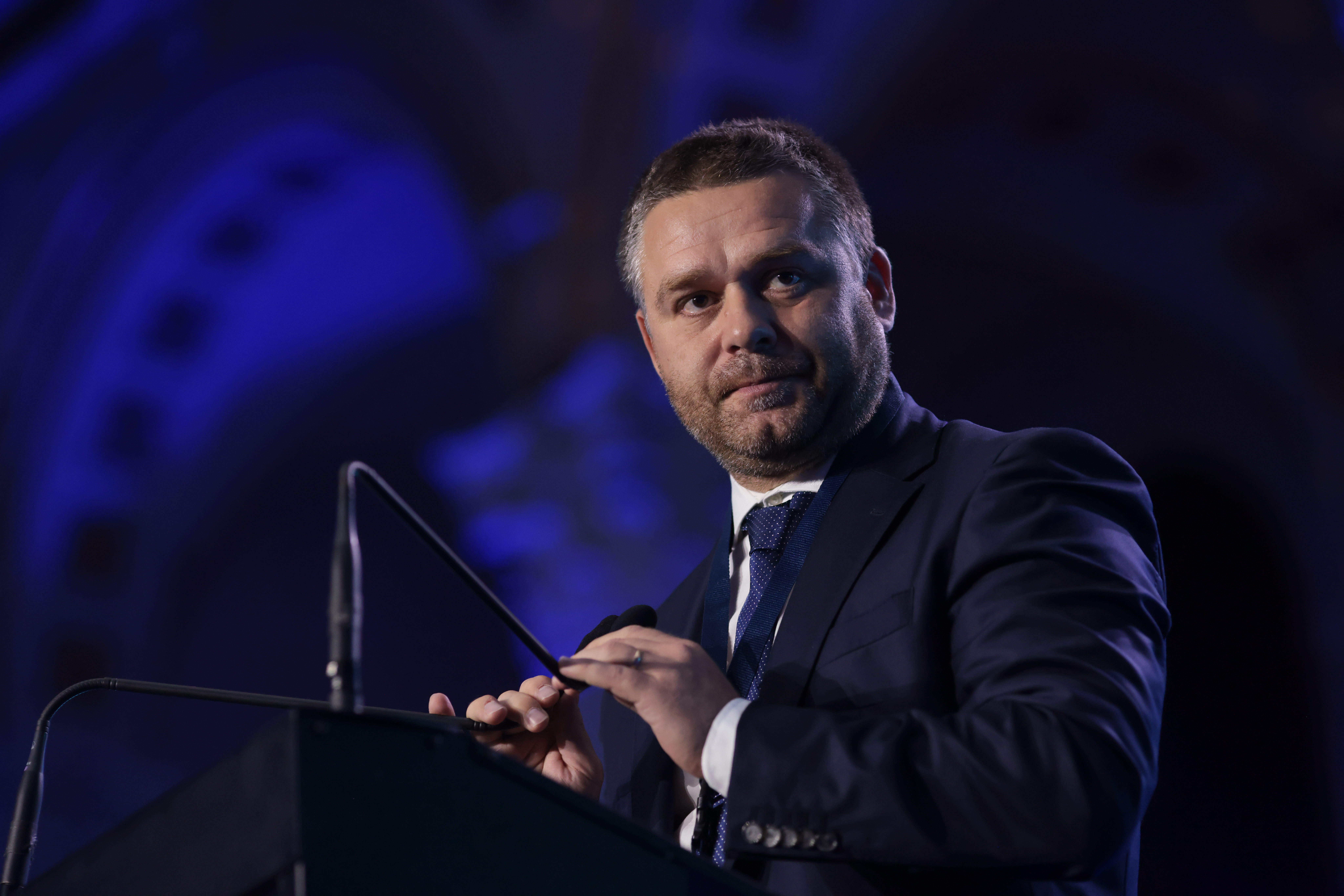
Present at the Peace Council in Washington, as an observer, Nicușor Dan spoke about what Romania can do concretely for the Gaza Strip: increase the number of flights to evacuate sick children, participate in the reconstruction of emergency response systems, ambulances, firemen, contribute with experts and trainers for the reconstruction of institutions, grant scholarships for Palestinian students, etc.
In the two minutes that his intervention lasted, Nicușor Dan did not have many details, it was probably not the right place, but he mentioned the good relations that Romania has with both the Israelis and the Palestinians.
But if many wondered why the president of Romania participated in a council boycotted by the majority of European leaders, now perhaps we should ask ourselves if our country can really do what it promised in Washington. Otherwise, it would be nothing but a justification, not even a skillful one, of a foreign policy gesture that was interpreted rather as a proof of servitude to Donald Trump.
In addition, there is also the interpretation that it is hypocritical for Romania to promise to support the reconstruction of the Gaza Strip, given that it is among the countries that made the most military exports to Israel, the country responsible for the destruction in this territory and the killing of over 70,000 Palestinians.
But the reality is that Romania has some assets that other countries do not have. Namely, an influential Palestinian community with which it has maintained ties and can rely on when needed.
“The most beautiful time of my life”
I got to know this community in 2017, when I was in the Gaza Strip, together with three other Romanian journalists. I found out then that there are hundreds of Palestinians who had studied in Romania, generally medicine, pharmacy or civil construction engineering, and who were organized in a Romania-Palestine Friendship Association.
Some were doctors, others directors of state hospitals or even owners of private hospitals. Without exaggerating, the Palestinians who had studied in Romania represented one of the pillars of resistance of the medical system in the Gaza Strip. During the few days spent there, however, I also met construction engineers or businessmen, all of whom maintain very close ties with Romania, in one form or another. Many had offices or businesses in Romania as well, Romanian spouses and relatives here. Some had Romanian citizenship, and I understood then that the relations of some of the Palestinians with the country where they studied never ended.
“I stayed in Romania for seven years, during Ceaușescu's time, and I really liked it there. I studied medicine in Iași, it was the most beautiful period of my life,” doctor Rafeek Zant, who was the patron of a private hospital in Gaza City, told me in Romanian.
“During Ceaușescu's time, Romania gave about 300 scholarships a year to Palestinians, both from Gaza and the West Bank. Most of them chose medicine, dentistry or construction. At the moment there are still about ten scholarships a year, given by Romania,” said Salah Joudah, a former professor at the University of Gaza, who also had a dental office in Bucharest.
After the war started by Israel, following the terrorist attack by Hamas on October 7, 2023, most of these people left the Gaza Strip. Those with whom I managed to get in touch told me that either they arrived in Romania, together with their Romanian citizen wives and children, or they left for other countries. The Minister of Foreign Affairs, Oana Țoiu, confirmed to me last year, in an interview, that there is no Romanian citizen left in the Gaza Strip, because they were removed from there by the Romanian authorities, right from the first days of the war.
What the MAE officially says about the Romanian-Palestinian community
The official data on the MFA website shows the following. Before the war, the mixed Romanian-Palestinian community is estimated at 2000 people and consisted of the following categories:
- Citizens with Romanian identity documents – 600
- Palestinians with university studies in Romania – 1400
- Palestinian citizens mixed families – 100
Only in the Gaza Strip were registered 700 Palestinian citizens with studies in Romania and 250 citizens with Romanian documents. These people are: doctors, dentists, pharmacists, civil construction engineers. There are also two registered associations: the Association of Graduates of Faculties and Institutes from Romania (founded in 2017) and the Palestine – Romania Friendship Association, founded in 1994.
Do the Romanian authorities rely on these human resources when they promise that they can contribute know-how to the reconstruction of the Gaza Strip after the war? Probably yes, it would be counterproductive not to. We also do not know how many of these people would be willing to return to a territory almost destroyed by Israeli rockets and bombings after two and a half years of war.
There are many unknowns, but what is certain is that the presence of the President of Romania, regardless of his name, at an international meeting where the reconstruction of the Gaza Strip is being discussed cannot be out of place at all.
Because, quite simply, recent history gives us the right to be there.
You can also read Gabriel Bejan if you subscribe to the “Ration, back!” newsletter, which he sends every Tuesday morning by email.