The US and China, the first step for the “defrost” of commercial relations, after the Economic War triggered by Trump. High level meeting in Switzerland

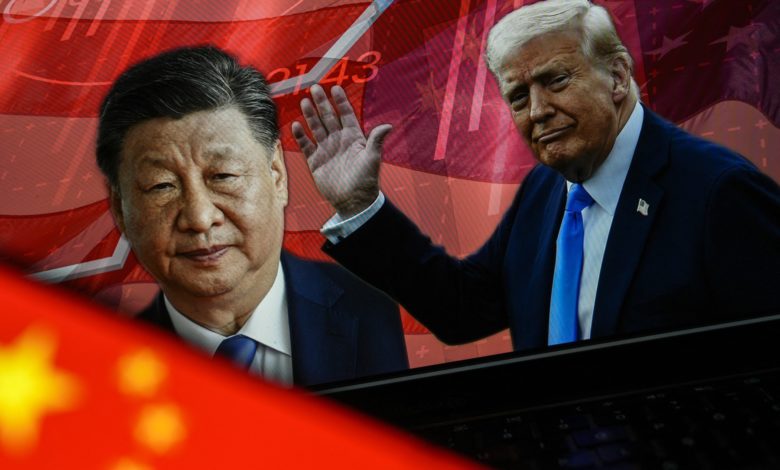
The Secretary of the US Treasury, Scott Bessent, and the main American commercial negotiator, Jamieson Greer, will meet in the weekend, in Switzerland, with Chinese Deputy Prime Minister, responsible for China's economic policy, in discussions that could represent a first step towards intertwing the commercial conflict between the two great economies of the world, notes Reuters.
The discussions come against the background of increasing commercial tensions, in which the rates applied to mutual imports have exceeded 100%, reaching, according to Bessent, at the level of a “commercial embargo”.
The conflict, amplified by the decision of US President Donald Trump last month to impose extended customs taxes for dozens of other countries, disturbed the supply chains, destabilized financial markets and fueled fears about global economic growth.
According to sources close to the negotiations, the meeting in Switzerland would aim to reduce general tariffs, as well as specific discussions on specific products, export controls and US decision to eliminate exemptions for small value imports.
“I think the discussions will be aimed at a relaxation of the situation,” Bessent told Fox News, after the announcement on the meeting. “We must first reduce tensions so that we can go further.”
A China Ministry of Commerce spokesman later confirmed that Beijing has agreed to meet US representatives.
“Taking into account the global expectations, China's interests and the demands of the American industry and consumers, China has decided to resume the dialogue with the United States,” said the spokesman, citing a proverb according to which “facts weigh more than words.”
This is the first high -level meeting between Chinese and American officials from the visit of US Senator Steve Daines to Beijing, in March, when Prime Minister Li Qiang met.
In recent months, Beijing has adopted a combative tone in relation to Washington, repeatedly stating that it will not go into negotiations unless the US gives up.
By signaling an approach change, the China Ministry of Commerce announced on Friday that it “evaluates” an offer from Washington to resume negotiations.
Asked on Wednesday about this apparent change of position, the spokesman of the Chinese Foreign Ministry, Lin Jian, said, at a daily press conference, that “China of China with a firm opposition to US tariff abuse remains unchanged.”
The stake is high for the Chinese economy, its industrial sector being already strongly affected by tariffs. Many analysts have revised their estimates for China's economic growth for 2025, and the Nomura Investment Bank warned that the commercial war could lead to the loss of up to 16 million jobs.
The Central Bank of China announced new monetary stimulation measures on Wednesday, including interest discounts and a liquidity injection in the banking system, to counteract the economic effects of tariffs.
The analysts described the intervention as a prudent and tactical nature.
Contradictory signals
US officials have had a series of meetings with commercial partners since the beginning of April, when President Trump announced a 10% rate applied to most countries, to which higher rates will be added starting July 9, unless bilateral agreements will be concluded.
Trump also imposed 25% rates for cars, steel and aluminum, 25% taxes for Canada and Mexico and 145% rates for China. Other taxes, including on pharmaceuticals, are expected in the following weeks.
In reaction, China has increased tariffs for American products to 125%, and the European Union is also preparing response measures.
Although Saturday's discussions aim to relax the situation, it remains unclear how substantial they will be, said Bo Zhengyuan, a partner at the Planum consulting company, based in Shanghai.
“In order to be possible wider geopolitical negotiations, the rates should be reduced first – the key is whether the two parties can agree on the level and scope of the discounts, as well as on the following stages.”
Bessent told Fox News that, during the Saturday meeting, the two parties will decide “about what to discuss.”
“We have a common interest – the current situation is not sustainable,” he said. “145% and 125% rates are equivalent to an embargo. We don't want to decoupling. We want a fair trade.”
The team of President Trump has sent contradictory signals in relation to the progress of negotiations with the great savings who are in a hurry to conclude agreements with Washington to avoid high taxes for imports.
Bessent has previously told Congress that the Trump administration is negotiating with 17 important trading partners and could announce agreements with some of them even this week.
Trump told journalists, before a meeting with Canadian Prime Minister Mark Carry, that he and his team will analyze the current agreements in the next two weeks to decide who will be accepted.
A British official has confirmed progress in the US and UK discussions on a commercial agreement. Bessent added that several countries, including Indonesia, have come up with solid proposals to reduce nourishments and non -retarisa barriers, such as subsidies.
Trump's measures on tariffs, which have been presented as a way to reduce the US commercial deficit, have so far have a reverse effect: in March, the deficit has reached a record level, against the background of massive imports made by companies before the entry into force of new taxes.
However, the US commercial deficit with China has reduced significantly, after Trump's rates have led to a marked decrease in imports from China.