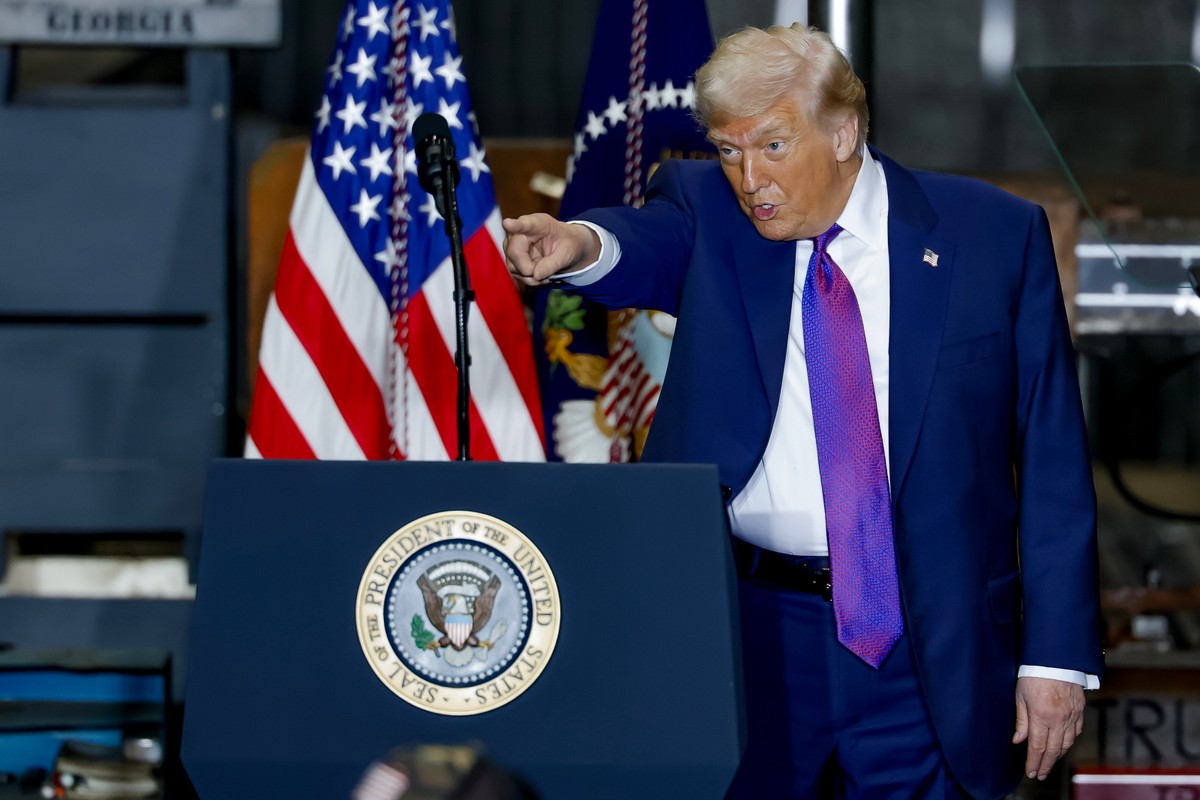
Donald Trump claims there are other methods he can use to impose tariffs other than the method the Supreme Court has not recognized. The US president announced that he would immediately introduce a global tariff of 10%. under a trade law known as Section 122
The US president did not withdraw from the tariffs and announced that he would use other mechanisms to achieve his goals. Trump repeated his oft-quoted claims during the conference that tariffs are both beneficial to the U.S. economy and a foreign policy tool.
The U.S. Supreme Court ruled Friday that President Donald Trump's emergency tariffs are illegal. According to the court, the president did not have the authority to impose tariffs under IEEPA. This act, previously used mainly to implement sanctions, was the legal basis for most of Trump's tariffs.
President Donald Trump says there are alternative methods of applying tariffs that could potentially generate more revenue than emergency powers that are currently unavailable.
“Other alternatives will now be used to replace those that the court wrongly rejected. We have alternatives,” he told reporters at the White House.
He said the new options were “approved by a decision” issued by the court today.
“Now I will go in a different direction, probably the direction I should have taken the first time,” he said, calling it “even stronger than our original choice.”
He cited various laws, including the Trade Act 1974 and the Trade Expansion Act 1962, although he said this would lengthen the process.
Donald Trump announced on Friday that he would immediately introduce a global tariff of 10%. under the trade law known as Section 122, after the Supreme Court issued a landmark ruling earlier in the day.
However, unlike previous tariffs imposed by Trump, the new tariffs can last for a maximum of 150 days, without congressional approval for an extension, writes CNN.
Trump also told reporters that he was opening several new investigations, which are a necessary precursor to imposing tariffs under a separate trade law known as Section 301.
Trump argued that the decision “empowered and enhanced the president's ability to both regulate trade and impose tariffs.”
He says the court ruled that he was not allowed to “charge a single dollar to any country.” He estimates that this was done to protect other countries.
But it says it can halt any trade or economic activity or impose an embargo on a country. “In other words, I can destroy trade, I can destroy the country,” he says, adding: “But I can't put a commission on it.”