Trump violated federal law by unilaterally imposing far-reaching tariffs around the world. It's severe White House failure on an issue of key importance for the president's entire foreign and economic policy agenda.
I don't think so. The court imposed limits on Trump's emergency powers. The ruling (six to three votes) came despite the president's several successes in emergency proceedings on other issues, such as migration or state spending cuts.
However, there are a few “buts”.
The decision doesn't mean Trump can't impose tariffs at all. It will have to find other ways, and the scope and pace may slow down significantly. Furthermore, EU tariffs on steel and aluminum that have been negotiated with Brussels are not affected.
Does Trump have to pay back the tariff revenue?
Justice Brett Kavanaugh, who dissented from the majority opinion, noted that the court did not comment today “on whether or how the government should return billions of dollarsthat he collected from importers.” However, the issue plays a key role in the case, because representatives of the Trump administration stated that possible refunds may have disastrous consequences for the US economy. “This process has the potential to cause considerable confusion,” Kavanaugh wrote.
The article continues below the video
According to data from the US Customs Service, as of December 14, the US federal government received USD 134 billion. (at the current exchange rate PLN 480 billion) revenues from questioned customs duties from over PLN 301,000 various importers.
What does this mean for Europe?
It is not yet entirely clear how the decision will affect trade relations with the rest of the world and the EU. But Trump is not completely powerless — he can still impose tariffs under other laws.
Analyst Sandra Eber from Union Investment believes that The EU is unlikely to renew its tariff package. Additionally, the Trump administration may continue to impose sector-specific tariffs on specific industries (such as steel or automobiles).
And the stock market?
Despite everything, the stock exchange initially reacted positively to this news. The German Dax index rose by more than 180 points (0.75%) in a few minutes, but has since fallen again to around 25,000. 210 points (plus 0.25%).
— There should be an impact on the capital market and enterprises limited – explains Sandra Eber. It is true that uncertainty returns with the Supreme Court's assessment, but “in reality, not much will change.”
How bad is Trump's defeat?
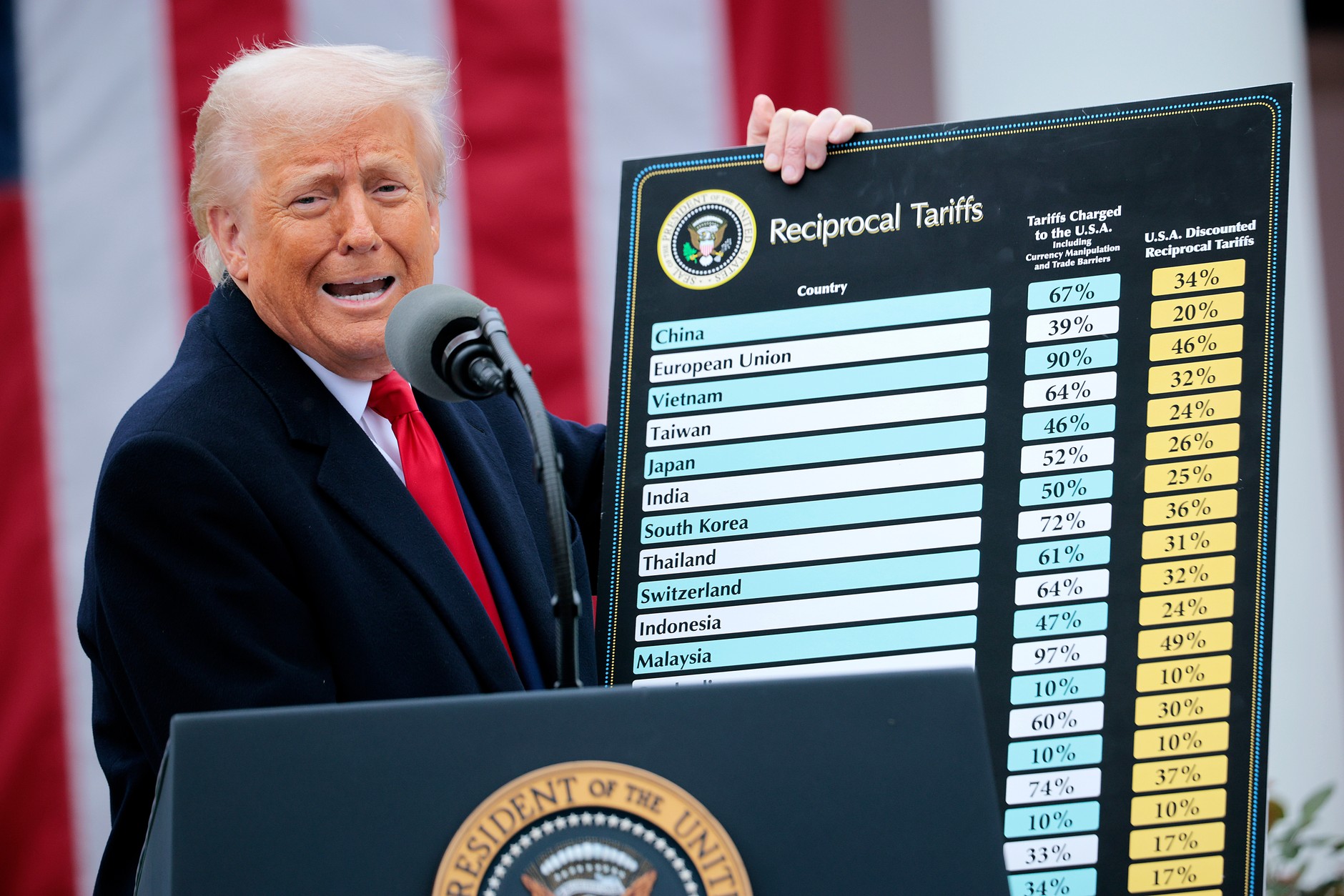
At the center of the decision are the tariffs that Trump has been imposing since April under the national emergency law. These included wide-ranging retaliatory tariffs that he imposed in the so-called Liberation Day, to almost all other countries – including the EU.
Earlier, the president called the legal proceedings “one of the most important in the history of the United States” and warned that if he loses, it will have serious economic consequences for his country.
Donald Trump during the so-called Liberation Day, April 2, 2026Chip Somodevilla / Getty Images
Americans are also skeptical
But many Americans — including Trump voters — have always felt differently about it. More than a dozen states, most of them Democratic, filed the lawsuit. However, libertarian and pro-economic groups, typically associated with Republicans, have also been critical of the tariffs.
According to polls, tariffs are generally frowned upon among the public because voters are very concerned about food affordability.
According to Reuters, the American president learned about the verdict during a closed meeting with state governors. Agency sources say the president called the ruling a “disgrace.”
I’m Ashley Davis as an editor, I’m committed to upholding the highest standards of integrity and accuracy in every piece we publish. My work is driven by curiosity, a passion for truth, and a belief that journalism plays a crucial role in shaping public discourse. I strive to tell stories that not only inform but also inspire action and conversation.