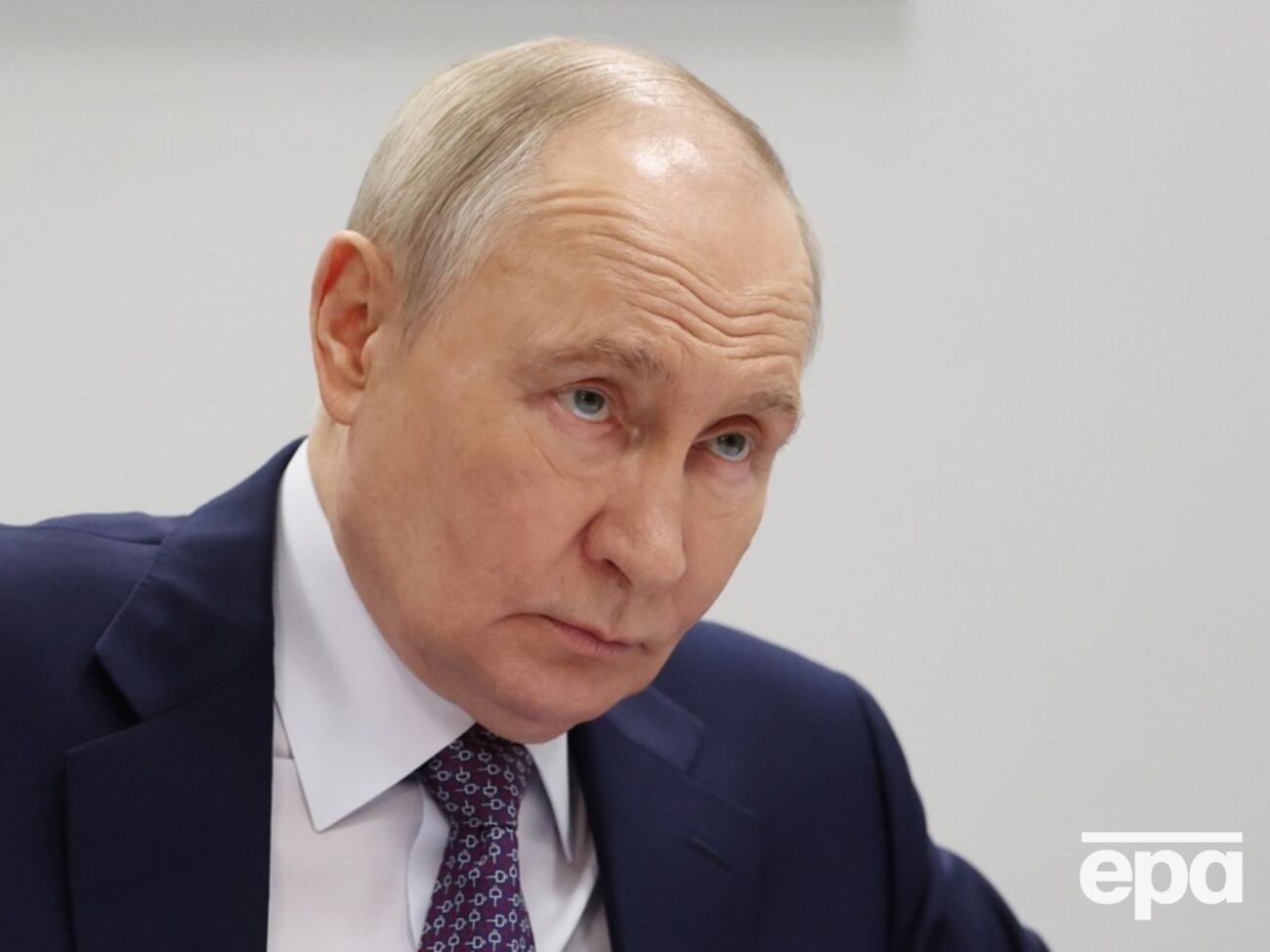
The illegitimate president of the aggressor country, Russia, Vladimir Putin, during his quarter of a century of rule, deprived it of its status as a “great power.” American political scientist and international relations expert Walter Russell Mead wrote about this in a column for The Wall Street Journal (WSJ).
In his opinion, for more than 10 years, Putin has won against the background of some “narrow-minded” Western leaders. The Russian leader’s insightful and disillusioned understanding of his opponents allowed him to “inflict one humiliating defeat after another on the self-confident West,” including the attack on Georgia in 2008, the seizure of Crimea and a large part of Donbass in 2014, the column’s author believes.
The growth of Putin’s influence was significantly facilitated by his role in suppressing protests in Belarus against unrecognized President Alexander Lukashenko, as well as the decline, with the informal support of the Kremlin, of French influence in former African colonies, the WSJ notes.
The author of the material considers Putin’s “critical mistake” to be that he did not accept Ukraine as a real state, believing that its people do not have national identity, and the legitimate government is an “empty shell.”
A critical mass of Ukrainians “turned out to be ready to fight and die for the country that Mr. Putin had arrogantly rejected,” the article says. President Vladimir Zelensky turned out to be a gifted politician and diplomat who managed to maintain the unity of the people within the country and at the same time patiently accumulate international support, its author states.
He admits that the spring-summer offensive of the Russian Federation could still lead Ukraine to a crisis, but the war of the aggressor country has been going on “for too long, is too expensive and has so weakened the foundations of Russian power that any victory will be Pyrrhic.” A more likely outcome, according to the American political scientist, is “a painful impasse that will continue to deplete the human and economic resources of the Russian Federation,” threatening Putin’s power.
Viktor Orban's defeat in Hungary deprived Moscow of its closest European ally, and the rest of the European Union, despite disunity and disorientation due to the transatlantic split, retained financial leverage to support Ukraine. In the eastern direction, Putin is losing influence in Armenia and Azerbaijan, which are already actively cooperating with the West, he emphasizes. At the same time, some of the Central Asian republics now have closer economic ties with China than with the Russian Federation, actively developing pipeline routes for energy supplies to the West, bypassing Russian territory.
The author of the column draws attention to the change of power in Syria as another loss for the Kremlin, as well as its inability to have a significant influence on military or diplomatic events in the US and Israeli military operation against Iran. At the same time, there is a demographic decline within the Russian Federation, aggravated by the war in Ukraine, while the share of the Muslim population in the country is growing, the material says.
These trends mean problems not only for Putin, but foreshadow a crisis for Russia comparable to the shock after the collapse of the Soviet Union, the newspaper admits. The Russian economy is weakening, and the head of the Kremlin, as well as his successors, “may find it difficult to hold on to what is left of the empire,” a columnist for the publication believes.
For now, the current head of the Kremlin “shouldn’t be written off,” but if he fails to “find the energy and creativity to get out of this situation,” history may remember him as the leader under whom Russia finally and fatally lost its status as a serious great power,” the WSJ summarizes.