When did Russian propaganda begin on Romanian territory. The newspaper published by the tsarina's lover who wanted to be the king of Dacia

Russian propaganda on Romanian soil began paradoxically: through the very first newspaper in our history. Printed in Iasi approximately 300 years ago, the publication served the interests of a favorite of the imperial court. He used the newspaper as a political weapon to take control of Moldova, imitating the western press models of the time.
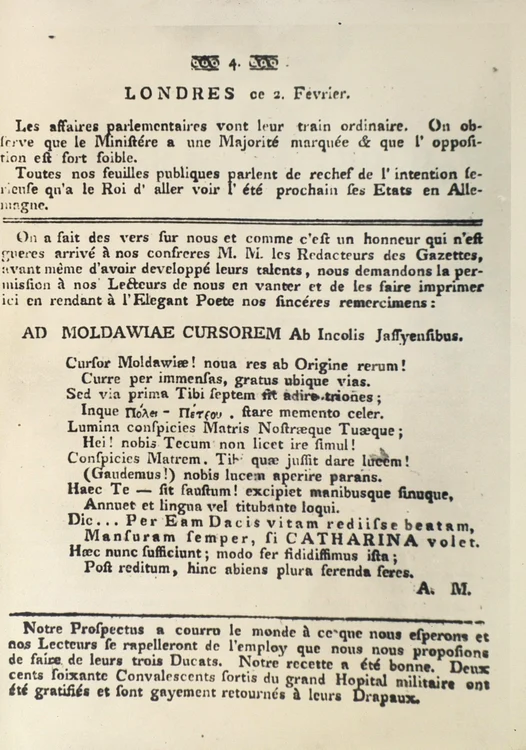
A page of the newspaper Courrier de Moldavie PHOTO tiparituriromanesti.wordpress.com
In the 18th century, the Tsarist Empire, reformed by Peter I the Great, fought for supremacy in the area of the Black Sea basin and the Balkans. Czars and tsarinas dreamed of turning the Black Sea into a Russian “lake” and at the same time expelling the Ottomans from Europe. This is how the “Greek Plan” was born, conceived in 1780 by Catherine the Great, Empress of Russia, in collaboration with the Habsburg Emperor Joseph II. Within the “Greek Plan” there was also a “Dacian Plan” which targeted the Romanian Principalities. More specifically, the Russians hoped to remove the Principalities from Ottoman influence and transform them, through unification, into a buffer zone, theoretically independent, but practically under strict Russian supervision, called Dacia.
The “Dacian Plan” was complementary to the “Greek Project”, by which Catherine wanted to restore a Byzantine Empire under the leadership of her nephew, Grand Duke Constantine (symbolically named after Constantine the Great). The capital would have been in Constantinople. In this context, in Iași, the first newspaper from Romanian territory appeared, a Russian propaganda publication, developed by the protégé and amatuer of the Tsarina, through which the Tsarist Empire was preparing the ground for the “Dacian Project” and implicitly winning the sympathy of the population, for an easier transition. This publication was called “Courrier de Moldoavie”, and it had to have bilingual editions through which the Romanians were kept informed about the Russian victories and the great achievements of the “protectors” of the Orthodox Christians.
When Russia set its eyes on the Romanian Principalities
This first publication from Romanian territory appeared in the context of the Russo-Turkish War of 1787-1792. Here, in short, how things were. Catherine the Great continued the political and reforming work of Peter I and wanted to consolidate the state of the Tsarist Empire as a great power. The Ottoman Empire, entered into an accelerated process of decay, stood in the way of the Tsarina's dreams of aggrandizement. After the annexation of Crimea by Russia in 1783, the Ottoman Empire wanted to regain the territory and stop the Russian advance in the North Pontic area.
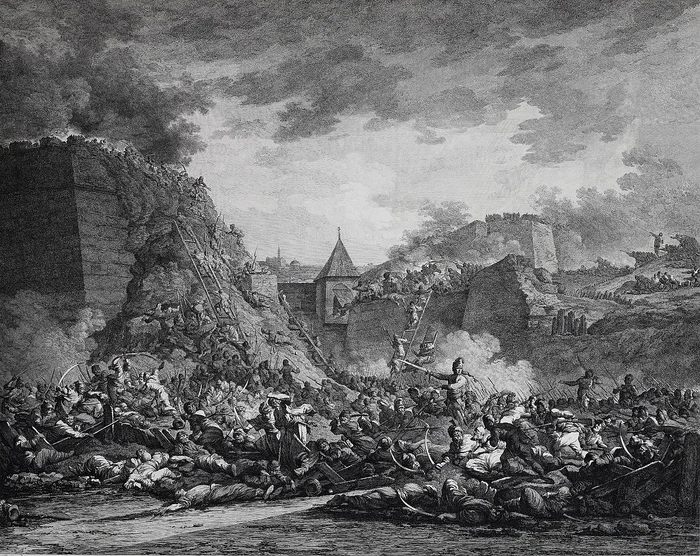
Siege of Ocheakov PHOTO wikipedia
The lavish visit of Empress Catherine II to the Crimea was perceived in Constantinople as a direct provocation. In 1787, the Ottoman Porte declared war on Russia. The war was fought on several fronts: north of the Black Sea, in Crimea and, above all, on the territory of Moldova and Wallachia. The Habsburg Empire, led by Joseph II, participated in the beginning of the war, but withdrew in 1791 making a separate peace with the Ottomans. The Russians, better equipped and benefiting from talented commanders like General Alexandr Suvorov, managed to win the war. Two of the most important victories of the Russians took place on the current territory of Romania, at Focșani and Râmnicu Sărat. The war ended with the Treaty of Iasi, signed in the capital of Moldova. Through this treaty, the Ottoman Empire had to recognize the annexation of Crimea by Russia and the Russian-Ottoman border was established on the Dniester. In other words, the Romanians became the neighbors of the Russians.
At the same time, Russia also obtained the Edisan, that is, the territory between the Bug and the Dniester. In short, the Russo-Turkish war of 1787–1792 was one of the most important conflicts in Eastern Europe at the end of the 18th century, consolidating Russia's dominance in the Black Sea but also with numerous direct consequences for the Romanian Countries. The most notable effect is that after 1792, Russia became the main self-proclaimed protector of Orthodox Christians in the Ottoman Empire, including the Romanians. This position will lead, in the 19th century, to repeated interventions in the Principality and serious interference in internal politics.
The tsarina's lover and a Russian newspaper in Moldova
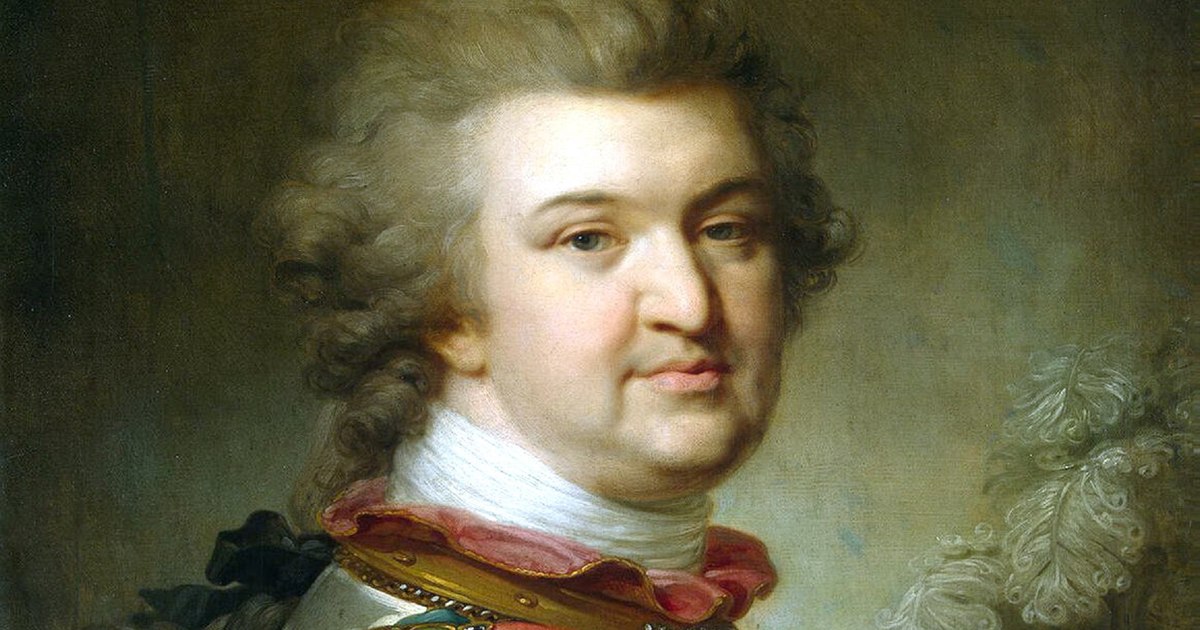
During this Russo-Turkish war, as I mentioned, Russian troops entered the territory of the Romanian Principalities, vassals of the Ottoman Empire. The Russian general Grigori Potemkin, the commander of the Russian troops in the Russo-Austro-Turkish war of 1787-1792, established his headquarters in Iasi, the capital of Moldova, in the Ghica Palace. Incidentally, Potemkin effectively ruled the principality during the Russian occupation. This was a particularly interesting and at the same time controversial character.
A lover and secret adviser to Tsarina Catherine the Great, Potemkin was considered one of the most influential people of his time. Military, diplomat, administrator Potemkin played a decisive role in the transformation of Russia into a great European power. Born in 1739 into a family of petty nobles, Potemkin quickly rose through the political and military ranks thanks to his intelligence, ambition and strategic talent. The decisive moment of his career was the closeness to the empress Catherine II. His influence on foreign policy and on the reorganization of the south of the empire was considerable. One of Potemkin's greatest achievements was the consolidation of Russian control over the North Pontic region.
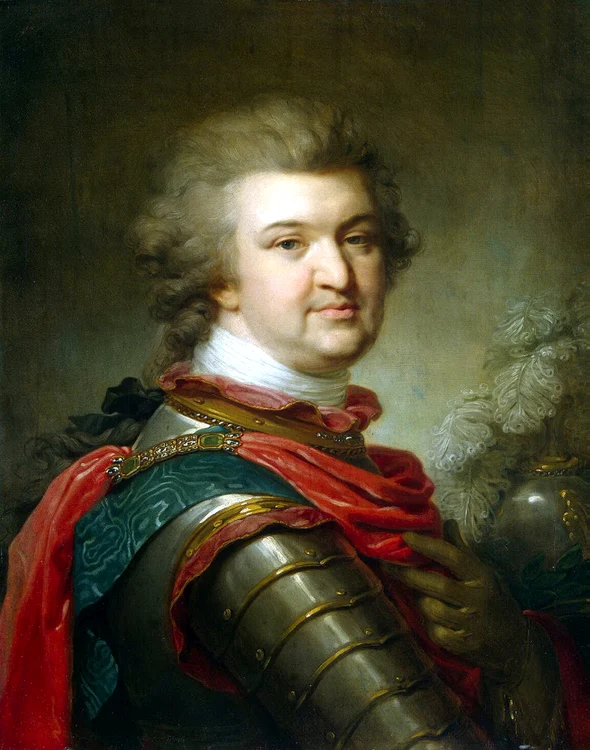
Potemkin PHOTO wikipedia
After the wars with the Ottoman Empire, Russia annexed Crimea in 1783 being a crucial moment in the history of the region. Potemkin was appointed governor of the new territories, called “New Russia” (No Novorossia). He coordinated colonization, founded cities and developed infrastructure. Among the cities connected with his name are Sevastopol, an important military port on the Black Sea, but also Kherson. He also laid the foundations of the Russian Fleet at the Black Sea, thus consolidating the empire's strategic position in southeastern Europe. Well, this top figure of European politics settled in Iasi and dreamed of becoming a kind of king of “Dacia”. More precisely, to be named lord of Moldavia and after that king of the new Kingdom of Dacia, through the unification of the two Romanian countries. For practical military purposes, but also for propaganda purposes, because we must say that Potemkin was also a master of propaganda (no – see the preparation of Crimean villages for the tsarina's visit), Catherine's lover and advisor ordered the printing of a newspaper in Moldova, called “Courier de Moldavie” (no – Courier Moldovei).
For this purpose, after the fall of Oceakov (the Ottoman fortress in the south of Ukraine), Potemkin arrived in Iasi with a campaign printing press, but also with a team of Russian printers. The “newsroom” was fixed in the Ghika Palace, Potemkin's residence and headquarters of the Russian command. Initially, this newspaper was to be printed bilingually, that is, in French and Romanian. Later, the columns in Romanian were abandoned, being printed only in French. The first issue of this newspaper appeared in March 1790. It cost three guldens. It primarily had a practical purpose, informing the Russian troops on the territory of Moldova about the progress of the war on other fronts. At the same time, it also had the propagandistic purpose desired by Potemkin, to attract the Romanian elites to the side of the Russians.
“To the Conqueror, Our Great Hatman and Benefactor”
The propagandistic character of this publication is best shown by a series of articles appearing in its pages. For example, in the very first issue, the Russians are presented not as conquerors, but as true liberators from the Ottoman yoke, those who fought for the Orthodox brothers and those who brought civilization. Potemkin was exalted.
“The house of Mr. Mare Vornic Ghika, where the reception was given, was magnificently illuminated by more than 7,000 lanterns. Across the road from this house, an allegorical illumination was lit that represented a temple with a colonnade, at the top of which the coat of arms of the Prince Marshal (no Potemkin) was visible. In the middle of the Temple was erected an altar of perfumes, at the foot of which could be read the inscription in Russian: To the Victor, Our Grand Hatman and Benefactor. Before proceeding to the ball, His Highness took a promenade through the principal streets of the city, which were entirely illuminated. Upon his entrance into the Hall, the celebration began with an ample Italian vocal music, accompanied by several hundred instruments.”it is shown in a fragment of the first issue.
In another edition, there is also a poem with an obvious propagandistic character, alluding to the “Dacian Plan”, but also to a supposed desire of the inhabitants of Iași to call themselves Empress Catherine.
“Courier of Moldavia! a new thing from the beginning of time! It runs through endless expanses, well received everywhere. But first you must reach the seven stars and stand on the border between Poli and Peter (allusion to St. Petersburg). Look at the light of our Mother and our Fatherland; Ah! we are not allowed to go with you! Look at your Mother, who commands to give us light! for she opens the years with light! receive them in your hands, even if your tongue hesitates, we will endure the yoke, if CATERINA wills it; for the time being, you will have it from here others”.
The newspaper specified that this poem was written out of a pro-Russian sympathy of the residents of Iași. Sign some AM